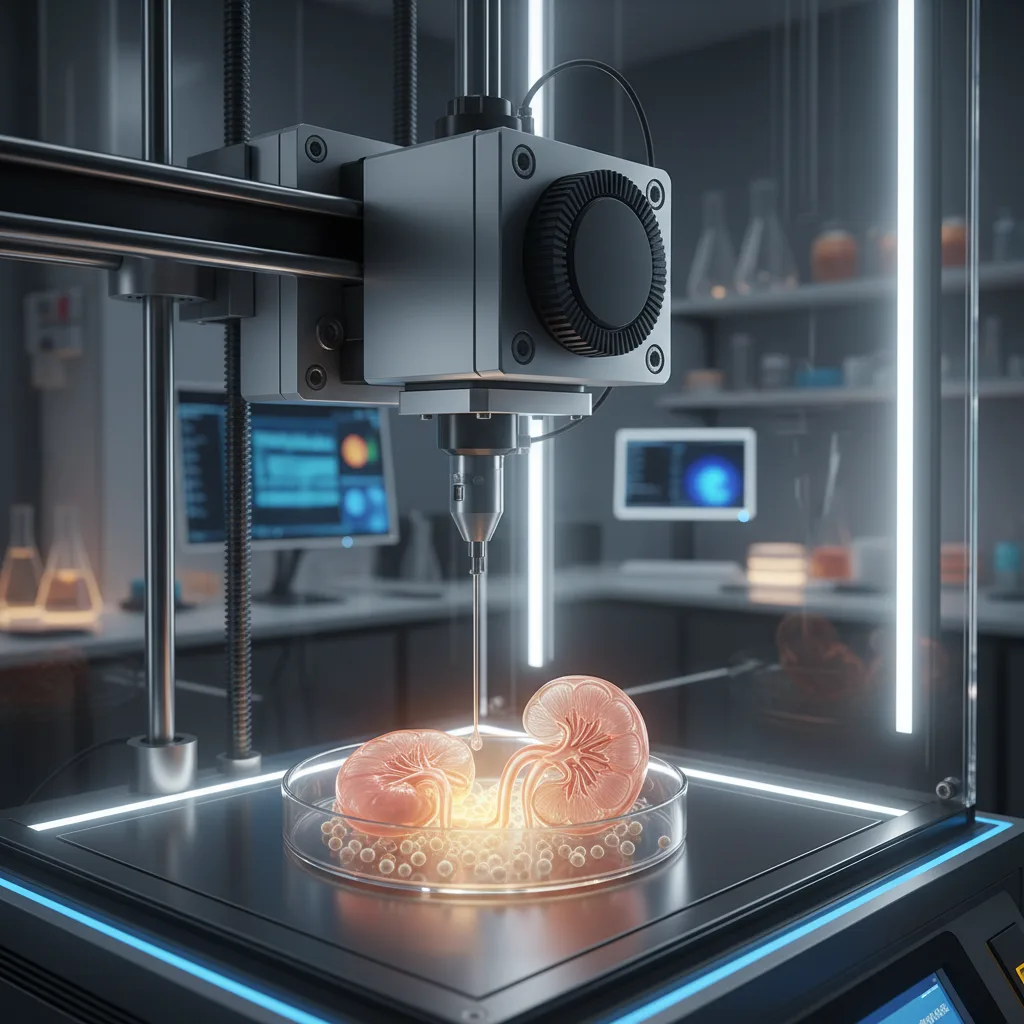
Imagine a future where donor organ shortages are a thing of the past, and every patient receives a perfectly matched, custom-made organ. This is precisely what 3D bioprinting promises. This fascinating technology combines 3D printing with biology, using "bio-inks" composed of living cells and biomaterials to build three-dimensional structures that mimic the complexity of human tissues and organs.
The process begins with a detailed image of the desired organ, obtained through CT scans or MRIs. Then, a specialized bioprinter deposits layers of bio-ink, following the design, similar to how a conventional 3D printer builds a plastic object. The main challenge lies in vascularization: ensuring that bioprinted organs receive nutrients and oxygen, mimicking the body's network of blood vessels.
Currently, significant advances have already been achieved. Scientists have bioprinted simpler tissues like skin, cartilage, and even small kidney structures that show some functionality. In 2019, researchers at Tel Aviv University succeeded in bioprinting the first vascularized heart from human cells, albeit on a reduced scale. Although fully functional complex organs for human transplantation are still a future goal, this technology represents immense hope for millions of people on waiting lists, while also offering new avenues for drug development and disease research without relying on animal testing.
Source: Nature Biotechnology, Science, Tel Aviv University