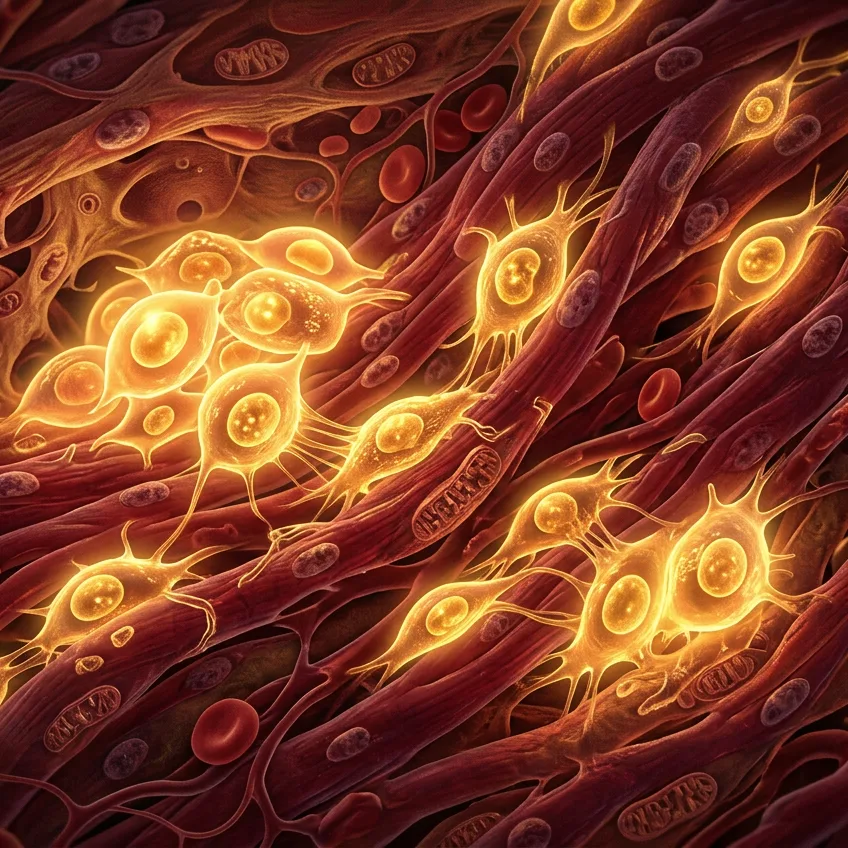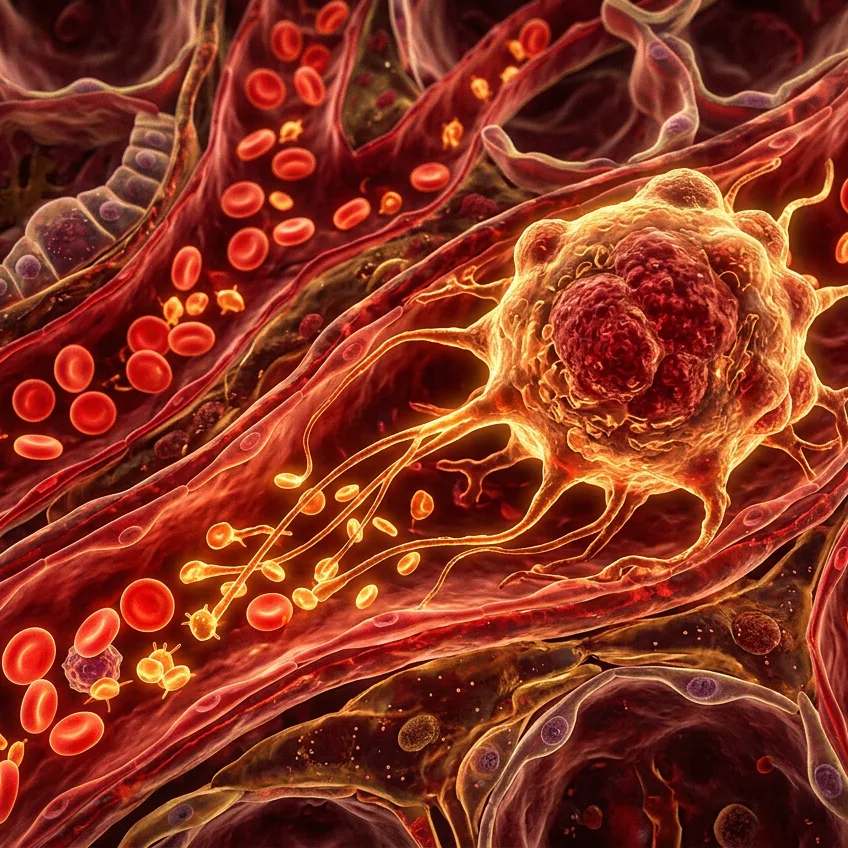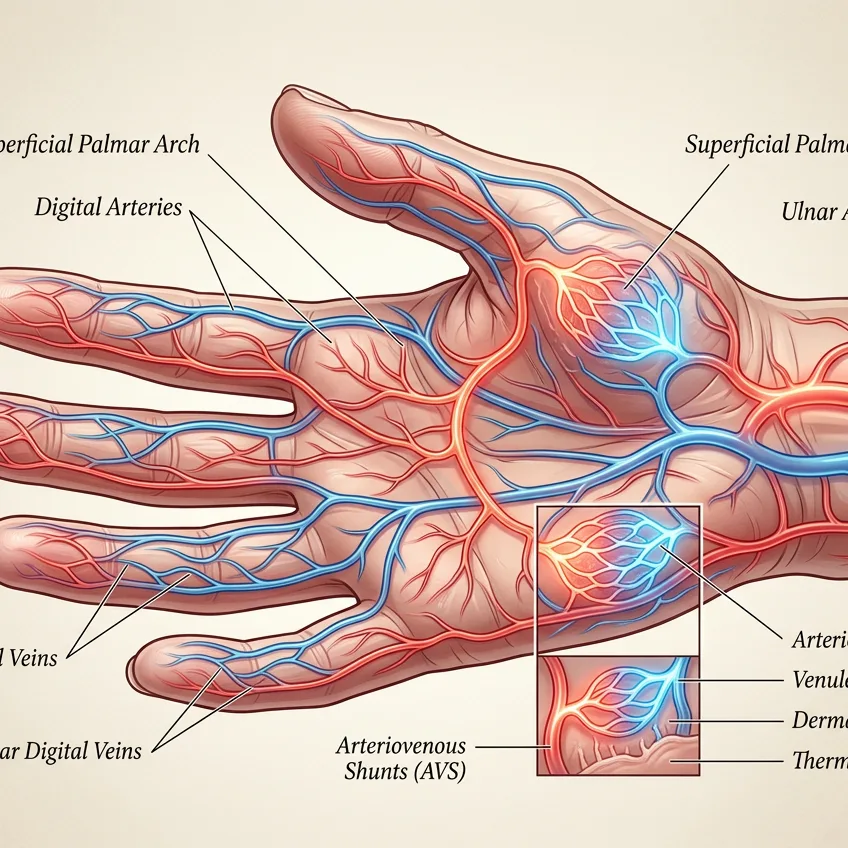
In the glabrous skin of our body—the hairless surface of the palms of the hands, the soles of the feet, and areas of the face—there is an unusual circulatory network: arteriovenous anastomoses (AVAs). While the vast majority of blood vessels filter blood through microscopic capillary beds to nourish tissues, AVAs are genuine shortcuts that directly connect arterioles with large-caliber venules.
These microscopic structures are not designed to feed cells, but to act as precision biological thermal radiators. When the body's core temperature rises due to exercise or the environment, the hypothalamus orders massive dilation of the AVAs. This mechanism diverts a disproportionate rush of blood toward the skin of the palms, increasing flow by up to 60 % of peripheral cutaneous circulation to transfer heat to the outside.
Pioneering research from Stanford University, led by biologist H. Craig Heller, revealed that controlled cooling of the palm of the hand with water at around 15 °C allows core heat to be extracted from the body much faster than applying cold to the chest or forehead. Curiously, if direct ice is used, the AVAs undergo an immediate reflex vasoconstriction that 'shuts off the radiator', trapping the heat inside. Understanding this circuit not only optimizes athletic performance and prevents heat stroke, but also illustrates how our hands are sophisticated organs of vital thermoregulation.
Source: Stanford University - Heller Lab / Journal of Applied Physiology (studies on thermoregulation in glabrous skin and palmar cooling)