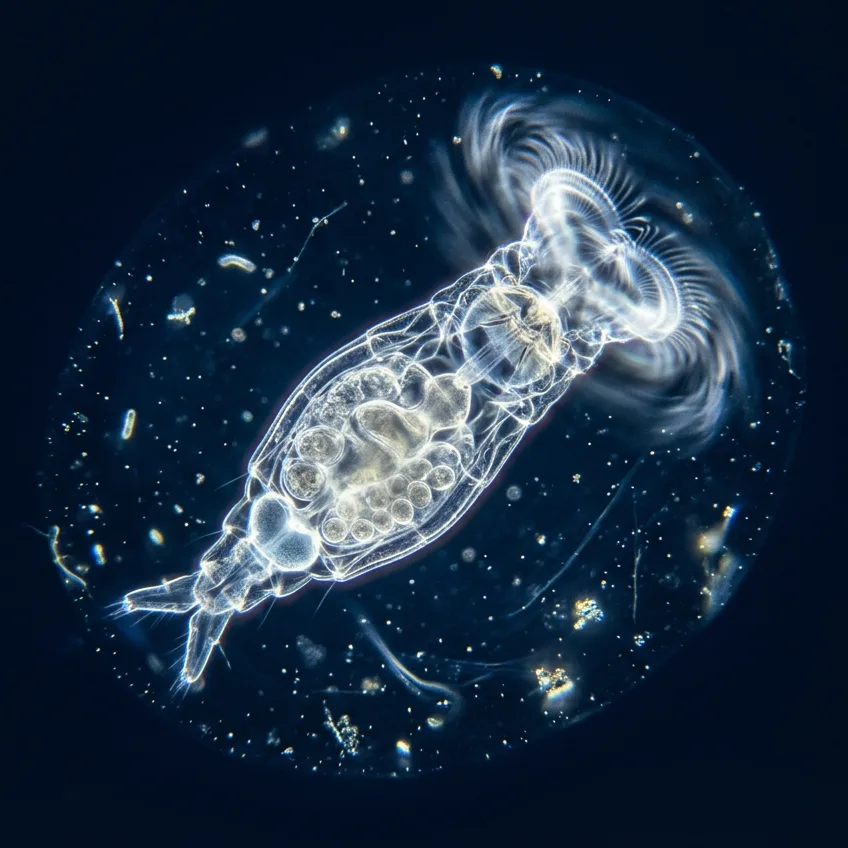
In the animal kingdom, there is a fundamental biological rule: complex multicellular organisms need sexual reproduction to purge harmful mutations and thrive against parasites. However, bdelloid rotifers, microscopic freshwater animals measuring less than a millimeter, have broken this principle for more than 80 million years without a single male existing in their entire taxonomic class.
How have they managed to avoid extinction without recombining their genome through sex? The key lies in an extreme physical endurance called anhydrobiosis. When the mosses or puddles where they live dry up, they lose up to 99% of the water in their bodies, stop their metabolism, and transform into inert capsules capable of withstanding the vacuum of space, cryogenic temperatures, and lethal radiation.
During this desiccation collapse, their cell membranes rupture and their genetic material suffers massive fractures. Upon rehydration, the true biological marvel occurs:
- Extreme DNA repair: They reassemble their own chromosomes in a matter of hours with ultra-intense enzymatic machinery.
- Horizontal gene transfer: While rebuilding their genome, they incorporate free DNA from the environment. Around 10% of their active genes come directly from bacteria, fungi, and plants.
Instead of exchanging genes with peers through sexual reproduction, bdelloid rotifers have resorted to a form of 'genetic piracy,' absorbing chemical defenses and external enzymes to adapt and continue evolving in solitude.
Source: Gladyshev, E. A., Meselson, M., & Arkhipova, I. R. (2008). Massive horizontal gene transfer in bdelloid rotifers. Science, 320(5880), 1210-1213.