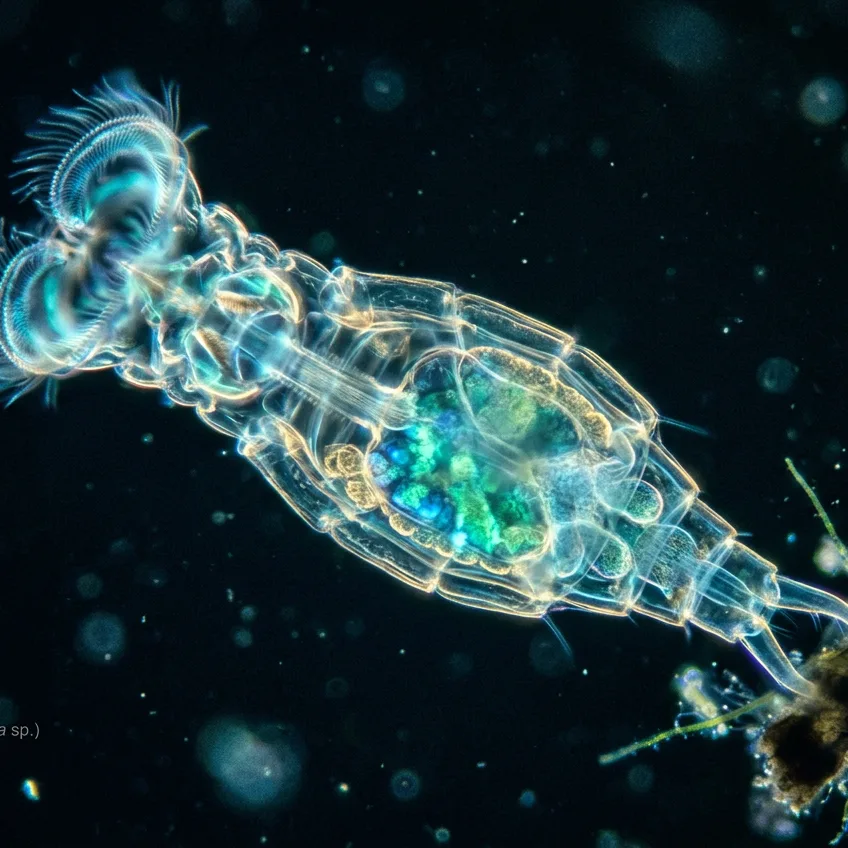
In the animal kingdom, sexual reproduction is the essential biological norm for recombining genetic material and purging harmful mutations. According to classical evolutionary models, any lineage that gives up sex is doomed to rapid extinction due to the degenerative accumulation of genetic errors. However, bdelloid rotifers, a clade of microscopic invertebrates with more than 450 species, broke this axiom more than eighty million years ago: males do not exist, and all populations consist exclusively of fertile females.
For decades, biologists described these organisms as an "evolutionary scandal." The solution to the paradox emerged when analyzing their genome, discovering that about 10 % of their active genes do not come from animal ancestors, but have been directly incorporated from bacteria, fungi, and plants through massive horizontal gene transfer, a phenomenon virtually unheard of in the complex animal kingdom.
The key to this unique biological hacking lies in their capacity for anhydrobiosis. In the absence of water, these organisms expel almost all of their cellular moisture, halt their metabolism, and enter a dormant state capable of enduring the vacuum of space or lethal radiation. When water returns, their cell membranes reconstitute and incorporate loose fragments of environmental DNA present in the mud, patching and enriching their own genome with foreign defenses against diseases and poisons.
Source: Science (Gladyshev et al., 'Massive Horizontal Gene Transfer in Bdelloid Rotifers')