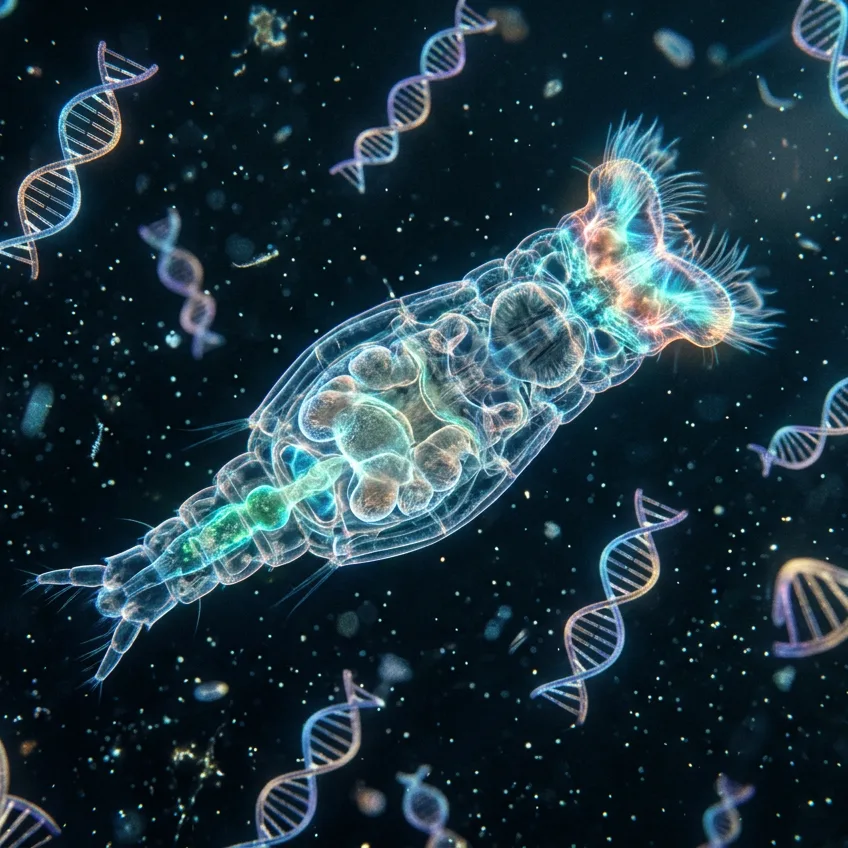
In evolutionary biology, there is a fundamental rule: animals that abandon sexual reproduction usually go extinct quickly due to the accumulation of harmful genetic mutations, a phenomenon known as Muller's ratchet. However, bdelloid rotifers, a class of microscopic freshwater invertebrate animals, have spent about eighty million years defying this biological doom without having produced a single male.
The key to their unusual longevity as a lineage lies in an almost indestructible environmental resilience. When their aquatic environment evaporates, they enter a state of anhydrobiosis: they dehydrate almost completely, halt their metabolism, and endure extreme freezing or massive doses of radiation. During this process, their cell membranes fracture and their own DNA shatters into pieces.
Scientific amazement erupted upon discovering how they repair themselves when rehydrating. Instead of merely patching up their damaged genome, they take advantage of the temporary permeability of their cells to absorb DNA fragments present in the environment through horizontal gene transfer. Genomic studies have shown that up to 10% of their active genes do not come from animal ancestors, but have instead been "stolen" from bacteria, fungi, and microscopic plants.
This extraordinary biological copy-and-paste mechanism allows them to:
- Generate continuous genetic diversity without the need for sexual mating.
- Synthesize enzymes and toxins acquired from bacteria to defend against parasites.
- Purge lethal genetic errors by replacing defective sections with foreign code.
Bdelloid rotifers are authentic evolutionary chimeras that have transformed cellular reconstruction into the most audacious genetic tool in the animal kingdom.
Source: Nature / Science (Research led by Eugene Gladyshev, Matthew Meselson, and Irina Arkhipova on horizontal gene transfer in Bdelloidea)