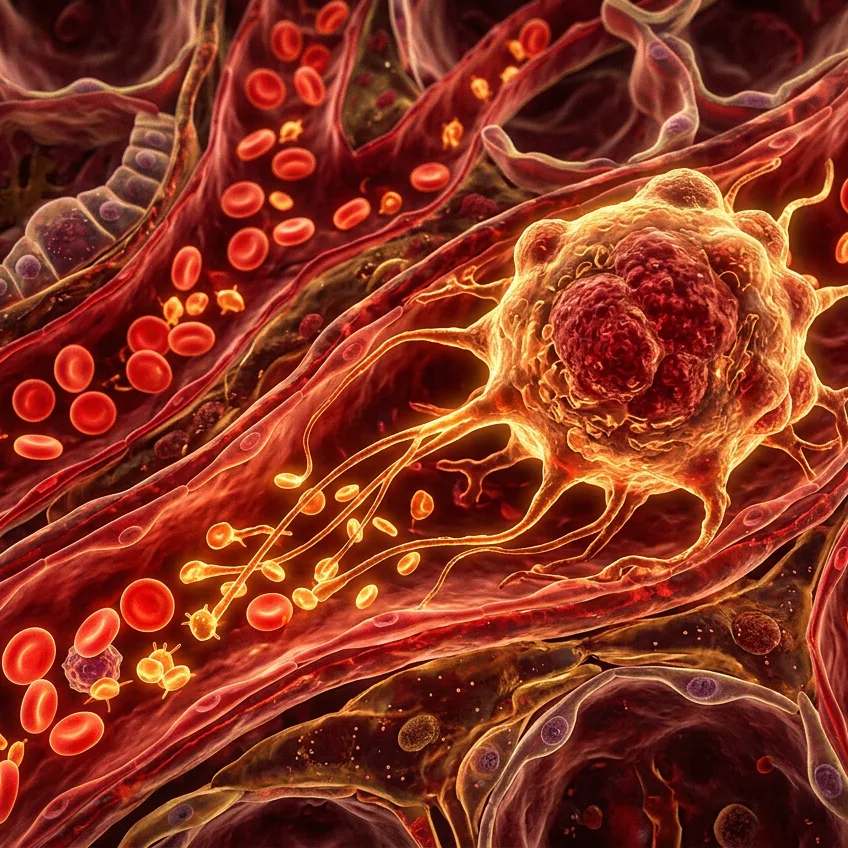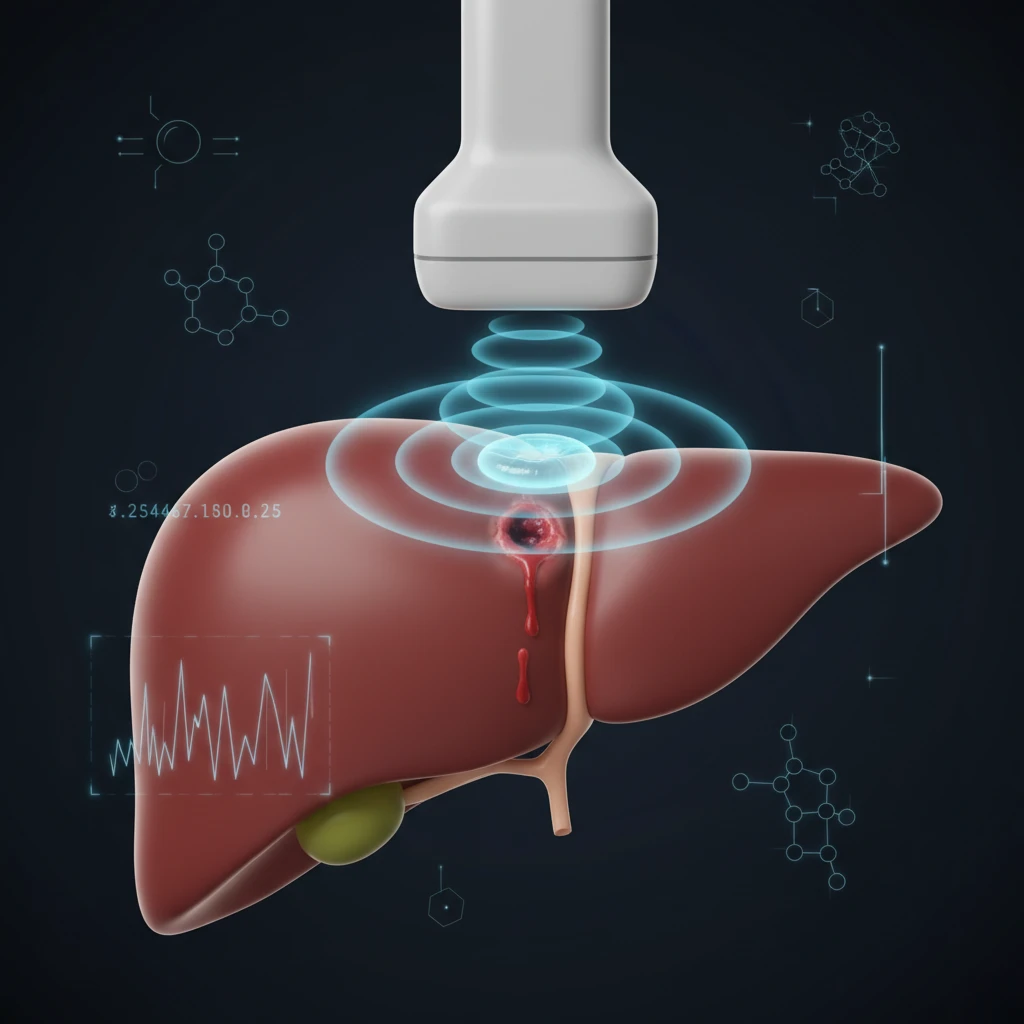
An innovative medical technique, still in the experimental phase, uses low-frequency ultrasound to clot blood almost instantly. Researchers at the Massachusetts Institute of Technology (MIT) have shown that specific acoustic pulses, in the 40 kHz range, can activate platelets and trigger the coagulation cascade without the need for external chemical agents.
The mechanism was inspired by observing fish like the swordfish, which suffers deep wounds while hunting but manages to stop bleeding quickly in water, an environment that dilutes clotting factors. Scientists discovered that shock waves generated by its sudden movements stimulate platelets.
- Precision: The system can focus on specific blood vessels with a precision of 1 millimeter.
- Speed: Clotting begins in less than 100 milliseconds after the pulse is applied.
- Application: It could be vital for military field treatments or accidents involving internal bleeding where immediate surgery is impossible.
In tests on animal models, the technique reduced bleeding by 85% in severe liver injuries. The next step is to develop portable devices, similar to an ultrasound scanner, that allow paramedics to administer this treatment at the accident scene, combining diagnosis and therapy in a single tool.
Source: Massachusetts Institute of Technology (MIT) - Department of Mechanical Engineering, study published in the journal 'Nature Communications'.