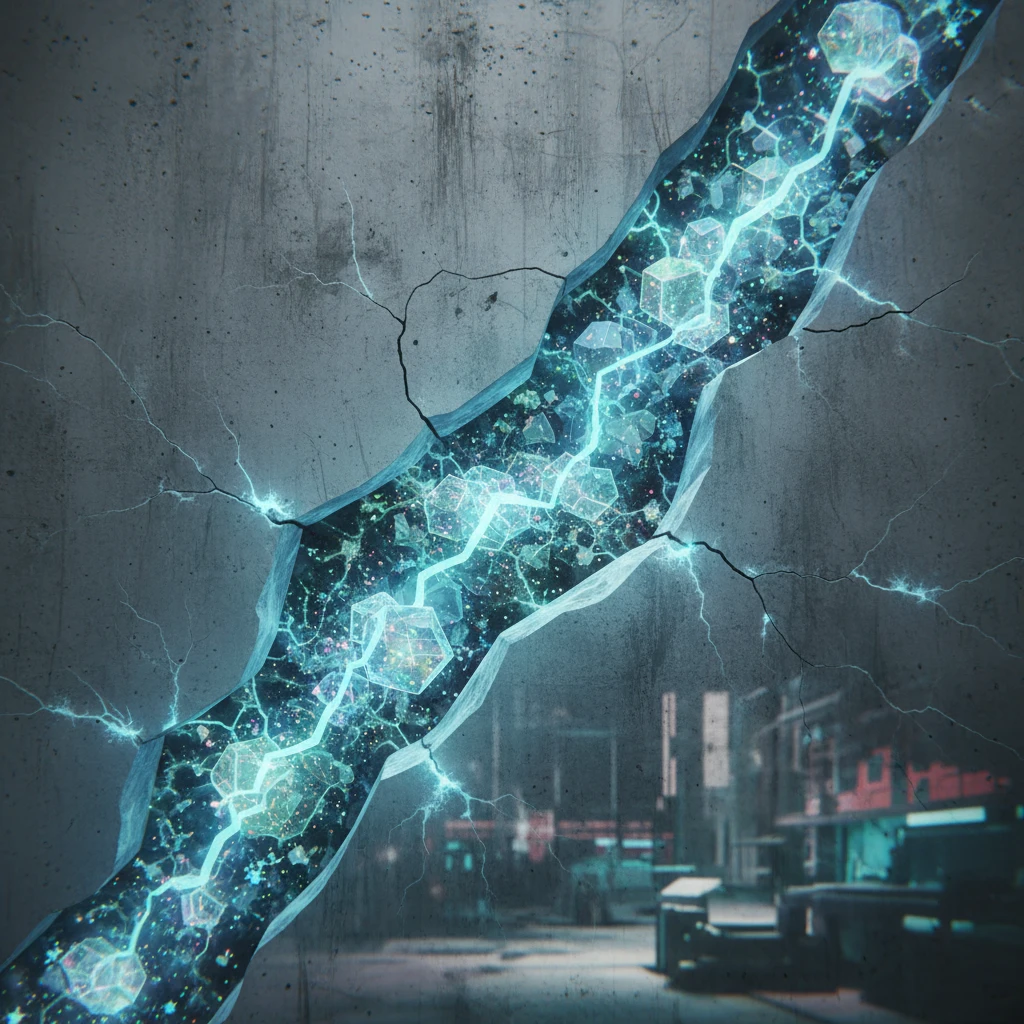
Concrete, a fundamental pillar of modern infrastructure, has an Achilles' heel: cracks. These not only compromise structural integrity over time, but they also require costly and frequent repairs. However, science has found a surprisingly organic solution: bacteria!
Scientists, primarily from the Delft University of Technology in the Netherlands, have developed a "bioconcrete" or self-healing concrete. The key lies in incorporating bacterial spores (such as Bacillus pseudofirmus or Sporosarcina pasteurii) into the concrete, encapsulated in porous clay or polymers to protect them during the mixing process.
When a crack appears in the structure and water seeps inside, this moisture activates the dormant spores. The "awakened" bacteria begin feeding on a nutrient, such as calcium lactate, which is also added to the concrete. As a result of their metabolism, these clever microorganisms produce calcium carbonate, essentially limestone.
This limestone precipitates and fills the cracks, sealing them completely. This process not only halts the progression of the damage, but also protects the internal reinforcing steel from corrosion. The self-healing capacity of concrete promises a significant extension of the lifespan of buildings, bridges, and tunnels, potentially for centuries, drastically reducing maintenance costs and the environmental impact associated with cement production and constant repairs.
Source: Delft University of Technology, Cement and Concrete Research Journal