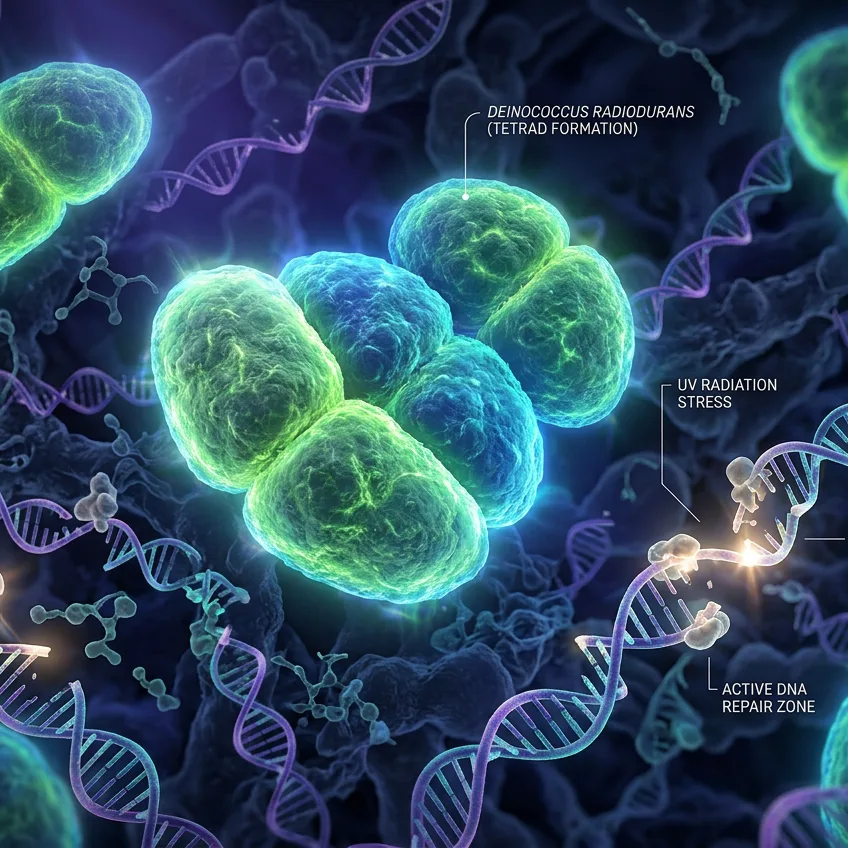
While a dose of just 5 to 10 gray of ionizing radiation is fatal to a human being, the bacterium Deinococcus radiodurans can thrive after receiving more than 15,000 gray without flinching. Discovered by chance in 1956 inside a can of minced meat that had spoiled despite being sterilized with gamma rays, this microscopic creature defied all known laws of molecular biology.
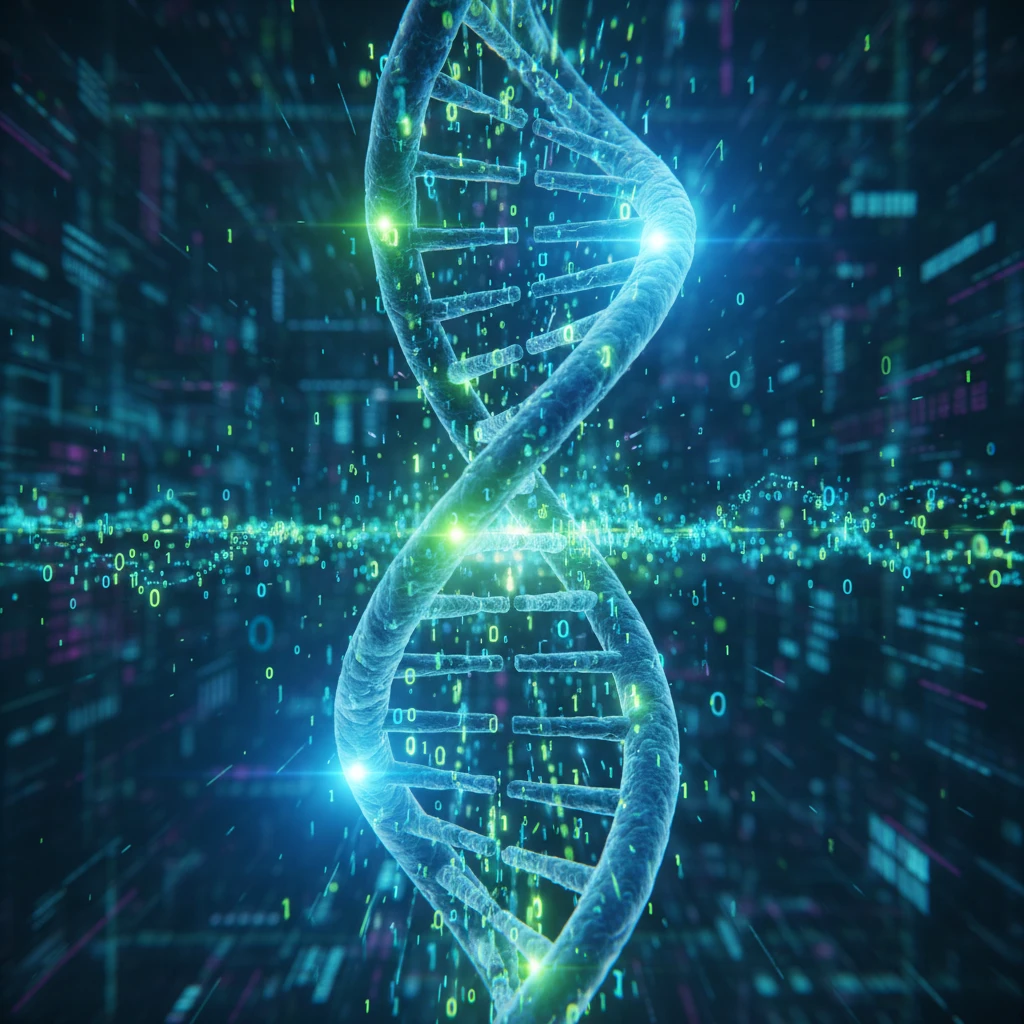
The secret of its apparent immortality does not lie in preventing radiation from penetrating its interior, but in how it manages the resulting disaster. Extreme exposure shatters its genome into hundreds of disparate pieces. In most living cells, around twenty double-strand DNA breaks seal their definitive death; however, D. radiodurans manages to stitch together its entire genetic material in less than twelve hours through a refined process of extended homologous recombination.
To achieve this feat, the bacterium deploys two extraordinary biological strategies:
- Manganese protein shielding: It accumulates antioxidant complexes of manganese ions that immediately neutralize free radicals, protecting repair enzymes while the DNA suffers damage.
- Toroidal chromosomal organization: It maintains between four and ten identical copies of its genome packed into dense rings, which prevents broken fragments from scattering and facilitates an accurate reconstruction just like a puzzle.
Also capable of withstanding the vacuum of space, prolonged desiccation, and acid baths, this bacterium has inspired new research into nuclear waste treatment and regenerative medicine.
Source: Nature Reviews Microbiology / Journal of Biological Chemistry