Every day, the parietal cells of the human stomach pump about two liters of concentrated hydrochloric acid. With a pH of between 1.5 and 2.0, this chemical cocktail is corrosive enough to dissolve soft metals, burn skin on contact, and denature food proteins. However, the stomach itself survives unharmed thanks to a feat of cellular bioengineering: the gastric mucosal barrier.
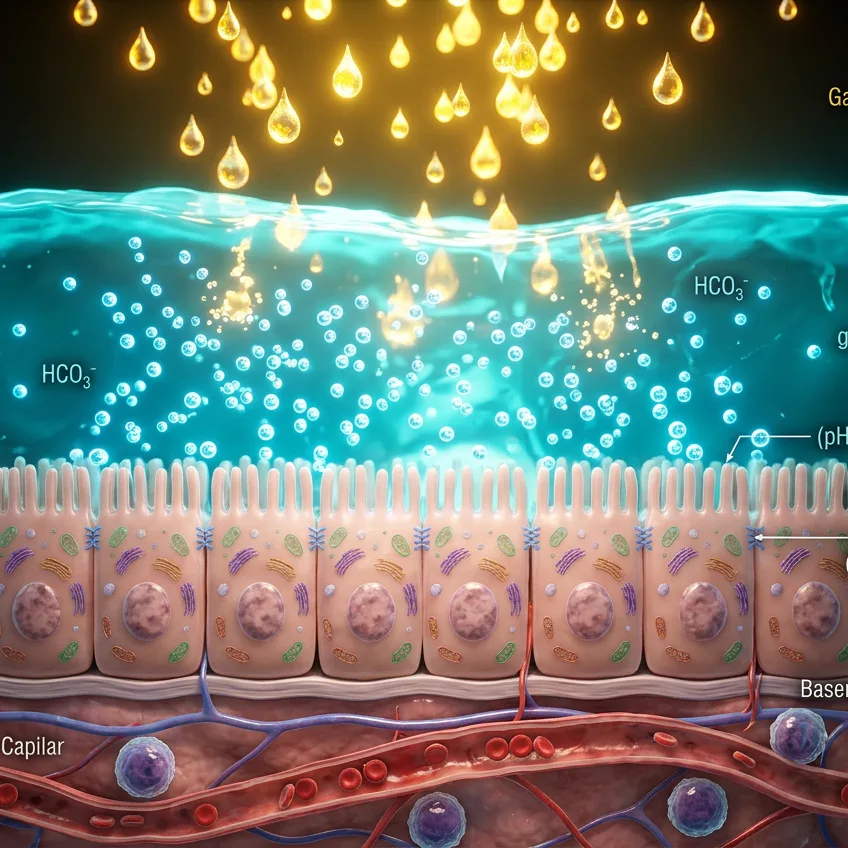
This biological armor consists of a viscous film barely 0.2 millimeters thick composed of highly hydrated mucins. Its true genius lies in its miraculous chemical gradient:
- Extreme pH gradient: While fluid burns at a destructive pH 2 in the gastric cavity, epithelial cells continuously pump bicarbonate ions into the base of the gel, maintaining the tissue surface at a neutral and gentle pH 7.
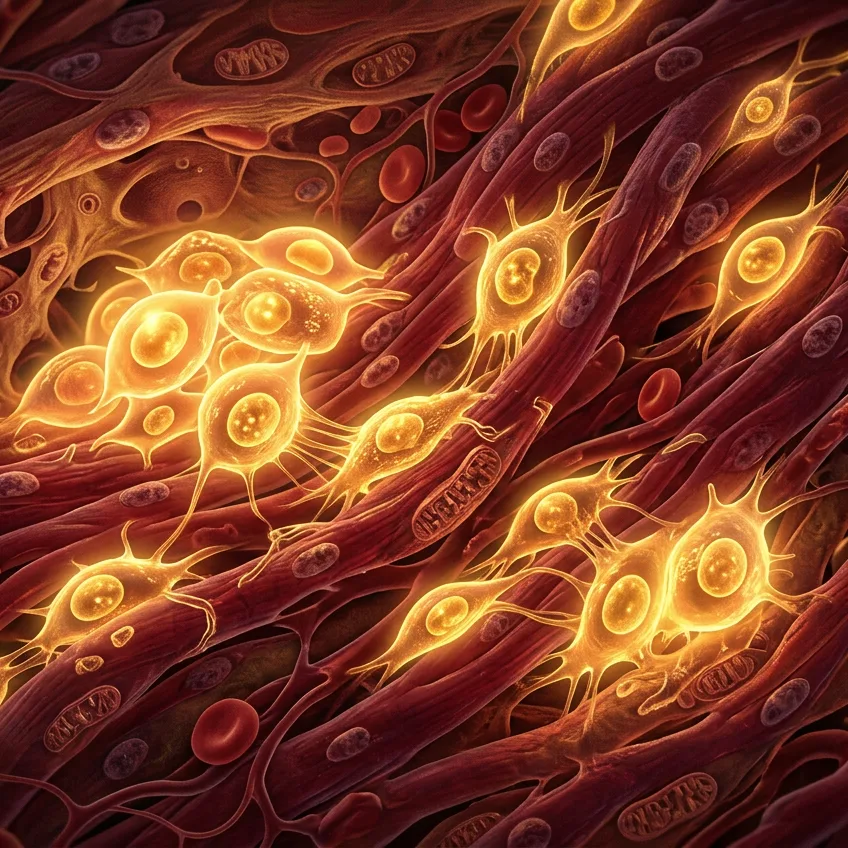
- Express cell renewal: Subjected to brutal wear and tear, the gastric epithelium boasts one of the fastest renewal rates in the body; it replaces all its surface cells every three to five days.
- Rescue microcirculation: A dense capillary network instantly clears away any acid proton that manages to leak through and delivers nutrients for instant healing.
When this shield falters—for example, due to the overuse of anti-inflammatory drugs like ibuprofen, which shut down protective prostaglandins, or from Helicobacter pylori infection—the acid breaches the barrier and begins self-digestion of the tissue, creating a painful ulcer. A reminder that we host a voracious chemical reactor tamed by an ultra-thin sheet of alkaline mucus.
Source: American Journal of Physiology - Gastrointestinal and Liver Physiology