When you bump your shin against a table, the universal first instinct is not to scream, but to rub the affected area vigorously with your hand. Far from being a mere behavioral placebo, this instinctive gesture triggers a prodigious neurobiological circuit described by the Gate Control Theory of Pain.
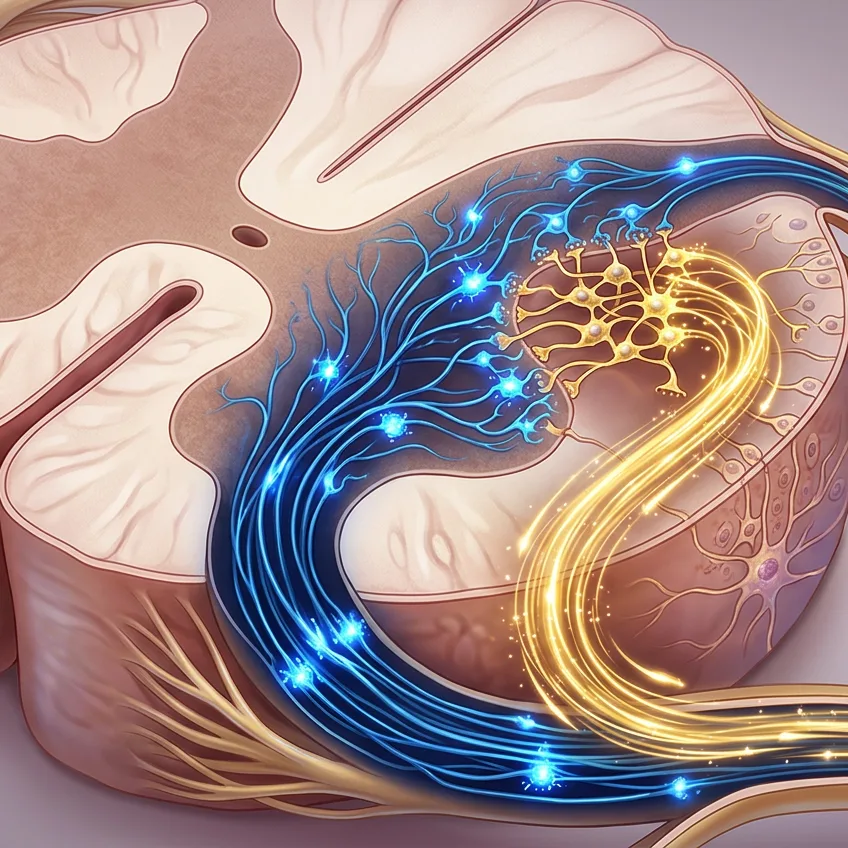
Proposed in 1965 by Ronald Melzack and Patrick Wall in the journal Science, this theory showed that the spinal cord does not act as a passive telephone line, but as a sophisticated control center with molecular 'gatekeepers.' In our body, pain and touch travel along very different neural highways:
- C and A-delta fibers: They are thin and poorly myelinated. They transmit sharp and dull pain signals at slow speeds, between 0.5 and 2 meters per second.
- A-beta fibers: They are thick axons covered by a dense myelin sheath that conduct touch, pressure, and rubbing at over 60 meters per second.
By vigorously rubbing the bruised skin, mechanical signals from the A-beta fibers win the race to the substantia gelatinosa of the dorsal horn of the spinal cord. There, they stimulate inhibitory interneurons that release neurotransmitters such as GABA, which physically close the 'synaptic gate' to slow pain signals before they can be transmitted through the spinothalamic tract to the thalamus and conscious cortex.
This ingenious evolutionary short circuit allows the body to prioritize tactile response over acute pain. Today, this mechanism is the cornerstone of the design of electrical stimulation devices (TENS) and advanced therapies for treating chronic pain.
Source: Science (Melzack & Wall, 1965: 'Pain Mechanisms: A New Theory')