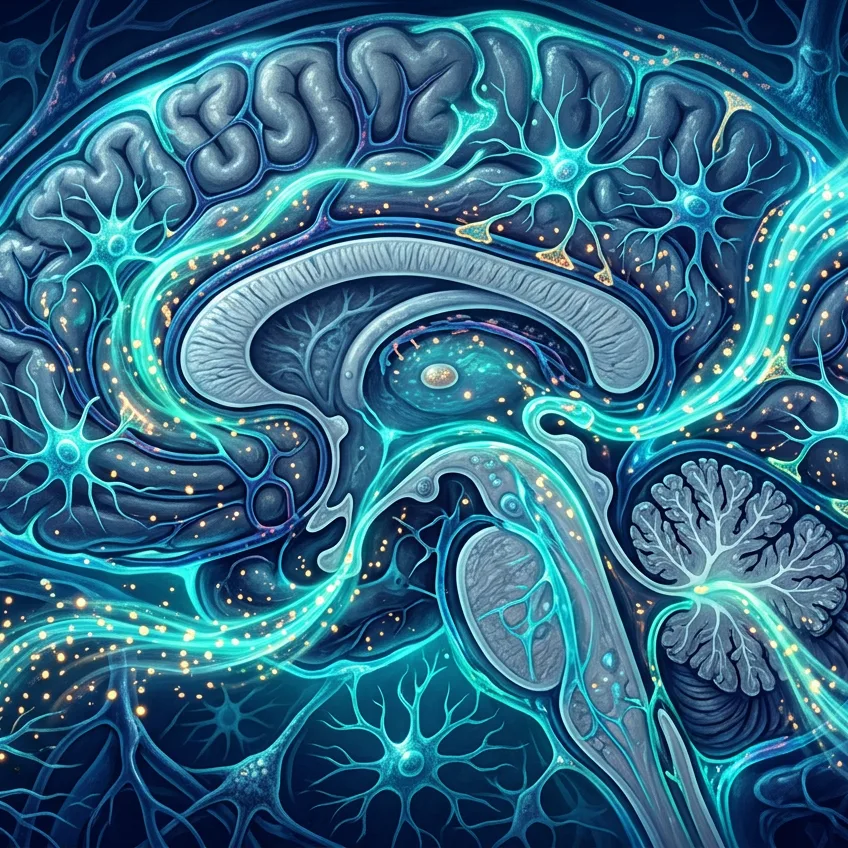
For decades, neuroscience faced a baffling puzzle: while the rest of the body relies on the lymphatic system to evacuate metabolic waste, the brain—the body's most active organ—seemingly lacked drainage vessels within its tissue. The answer arrived in 2012 thanks to neuroscientist Maiken Nedergaard and her team: the glymphatic system.
This mechanism works like a sophisticated pressure-washing circuit that operates almost exclusively while we sleep. Upon reaching deep slow-wave sleep, glial cells called astrocytes modulate their volume and neurons shrink by up to 60%. This massive contraction widens the interstitial space between cells, allowing cerebrospinal fluid to circulate rapidly through specialized aquaporin-4 (AQP4) water channels.
Throughout this nightly rinse, the brain actively flushes out proteins and molecular waste accumulated during waking hours:
- Beta-amyloid: Peptides that, if accumulated into plaques, constitute one of the hallmarks of Alzheimer's disease.
- Phosphorylated tau protein: Directly implicated in various neurodegenerative dementias.
- Metabolic waste: Excess lactate and byproducts of daily intense cellular oxidation.
Chronically depriving the body of deep sleep blocks this physiological drainage, leading to a toxic buildup that promotes cognitive decline. Sleeping well is not a passive disconnection, but an intense molecular hygiene session essential for brain health.
Source: Nedergaard, M., et al. (Science, 2012 / University of Rochester Medical Center)