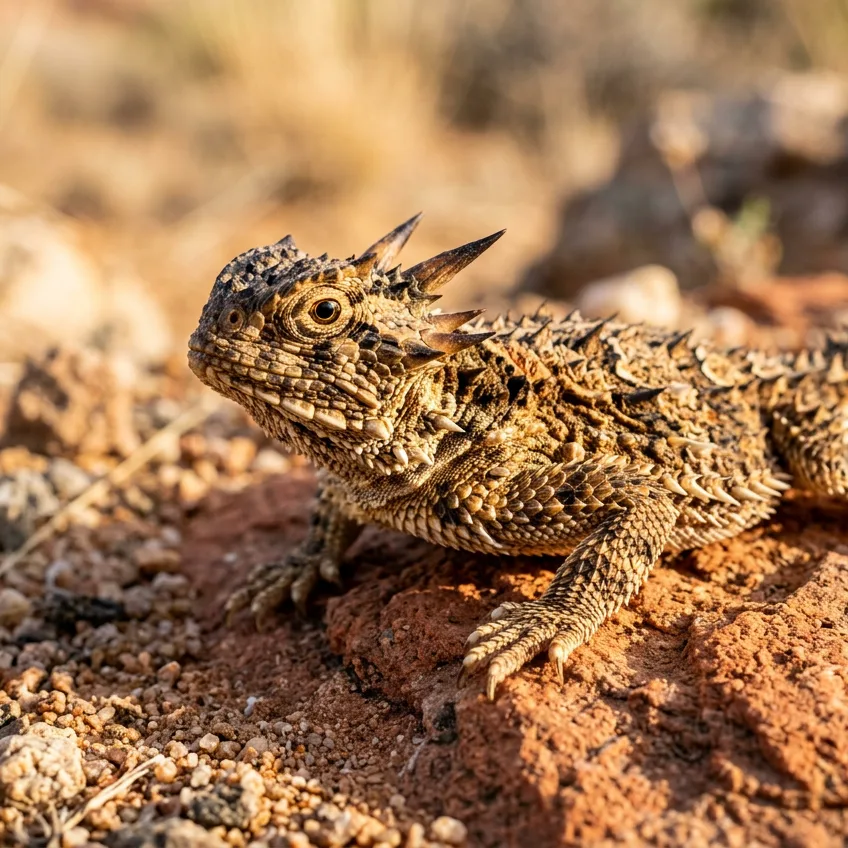
In the deserts of North America lives a master of extreme anatomical defenses: the horned lizard (genus Phrynosoma). When its cryptic camouflage and armored spiny scales are not enough to evade canids such as coyotes or foxes, this reptile resorts to an unprecedented physiological mechanism called ocular autohemorrhage.
The process is an unusual coordinated hemodynamic maneuver:
- Vascular blockage: The lizard activates muscular sphincters located in the internal jugular veins, interrupting the venous drainage that returns blood from the head to the heart.
- Pressure spike: While the veins remain sealed, arterial pumping continues unhindered, causing a dizzying increase in blood pressure within the ocular sinuses located behind the eyes.
- Rupture and ejection: When the limit of tissue elasticity is exceeded, the delicate conjunctival membranes tear in a controlled manner and shoot a fine stream of blood that reaches up to 1.5 meters away.
This blood projectile not only baffles the attacker through physical surprise: it has a caustic and extremely foul taste derived from its diet rich in harvester ants loaded with toxins and formic acid. Several studies have shown that the reptile does not waste this ammunition on birds of prey, but selectively reserves it against carnivorous mammals, inducing immediate retching and profuse salivation in them.
As soon as the fluid is expelled, the sphincters relax, cranial pressure normalizes, and the fissures in the ocular sinuses heal in a matter of minutes without causing lasting damage to its vision.
Source: Journal of Experimental Biology (Sherbrooke & Middendorf)