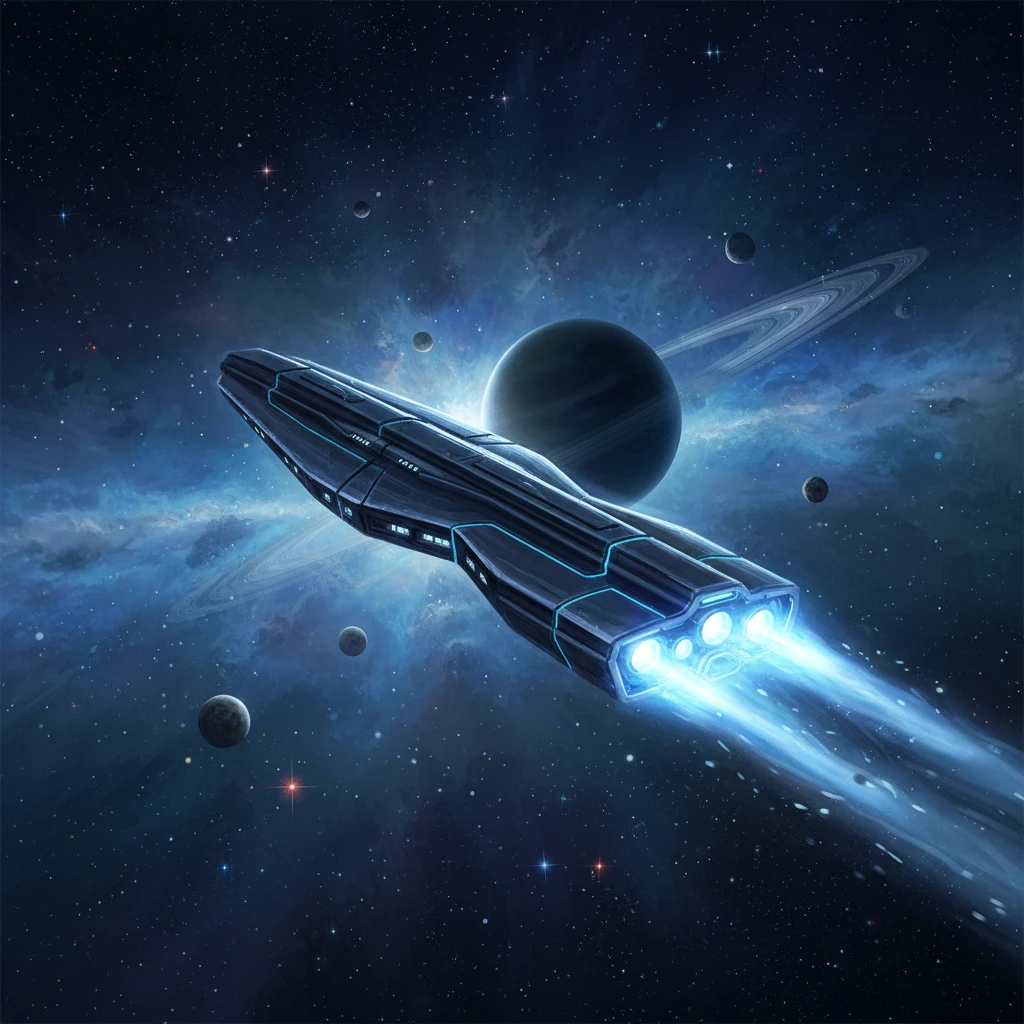
While chemical propulsion rockets have been the backbone of space exploration for decades, their primary limitation is the massive amount of fuel required to generate significant thrust. However, in the vast and silent vacuum of space, an entirely different propulsion technology is redefining the boundaries of our interplanetary journeys: ion engines.
These fascinating thrusters do not rely on combustion, but on electricity. They work by ionizing an inert gas, such as xenon, and then accelerating those electrically charged ions at incredibly high speeds through an electrostatic field. The result is a stream of particles that, while generating extremely low thrust (similar to the weight of a sheet of paper on Earth), does so continuously and with unprecedented fuel efficiency.
This constant propulsion, which can last for months or even years, allows spacecraft to reach much higher final speeds than with conventional rockets. Missions such as NASA's Deep Space 1 or the Dawn probe, which explored the asteroids Vesta and Ceres, have demonstrated the viability and success of this technology. The ESA and JAXA BepiColombo mission, heading to Mercury, also uses ion propulsion for precise navigation.
Ion engines do not aim for instant acceleration, but rather a gradual buildup of speed. This makes them ideal candidates for long-duration missions to distant planets, asteroids, or even for the vision of interstellar probes. Their promise is one of more affordable, long-term faster space travel capable of carrying larger payloads, opening a new chapter in our quest to understand the cosmos.
Source: NASA, ESA, JAXA (Space Agencies)