In the damp undergrowth of Europe and North America, one of the most chilling biological manipulation strategies in the animal kingdom unfolds. The protagonist is Leucochloridium paradoxum, a parasitic flatworm whose life goal is to reach the gut of songbirds to reproduce, using the land snail of the genus Succinea as an intermediate transport vehicle.
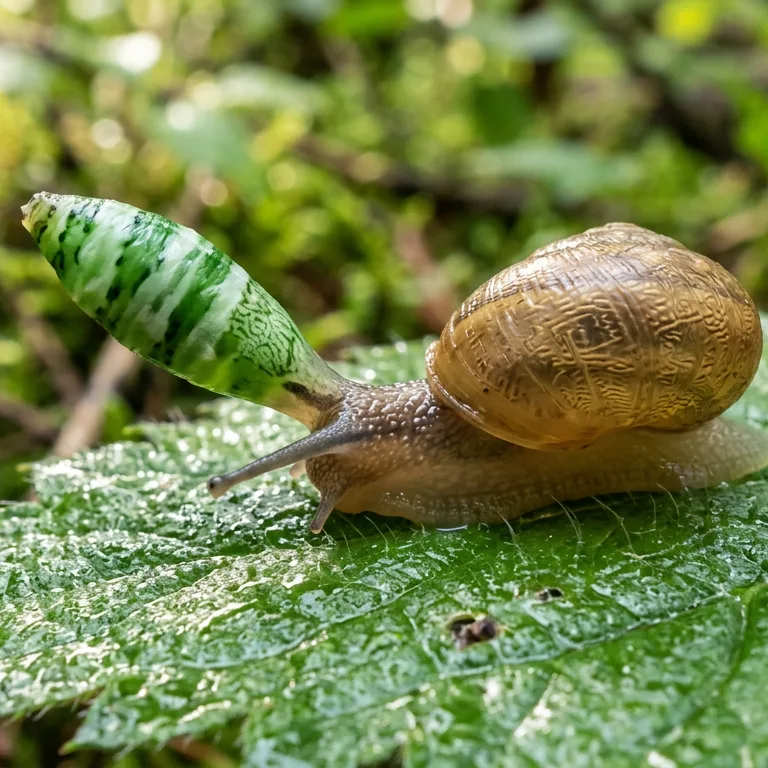
When a snail ingests bird droppings contaminated with the parasite's eggs, they hatch and form branched sporocysts that invade its tissues. Upon maturing, the flatworm develops swollen, colorful tubes, known as broodsacs, which it pushes into the mollusk's eye tentacles. Decorated with green, white, and black bands, these sacs begin to pulse at a rate of 60 to 80 contractions per minute under daylight, perfectly mimicking the undulating motion of a caterpillar or insect larva.
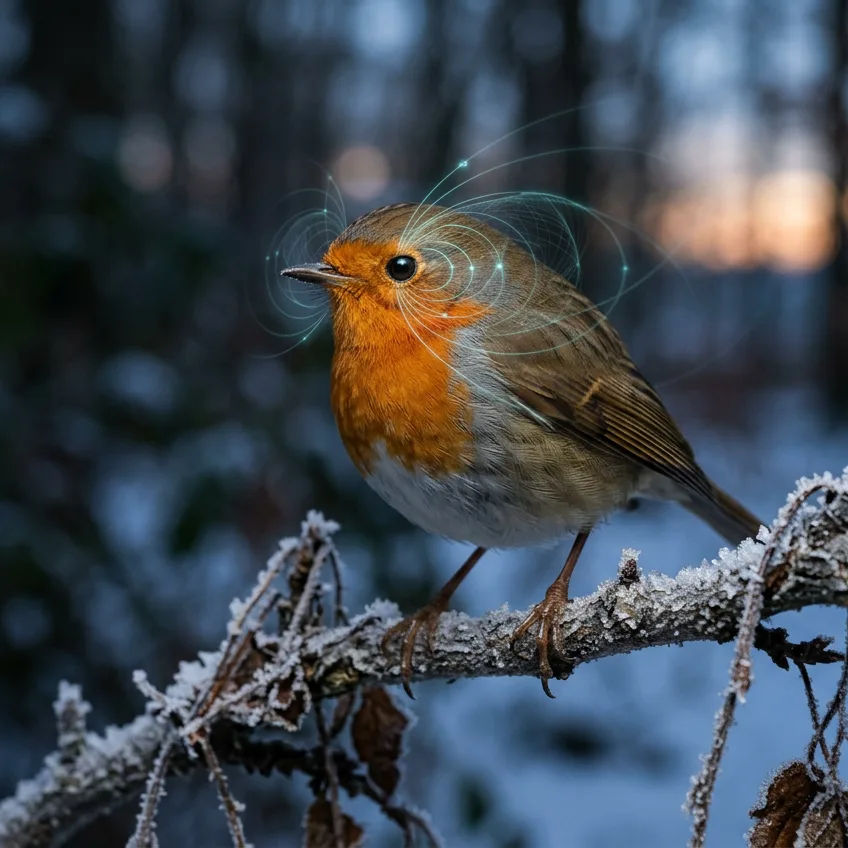
The stratagem is not limited to visual anatomy. The parasite alters the snail's nervous system to change its behavior: it overrides its natural photophobia and forces it to climb to the tops of sun-exposed leaves. Fully exposed, insectivorous birds mistake the pulsating eyes for succulent caterpillars and pluck them off with their beaks. Remarkably, the snail often survives the attack, regenerates its tentacle, and at times is occupied again by a new, dormant parasitic sac.
Source: Journal of Zoology / Parasitology Research