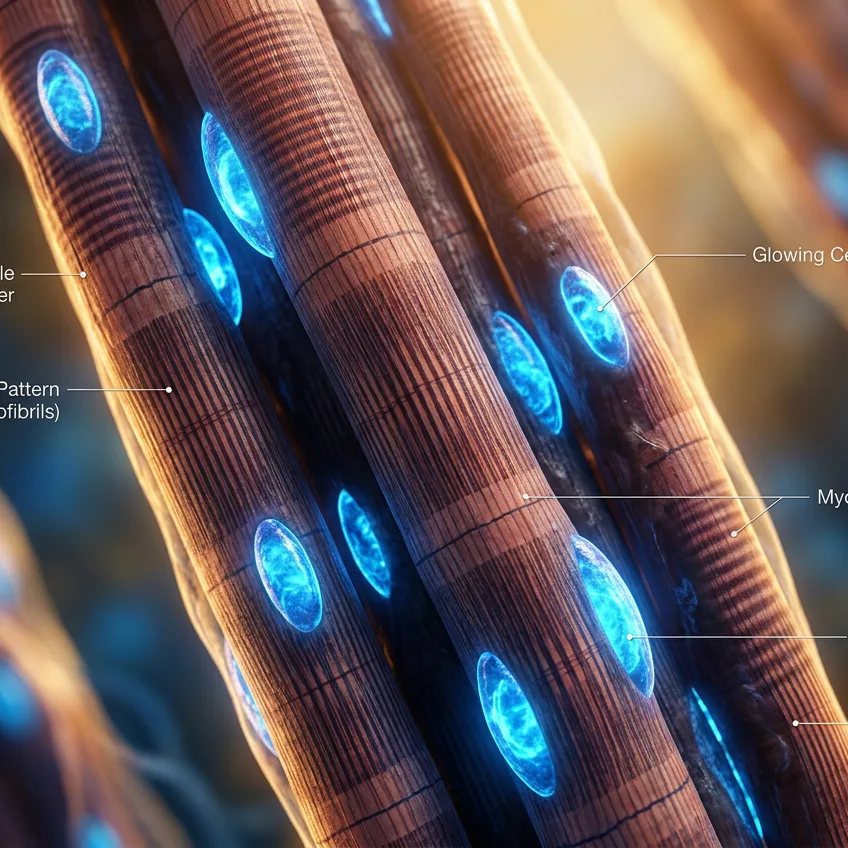
For decades, the popular concept of "muscle memory" was attributed almost exclusively to adaptations of the central nervous system. However, pioneering research in cellular physiology led by the University of Oslo has revealed an astonishing structural mechanism inside the tissue itself: permanent myonuclei.
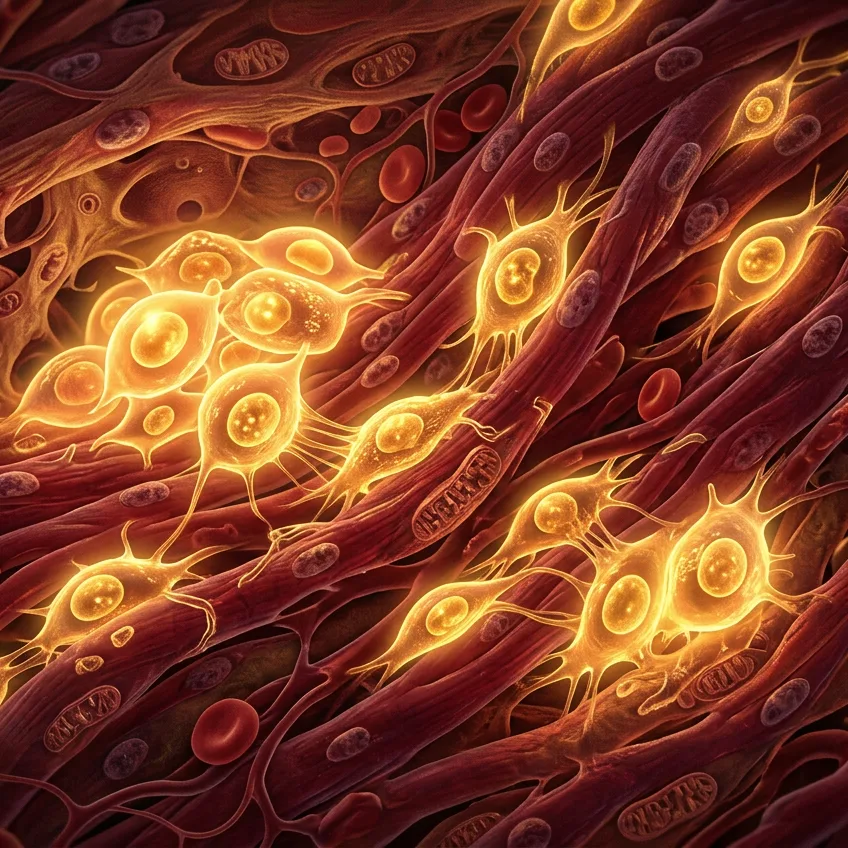
Unlike most cells in the human body, muscle fibers are gigantic and multinucleated. Each cell nucleus has a limit to the cytoplasmic volume it can manage, known as the myonuclear domain. When we undergo intense strength training, the body activates muscle stem cells (satellite cells) that fuse with existing fibers and donate new nuclei to enable protein synthesis and hypertrophy.
What is truly surprising happens when we stop training and disuse sets in:
- The muscle atrophies in volume and loses water and contractile proteins.
- The myonuclei do not die: contrary to what was previously believed, they do not undergo massive apoptosis; they remain dormant for years or even decades.
When a person who used to be in shape returns to lifting weights, these preexisting nuclei act as command centers ready to immediately restart protein production, bypassing the slower stage of cellular recruitment. This anatomical reserve explains why rebuilding previous muscle mass takes only a fraction of the original time, and it has revolutionized both therapies against sarcopenia in the elderly and the debate surrounding doping sanctions.
Source: Proceedings of the National Academy of Sciences (PNAS) / Kristian Gundersen (University of Oslo)