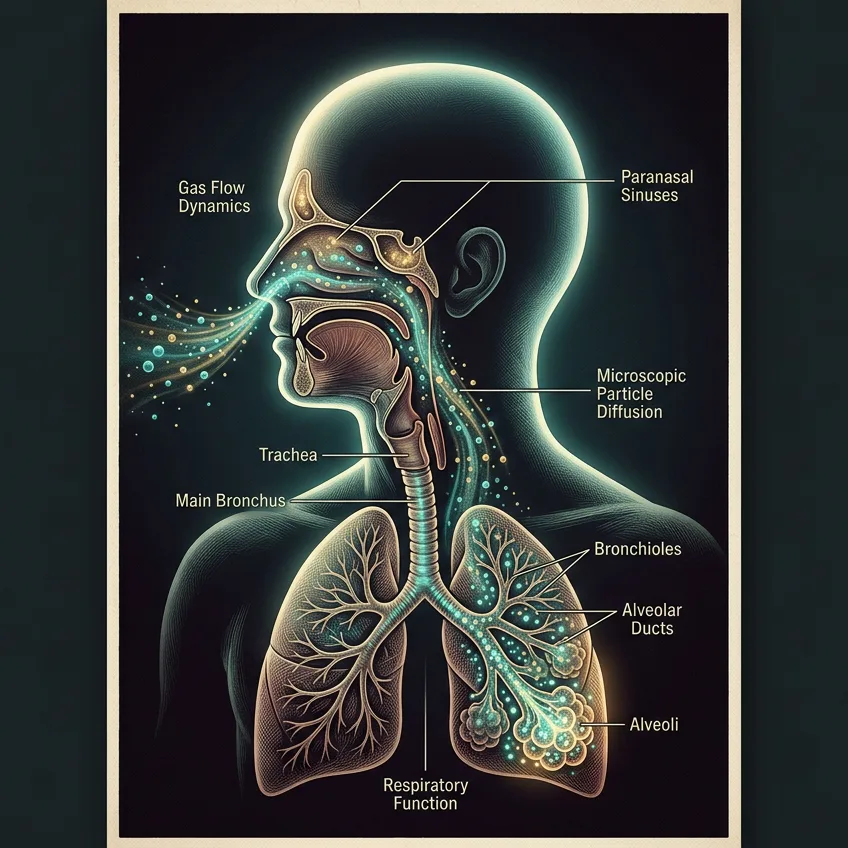
Although we usually perceive breathing as a purely mechanical process, the human nose operates as a sophisticated biochemical plant. In the paranasal sinuses, a set of hollow cavities around the face, the body continuously synthesizes nitric oxide (NO), a bioactive gas with decisive therapeutic properties that is completely wasted when breathing through the mouth.
Nitric oxide, whose physiological discovery earned the 1998 Nobel Prize in Physiology or Medicine, performs critical functions for well-being:
- Oxygen optimization: When inhaling nasally, the gas is carried down into the lungs, where it acts as a potent local vasodilator. This relaxes pulmonary arterial walls and redistributes blood flow to the best-ventilated areas, increasing blood oxygen absorption by 10% to 18%.
- Antimicrobial defense: In the upper respiratory tract, NO functions as an innate sterilizing shield, capable of disrupting the cell membrane of pathogenic bacteria and curbing the replication of multiple respiratory viruses before they colonize the bronchi.
- Cardiovascular health: Upon entering the general circulation, it helps regulate blood pressure and maintain vascular endothelial flexibility.
Surprisingly, studies by Sweden's Karolinska Institutet found that producing a continuous vocal hum (the guttural sound of humming) generates acoustic vibrations that increase the release of this gas in the nasal sinuses by up to 15 times compared to quiet breathing. This finding shows that conscious nasal breathing is an active biological tool for immune and cardiovascular protection.
Source: Weitzberg, E., & Lundberg, J. O. (Karolinska Institutet), 'Humming greatly increases nasal nitric oxide', American Journal of Respiratory and Critical Care Medicine.