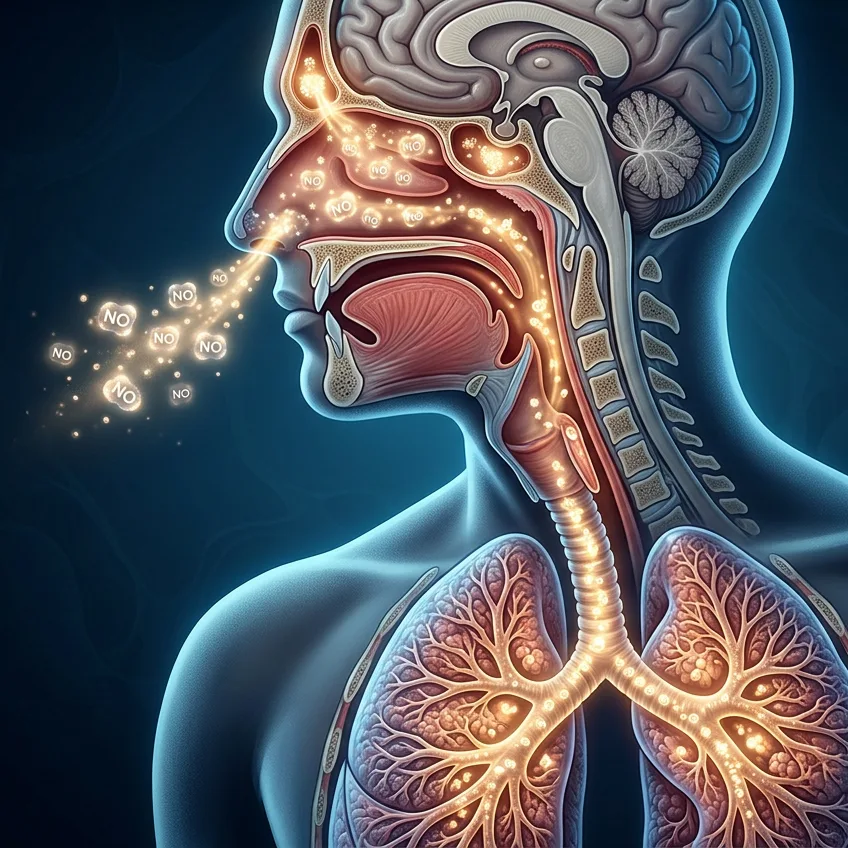
Although breathing seems like a mechanical act regardless of the path we use, physiology shows that doing so through the mouth or through the nose produces radically different effects in the body. The hidden key lies in the paranasal sinuses, a group of hollow cavities around the nose that continuously produce massive concentrations of nitric oxide (NO), a signaling molecule essential for cardiovascular and pulmonary health.
In the early 1990s, researchers discovered that human paranasal sinuses act as an authentic chemical reservoir. When inhaling through the nose, the airflow carries this gas toward the lungs, where it performs remarkable functions:
- Selective vasodilation: Nitric oxide relaxes the smooth muscle of pulmonary blood vessels and bronchioles, improving alveolar circulation and increasing oxygen uptake in the blood by 10% to 18% compared to mouth breathing.
- Natural antimicrobial shield: At high local concentrations, nitric oxide is cytotoxic to bacteria, fungi, and various respiratory viruses, neutralizing pathogens in the upper airways before they reach deeper tissues.
- Blood pressure regulation: Part of this compound enters the bloodstream, where it helps reduce systemic vascular resistance and stabilize heart rate.
A fascinating fact is that making a guttural hum (the classic humming sound) increases the release of nitric oxide from the paranasal sinuses into the nasal cavity by up to fifteen times, thanks to acoustic resonance that ventilates these sealed chambers. A biological reminder that the nose is not merely an air filter, but an indispensable chemical reactor for our well-being.
Source: American Journal of Respiratory and Critical Care Medicine (Lundberg et al., 'Nitric oxide and the paranasal sinuses')