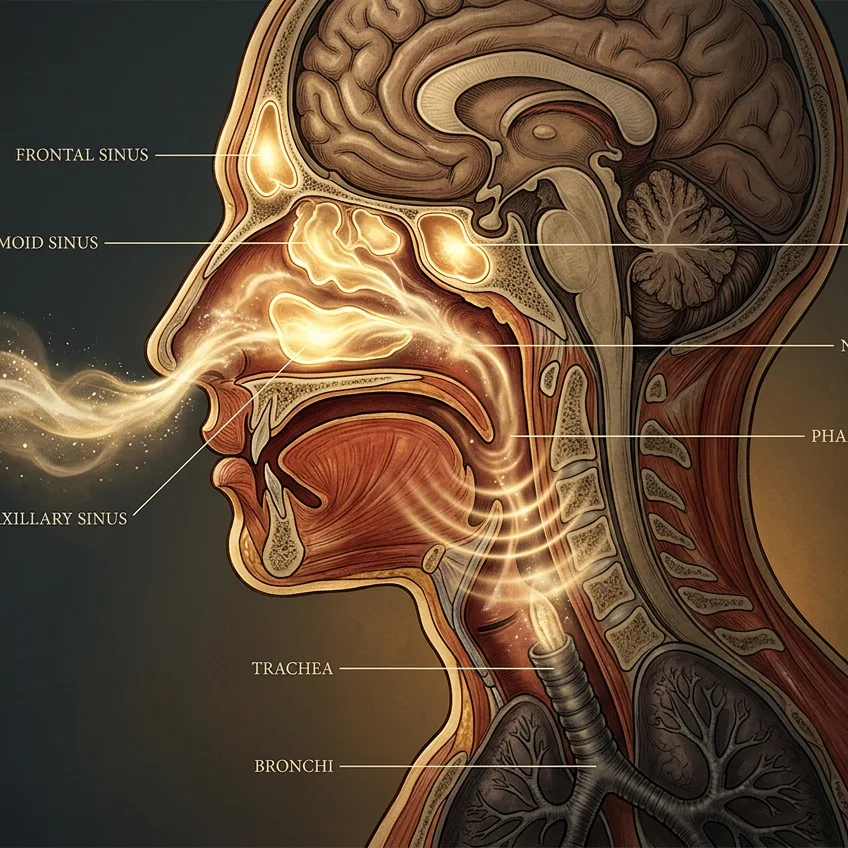
Hidden inside facial bones are the paranasal sinuses, hollow cavities that baffled anatomy for centuries. Today we know they act as true biochemical factories: their mucosa synthesizes massive concentrations of nitric oxide (NO), a key signaling molecule awarded the Nobel Prize in Medicine in 1998 for its vasodilating role.
Under normal conditions of quiet breathing, air exchange between these compartments and the nose is minimal, so the gas remains stagnant. However, in 2002, researchers at Sweden's Karolinska Institute discovered an astonishing physical switch to empty these reserves: humming.
By emitting an audible hum with sealed lips, vocal cords produce pressure waves that resonate with the sinus ostia. This vibration churns the trapped air and multiplies the release of nitric oxide into the nasal cavity by up to fifteen times. Inhaling immediately afterward carries this gas bolus to the lungs with immediate benefits:
- Alveolar vasodilation: It dilates pulmonary blood capillaries, optimizing oxygen uptake in red blood cells.
- Reflex bronchodilation: It relaxes smooth airway muscles, easing ventilation.
- Antimicrobial defense: At high concentrations, the gas inhibits the replication of inhaled viruses and bacteria before they colonize the lower respiratory tract.
This finding explains why exclusive nasal breathing combined with gentle vocal practices, such as humming pranayama in traditional yoga, exerts a quantifiable physiological effect on oxygenation and blood pressure.
Source: American Journal of Respiratory and Critical Care Medicine (Karolinska Institutet)