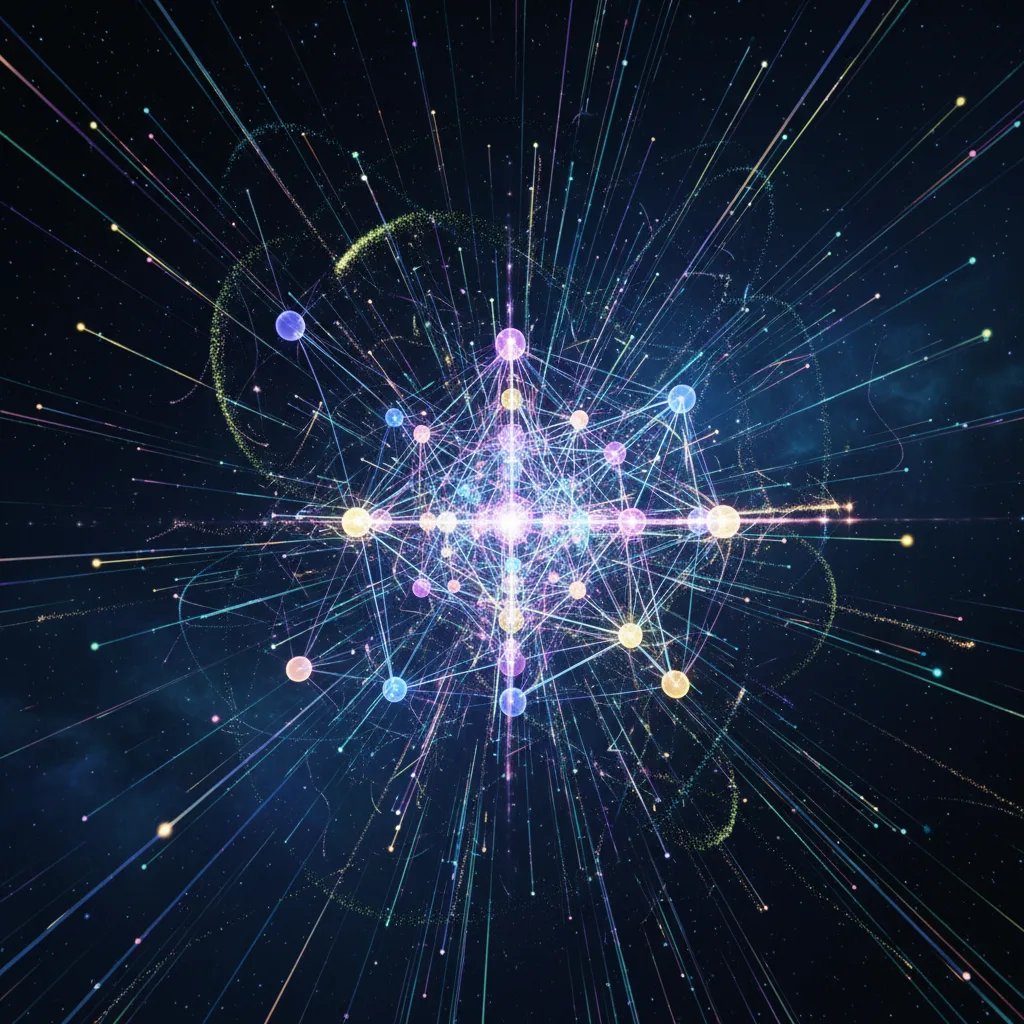
Modern Artificial Intelligence (AI), from virtual assistants to autonomous vehicles, relies on the processing power of electronic chips. However, these systems face fundamental limits: the speed of electrons and the heat they generate. To overcome these barriers, scientists are exploring a revolutionary path: Optical Neural Networks.
Instead of electrons, these networks use photons, particles of light, to perform calculations. Unlike electrical signals, photons can travel and cross paths without interfering with one another, allowing massively parallel processing at the speed of light. Imagine a chip where information is transmitted and computed through patterns of light that are modulated and directed.
This not only exponentially accelerates the speed of AI operations, but it also drastically reduces energy consumption and heat dissipation, critical problems for today's data centers. Potential applications are vast: from real-time pattern recognition to complex scientific simulation and the development of deep learning models that are impossible today. While they still face technical challenges in manufacturing and precision, optical neural networks promise a future where artificial intelligence will operate with unprecedented capability and efficiency, redefining the limits of what is possible in computing.
Source: Nature Photonics, Science, MIT Technology Review