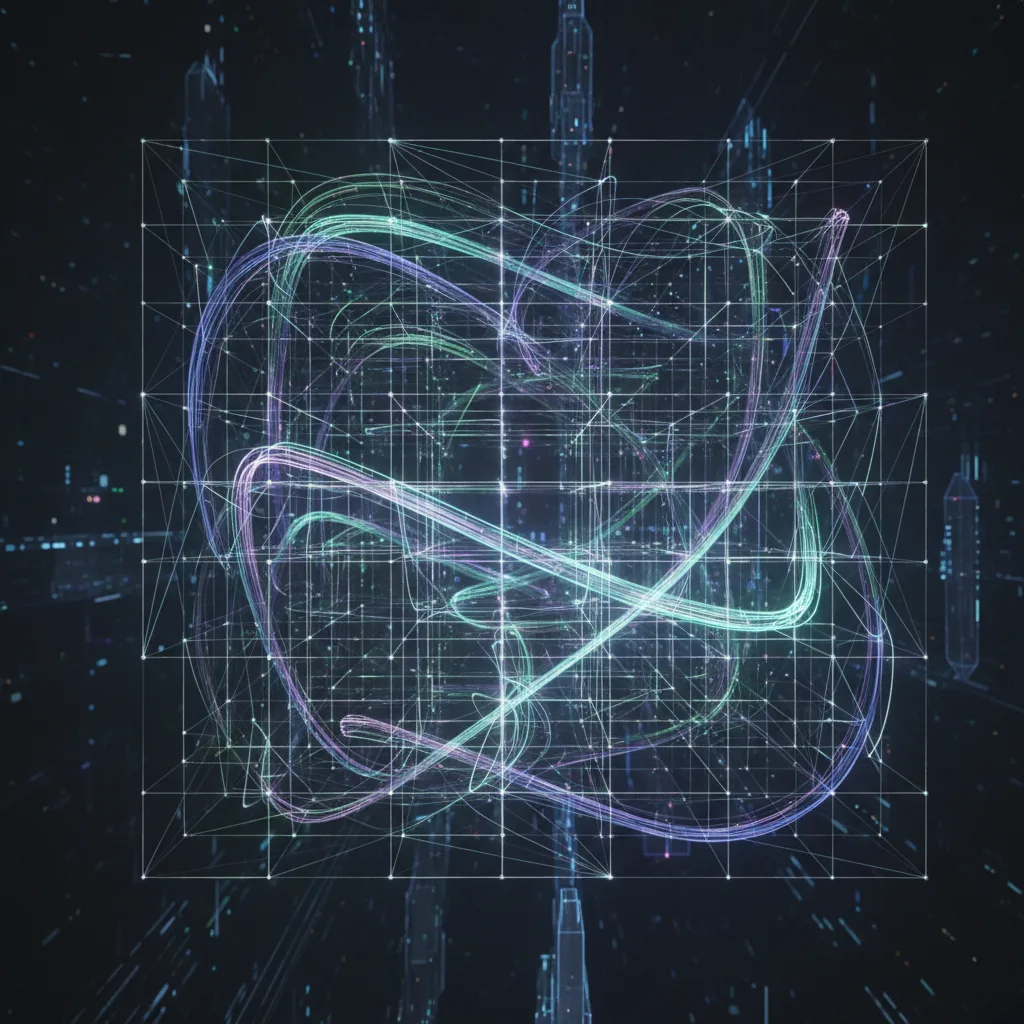
Imagine a labyrinth so tiny that only light can travel through it, but not randomly, rather following a preset path, or even becoming completely trapped. This is not science fiction, it is the reality of photonic crystals. These materials are nanometric structures with a precisely engineered periodicity, which act on photons much like a semiconductor controls electrons.
At the nanometer scale, these crystals can create what are known as 'photonic bandgaps' for light. This means that, for certain wavelengths, light simply cannot pass through the material in certain directions. Instead, other wavelengths can be guided with unprecedented efficiency or even stored temporarily. It is like building an invisible cage for light, or a plumbing system that transports it without the slightest leak.
The applications of photonic crystals are vast and promising. They are already used to develop optical fibers with nearly zero loss, revolutionizing telecommunications. Furthermore, their ability to trap light makes them ideal candidates to drastically improve the efficiency of solar cells, or to create incredibly compact and powerful lasers and sensors. On the horizon, technologies such as ultrafast optical computers, light-bending camouflage, and the ability to manipulate the speed of light emerge, opening a new universe of possibilities in physics and engineering.
Source: Nature Photonics