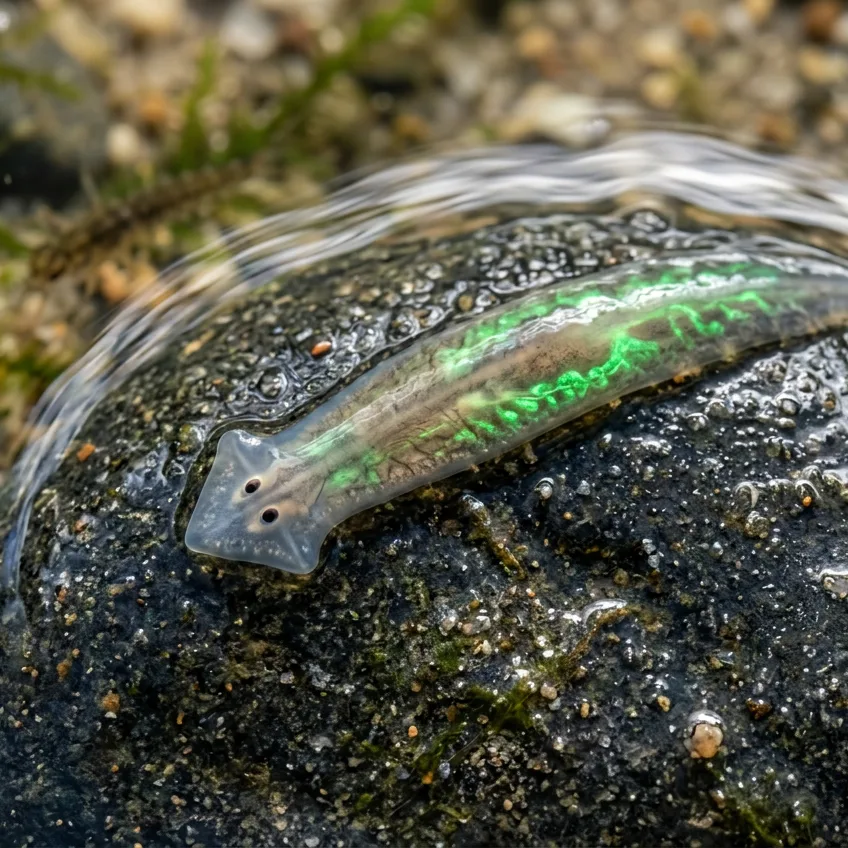
Among the most baffling wonders of cell biology stands the planarian (such as Schmidtea mediterranea), a small freshwater flatworm endowed with limitless regenerative capacity. If a planarian is cut into multiple pieces, each of those parts—even a fragment equivalent to one-three-hundredth of its body volume—will rebuild a complete, flawless organism in a matter of one or two weeks.
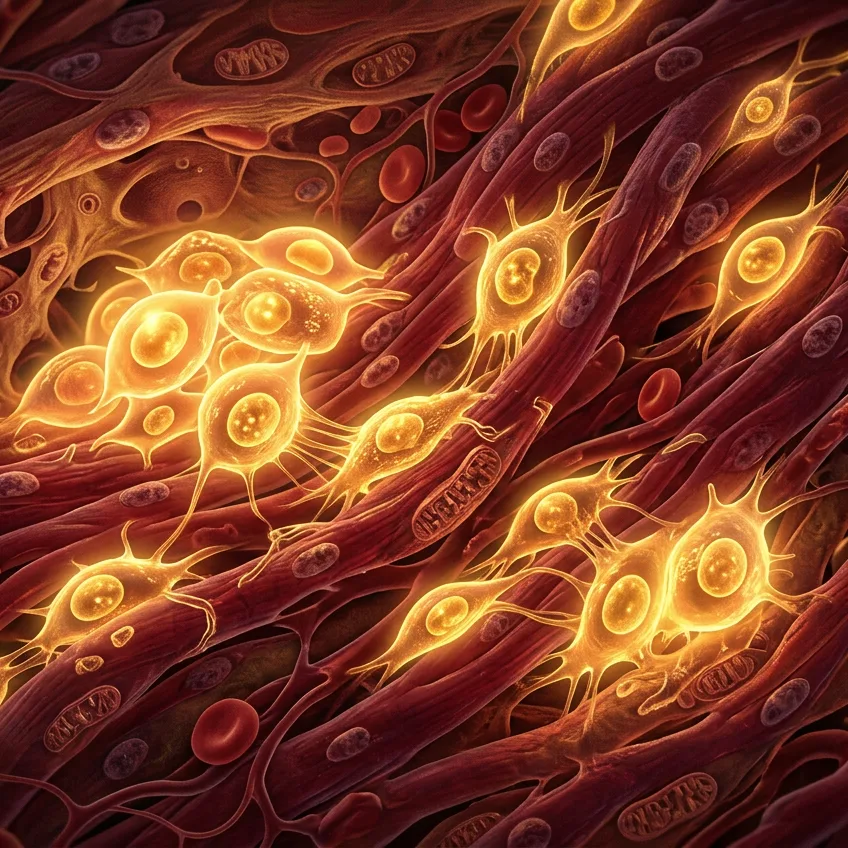
The secret behind this feat lies in its neoblasts, a population of adult pluripotent stem cells that makes up nearly 25 % of its body. Unlike mammalian stem cells, which lose versatility after embryonic development, planarian neoblasts can differentiate into any cell type: neurons, photoreceptors, digestive tissue, or musculature. In fact, biomedical research has shown that just a single transplanted neoblast is enough to rescue and completely rebuild an individual whose tissues had been destroyed by lethal radiation.
Even more perplexing is its relationship with memory and aging:
- Memory preservation: Experiments at Tufts University found that, after decapitating planarians previously trained to tolerate illuminated spaces in search of food, specimens that regenerated a new head from the tail retained the original learned behavior.
- Biological immortality: Asexual strains continually reactivate their telomerase, preventing telomere shortening with each cell division, making this invertebrate virtually immune to senescence.
Source: Nature / Journal of Experimental Biology