In the tropical forests of the island of New Caledonia lives one of the strangest botanical phenomena on the planet: the Pycnandra acuminata tree. While the vast majority of plants would perish immediately in the region's ultramafic soils due to the lethal toxicity of heavy metals, this tree has turned poison into its greatest evolutionary strength.
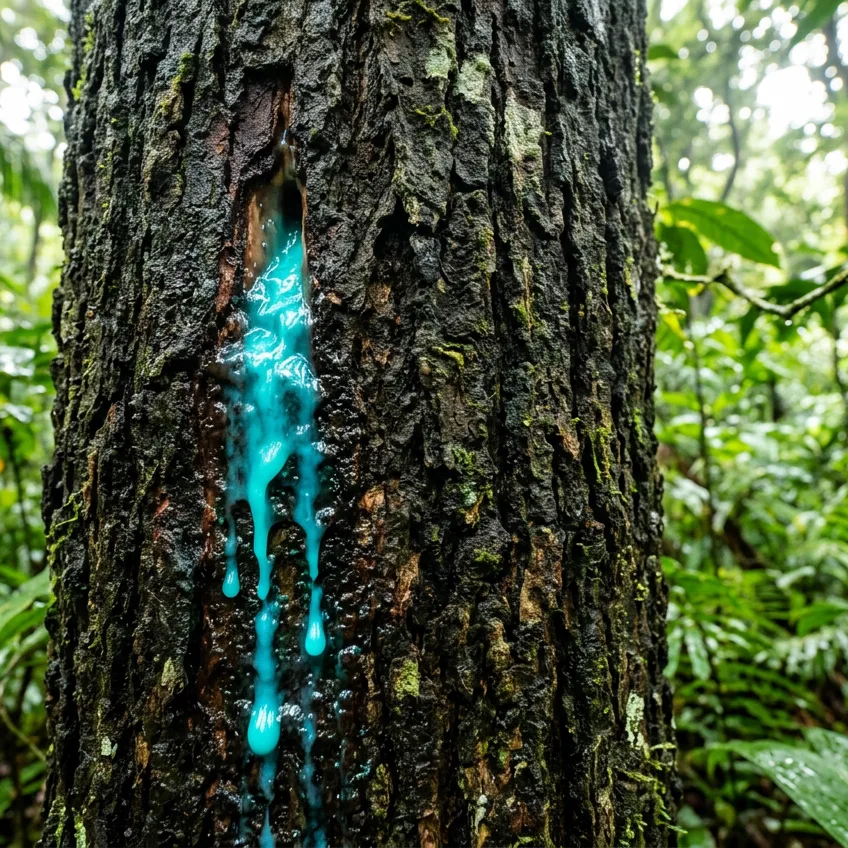
If this specimen's bark is lightly cut, the usual transparent or whitish resin does not flow, but rather a thick, viscous latex of an intense bright turquoise blue. This almost alien hue is due to its amazing capacity as a hyperaccumulating plant: its sap contains up to 25% nickel by dry weight, a concentration so colossal that it far exceeds the mineral richness of many commercial deposits exploited by the mining industry.
Botanists have discovered that this metal reserve is not a biological error, but a sophisticated chemical shield. By saturating its tissues with toxic concentrations of nickel, Pycnandra acuminata becomes deadly and inedible to herbivorous insects, larvae, and pathogenic fungi. Currently, this tree is the cornerstone of research into phytomining and bioremediation, disciplines exploring the use of hyperaccumulating plants to decontaminate devastated soils and harvest valuable metals ecologically.
Source: Nature Plants / BBC Science Focus