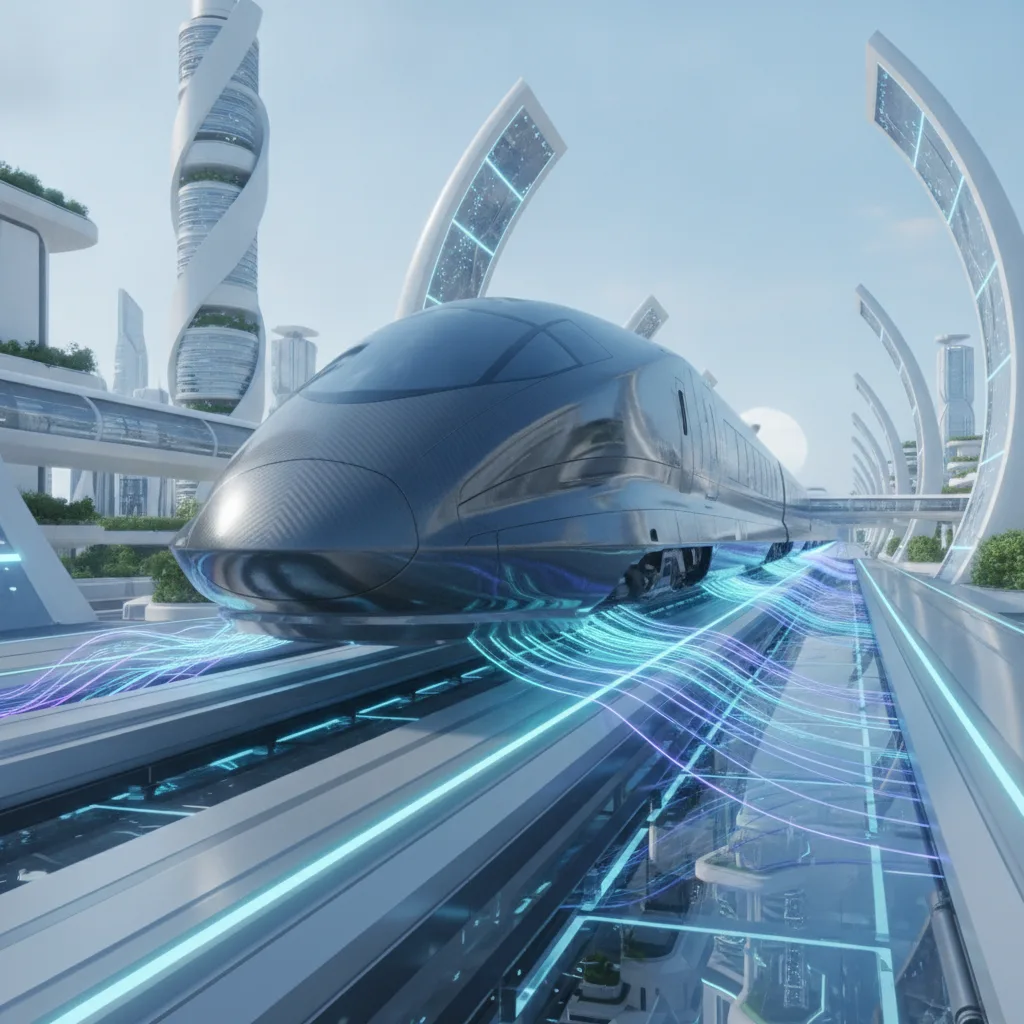
Imagine objects floating freely, without friction, moving with an efficiency that defies the conventional laws of physics. This is not science fiction, but the reality of quantum levitation, a fascinating phenomenon linked to superconductivity. When certain materials are cooled to extremely low temperatures (near absolute zero), they lose all electrical resistance, allowing current to flow without any loss.
Yet superconductivity hides an even more amazing secret: the Meissner effect. Discovered by Walther Meissner and Robert Ochsenfeld in 1933, this effect causes superconducting materials to expel any magnetic field from their interior. If you place a superconductor near a magnet, the superconductor creates its own opposing magnetic field, generating a repulsive force that makes the object levitate stably.
This levitation is not simply a trick; it is a macroscopic manifestation of quantum mechanics, where the properties of electrons synchronize on a visible scale. Its potential applications are revolutionary: from ultra-efficient magnetic levitation (maglev) trains that reach astonishing speeds with minimal energy use, to energy storage systems in flywheels that spin indefinitely without friction. It also promises frictionless bearings for precision machinery and advances in magnetic resonance equipment.
The main challenge is the need to cool these materials to cryogenic temperatures, often with liquid helium or nitrogen. However, research into high-temperature superconductors (those operating at less extreme temperatures) is advancing rapidly, bringing us closer to a future where quantum levitation could transform transportation, energy, and engineering, opening the door to a world without friction and with unprecedented efficiency.
Source: Wikipedia: Meissner effect, Superconductivity; Scientific publications on superconducting materials.