If you place two fingers on your wrist and breathe slowly and deeply, you will notice an apparent irregularity in your pulse: the heart gently speeds up every time you take in air and slows down immediately when you breathe it out. Far from being a heart defect, this natural phenomenon is known as respiratory sinus arrhythmia (RSA), and it represents one of the greatest examples of physiological efficiency in the human body.
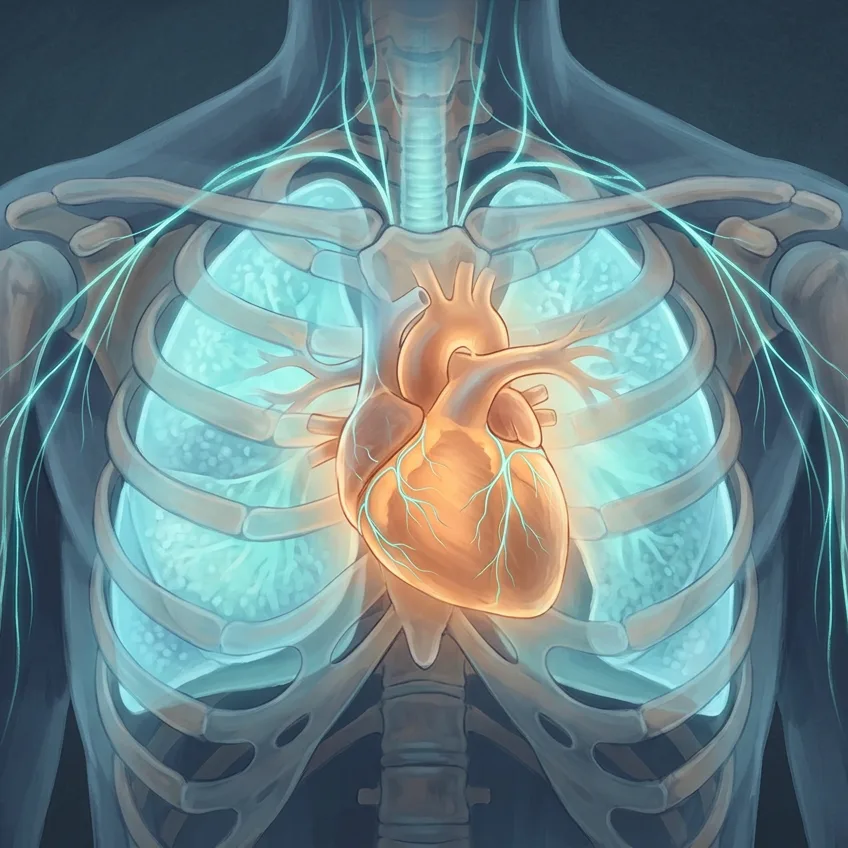
This precise adjustment is orchestrated by the vagus nerve and the brainstem. When inhaling, intrathoracic pressure decreases and the lungs fill with air; pulmonary stretch receptors send impulses that temporarily inhibit parasympathetic activity. By momentarily lifting this "biological brake," the sinus node accelerates heart rate to pump more blood through the alveoli right at the moment when oxygen is abundant.
During exhalation, the exact opposite occurs: the vagal signal reactivates strongly, releasing acetylcholine onto the heart to slow it down abruptly. This constant fluctuation serves crucial functions:
- Metabolic savings: It prevents the myocardium from wasting energy by pumping at high revs when the lungs are expelling carbon dioxide.
- Respiratory efficiency: It maximizes oxygen uptake by matching blood flow with the peak of ventilation.
- Stress regulation: It demonstrates the biological basis of why consciously prolonging exhalation calms the nervous system in a matter of seconds.
Having a pronounced respiratory sinus arrhythmia is an unmistakable sign of high heart rate variability (HRV), a key biomarker of biological youth, excellent cardiovascular health, and strong resilience to stress.
Source: Circulation Research / National Institutes of Health (NIH)