For more than a century, biology held as an unshakeable principle that photosynthetic endosymbiosis—the ability to harbor living plant cells within animal tissues—was exclusive to corals, mollusks, and other primitive invertebrates. The sophisticated immune system of vertebrates, it was believed, would instantly destroy any plant invader. However, in 2011, a team led by researcher Ryan Kerney discovered an astonishing exception in the spotted salamander (Ambystoma maculatum).
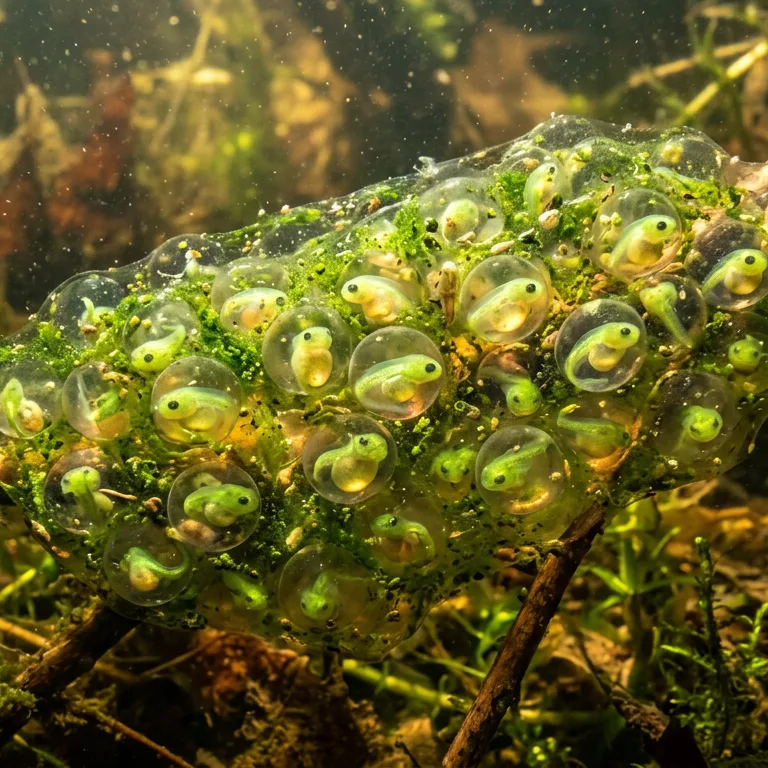
Scientists knew that the gelatinous eggs of this North American salamander maintained a symbiotic relationship with the single-celled green alga Oophila amblystomatis, whose name literally translates to "salamander egg lover." The colossal surprise came when analyzing the embryos using fluorescence microscopy: the algae not only surrounded the egg capsule, but also penetrated the embryonic cells of the amphibian.
This unusual cellular partnership works with astonishing precision:
- Oxygen and glucose on demand: The microalgae perform photosynthesis inside the embryo's cells, producing oxygen and carbohydrates that radically accelerate its development.
- Animal fertilizer: In exchange, the algae absorb nitrogen-rich waste expelled by the amphibian's metabolism.
- Cellular inheritance: Traces of algal DNA have been found in the reproductive tract of adult females, suggesting that the symbiosis passes from mothers to offspring.
This discovery made the spotted salamander the first vertebrate with "sun-powered" cells, opening new avenues for regenerative medicine and human transplant therapy.
Source: Proceedings of the National Academy of Sciences (PNAS) - 'Intracellular invasion of green algae in a salamander host' (Kerney et al., 2011)