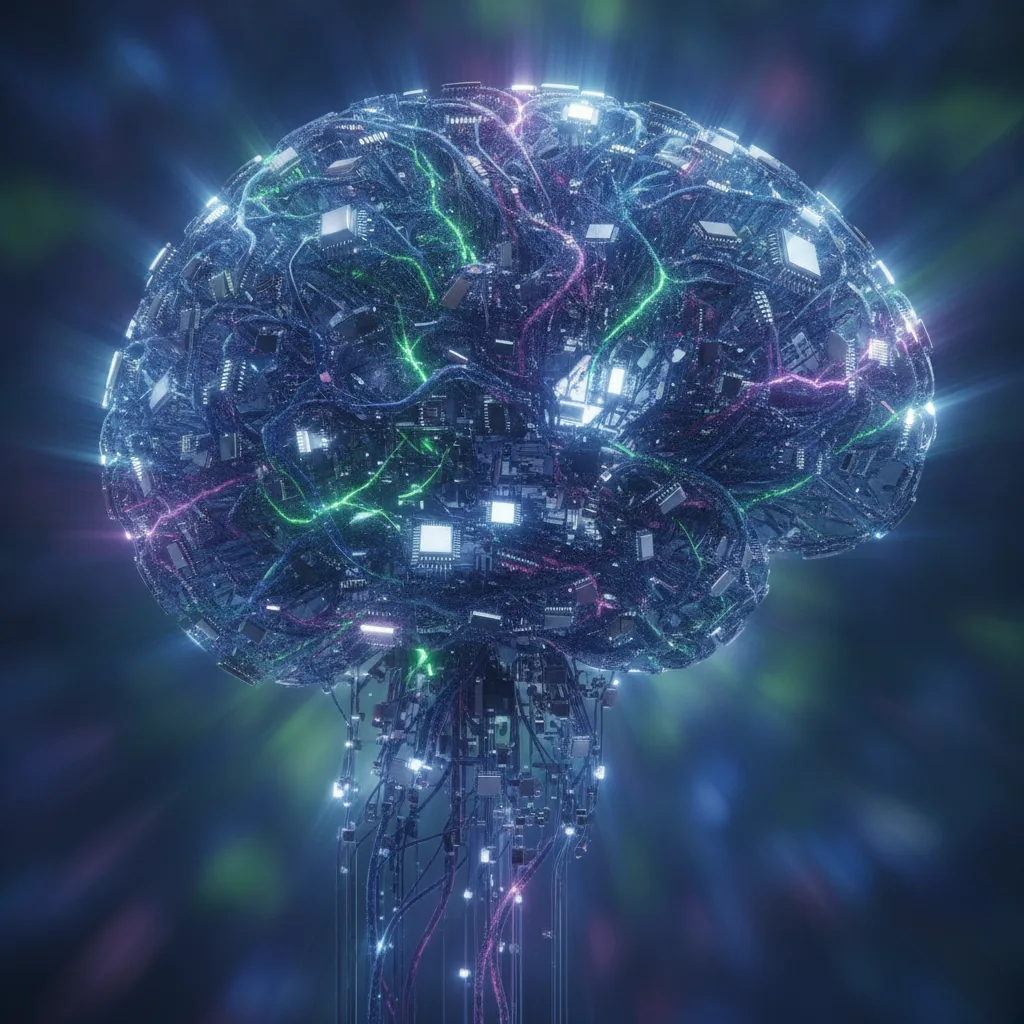
In the quest for artificial intelligence that emulates the efficiency and adaptability of the human brain, scientists and engineers are developing a revolutionary technology: synaptic transistors.
Unlike traditional transistors, which function as binary on/off switches, synaptic transistors are able to gradually adjust their conductivity, mimicking the plasticity of biological synapses. In our brain, synapses are the connections between neurons that strengthen or weaken with experience, enabling learning and memory. Synaptic transistors replicate this ability by modifying their resistance based on the patterns of electrical impulses they receive, allowing them to 'remember' and 'learn'.
This innate functionality allows them to process and store information in the same place (known as 'in-memory computing'), overcoming one of the major limitations of today's computers' Von Neumann architecture, where processing and memory are separated, creating a 'bottleneck'. By integrating both functions, synaptic transistors promise AI systems with significantly higher energy efficiency and unprecedented real-time learning capabilities.
The potential applications are vast: from portable devices with advanced AI that learn from their environment, to smarter autonomous robotics, self-adaptive sensors, and even more sophisticated brain-computer interfaces. Although still in the research and development phase, synaptic transistors represent a fundamental leap toward a new era of biologically inspired computing, opening the doors to truly neuromorphic artificial intelligence.
Source: Nature Electronics, IEEE Spectrum, MIT Technology Review on neuromorphic computing and synaptic transistors.