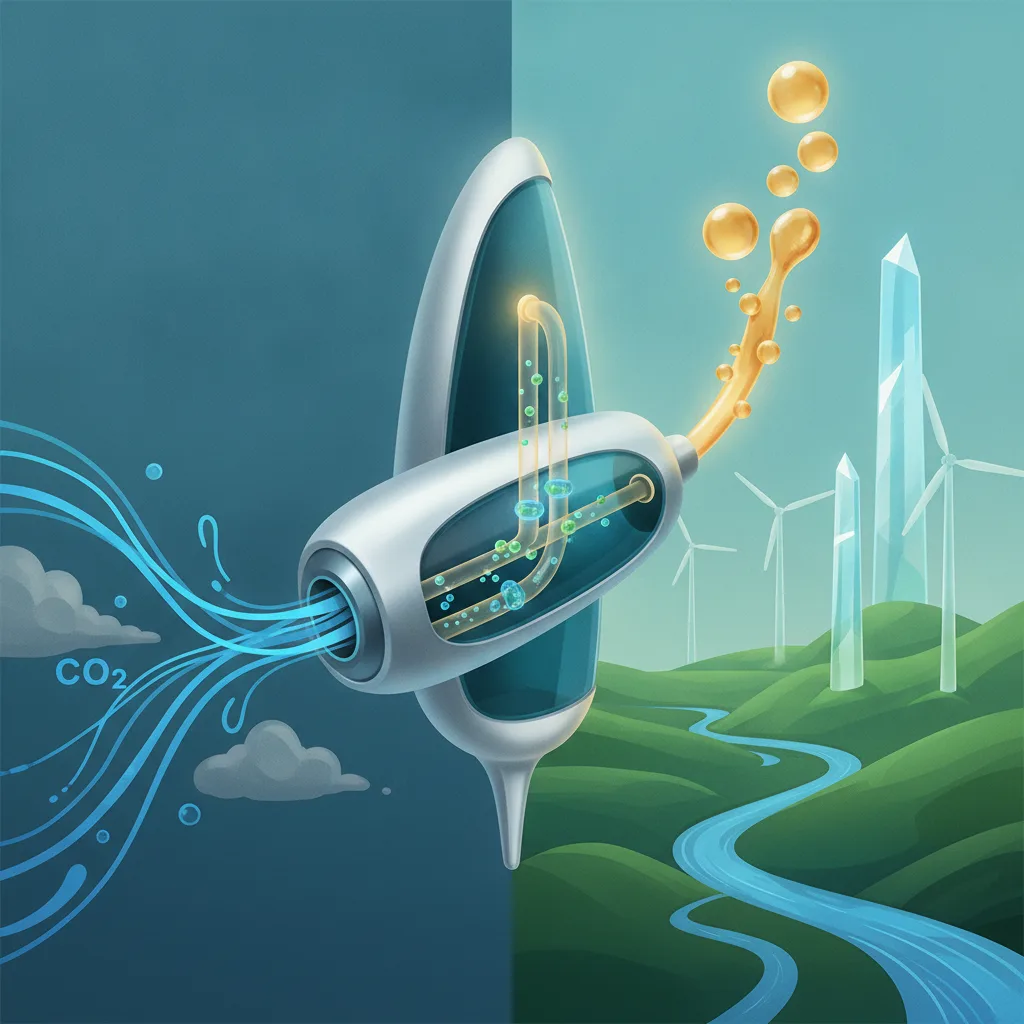
Imagine a world where we do not need fossil fuels, where clean energy arises directly from the sun and the air we breathe. This is not science fiction, but the promise of artificial photosynthesis, a revolutionary technology that seeks to mimic nature's most vital process: that of plants.
"Artificial leaves" are devices designed to replicate the efficiency of trees by converting sunlight, carbon dioxide (CO2), and water into usable fuel, such as hydrogen or methane. Unlike traditional solar panels that generate electricity, these innovations produce liquid or gaseous fuels that can be stored and transported.
The challenge lies in finding catalysts efficient and affordable enough to break water molecules to release hydrogen and then combine them with CO2. Researchers at institutions such as Harvard University and Caltech have achieved significant advances, developing systems that use materials like metal oxides (for example, cobalt or nickel) and genetically modified bacteria to improve conversion. One of the milestones was Harvard's "bionic leaf" in 2016, which combines an inorganic catalyst with a bacterium to produce liquid fuels.
Although it still faces obstacles in terms of efficiency, durability, and scalability for mass production, the potential is immense. Artificial photosynthesis could not only provide us with an unlimited source of clean energy, but also serve as a powerful tool to capture and recycle atmospheric CO2, transforming a global problem into a sustainable energy solution. It is a "forest" of emerging technology, planting the seeds of a greener future.
Source: Nature Catalysis, Science, Harvard University, Caltech



