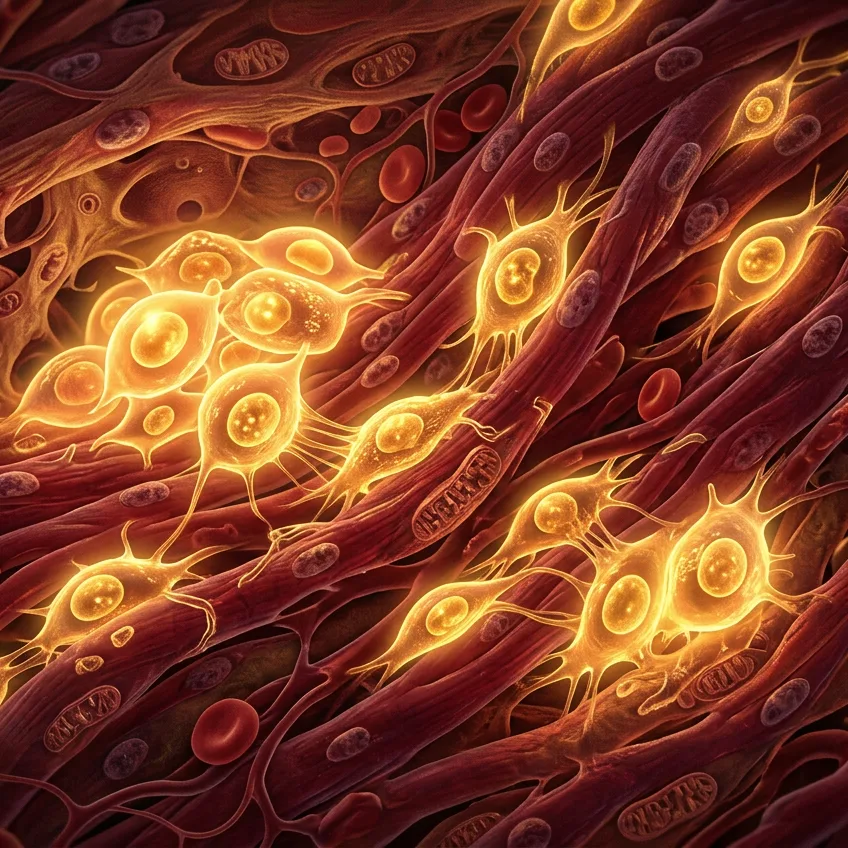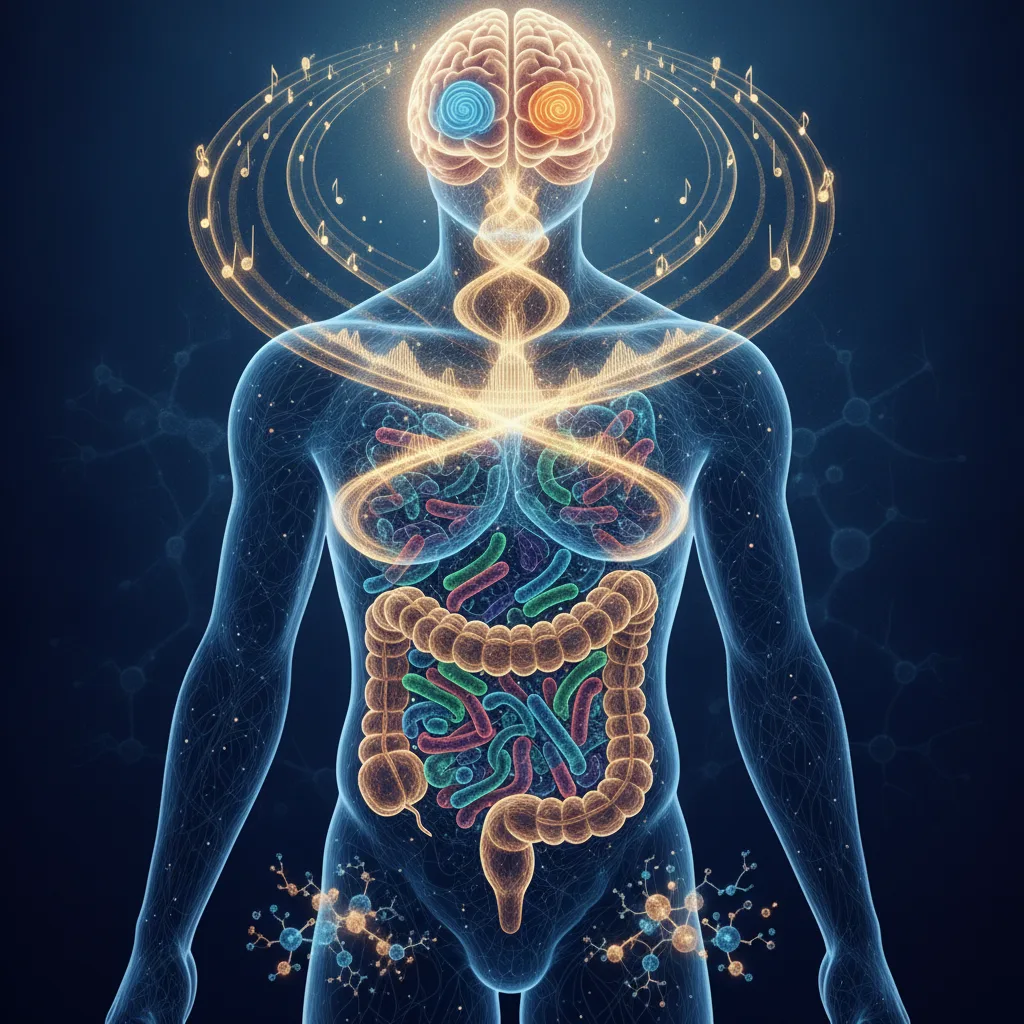
Your gut hosts a microbial ecosystem that produces 90% of the body's serotonin and synthesizes a variety of neurotransmitters. Each bacterial species, such as Bifidobacterium or Lactobacillus, generates a unique pattern of metabolic vibrations when processing nutrients. These oscillations, though infinitesimal, constitute a 'chemical-acoustic language' that enteric cells detect and translate into vagal nerve signals.
A 2023 study in Nature Microbiology showed that certain bacterial metabolites, such as butyrate, induce specific electrical rhythms in the gut. By sonifying these data, distinct melodic sequences are generated for each microbiome state: a harmonic symphony when the balance favors satiety, and a chaotic dissonance when bacteria associated with sugar cravings proliferate. This 'internal concert' explains why transplanting microbiomes from lean individuals to obese ones can alter food preferences in weeks.
- Key fact: The microbiome of a person with obesity produces an acoustic signature with peaks at low frequencies (20-50 Hz), associated with persistent hunger signals.
- Application: Researchers at the Weizmann Institute are developing 'symphonic probiotics' that, by regulating butyrate production, could modify this signature to reduce cravings.
The next time you feel an uncontrollable craving, remember: it might not be your brain, but the bacterial choir of your colon asking for its favorite note.
Source: Study: 'Acoustic signatures of gut microbiota metabolites modulate host feeding behavior' - Nature Microbiology (2023). Research by the Weizmann Institute of Science on appetite-modulating probiotics.