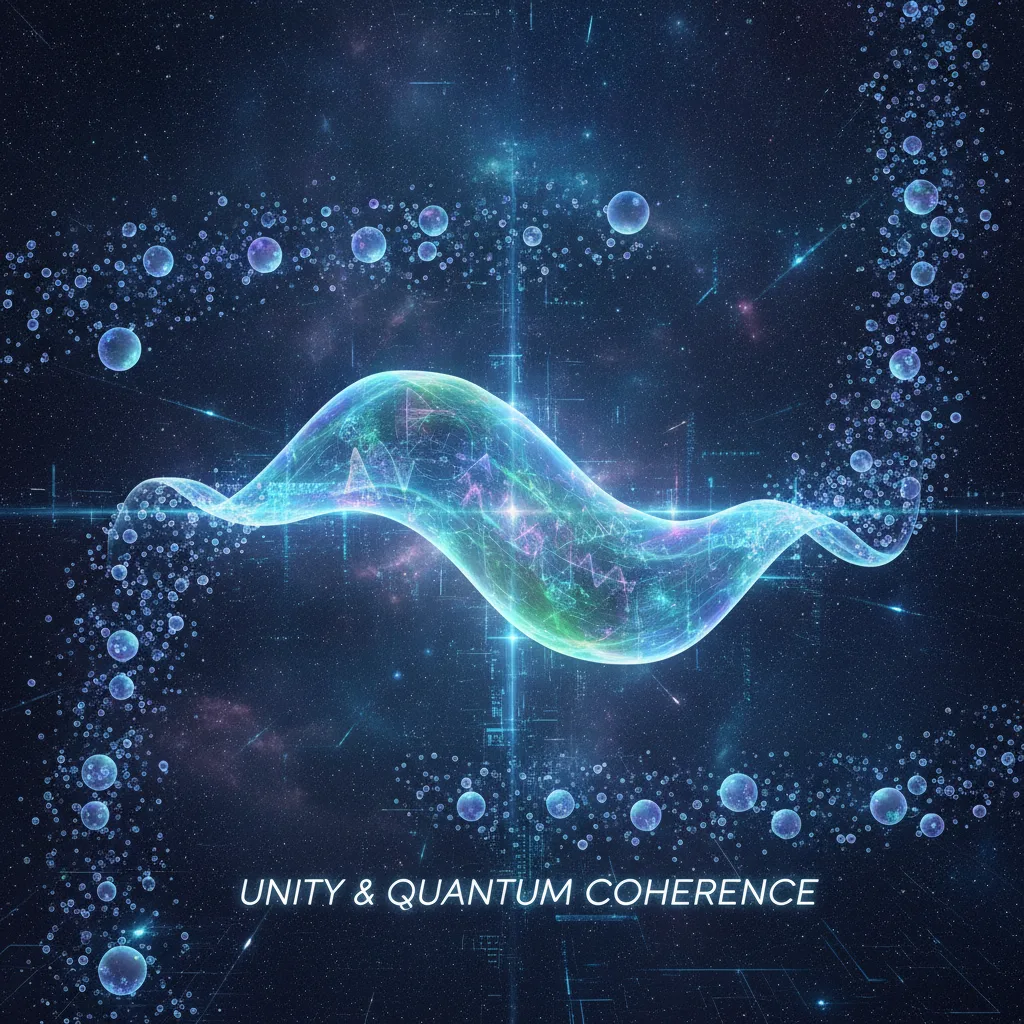
Imagine a state of matter so cold that atoms almost stop moving, collapsing their individual identity to behave as a single quantum entity. This is the fascinating Bose-Einstein Condensate (BEC), often called the "fifth state of matter," alongside solid, liquid, gas, and plasma.
The BEC is not merely a laboratory curiosity; it is a window into the depths of quantum mechanics. It forms when a gas of bosons (a type of elementary particle) is cooled to temperatures extremely close to absolute zero (-273.15 °C or 0 Kelvin). At these frigid temperatures, the matter waves of the atoms overlap, and thousands of them begin to occupy the same quantum state, becoming indistinguishable from one another. It is as if all members of an orchestra were playing the exact same note in unison, creating a single, gigantic wave.
The prediction of this state was made by Albert Einstein and Satyendra Nath Bose in the 1920s, but it was not until 1995 that scientists Eric Cornell and Carl Wieman, from the University of Colorado, and Wolfgang Ketterle, from MIT, managed to create it experimentally using rubidium atoms, earning them the Nobel Prize in Physics in 2001. To achieve this, they used a combination of laser cooling and evaporative cooling, trapping the atoms in magnetic traps to isolate them from ambient heat.
BECs are not only an impressive verification of quantum theories, but they also promise revolutionary applications. From developing ultra-high-precision sensors for gravitational or magnetic fields, to creating 'atom lasers' that could "write" with atoms on surfaces, and even exploring cosmic phenomena analogous to black holes. This exotic state pushes us to redefine our understanding of matter and energy.
Source: NobelPrize.org, Wikipedia, scientific articles on Bose-Einstein Condensates