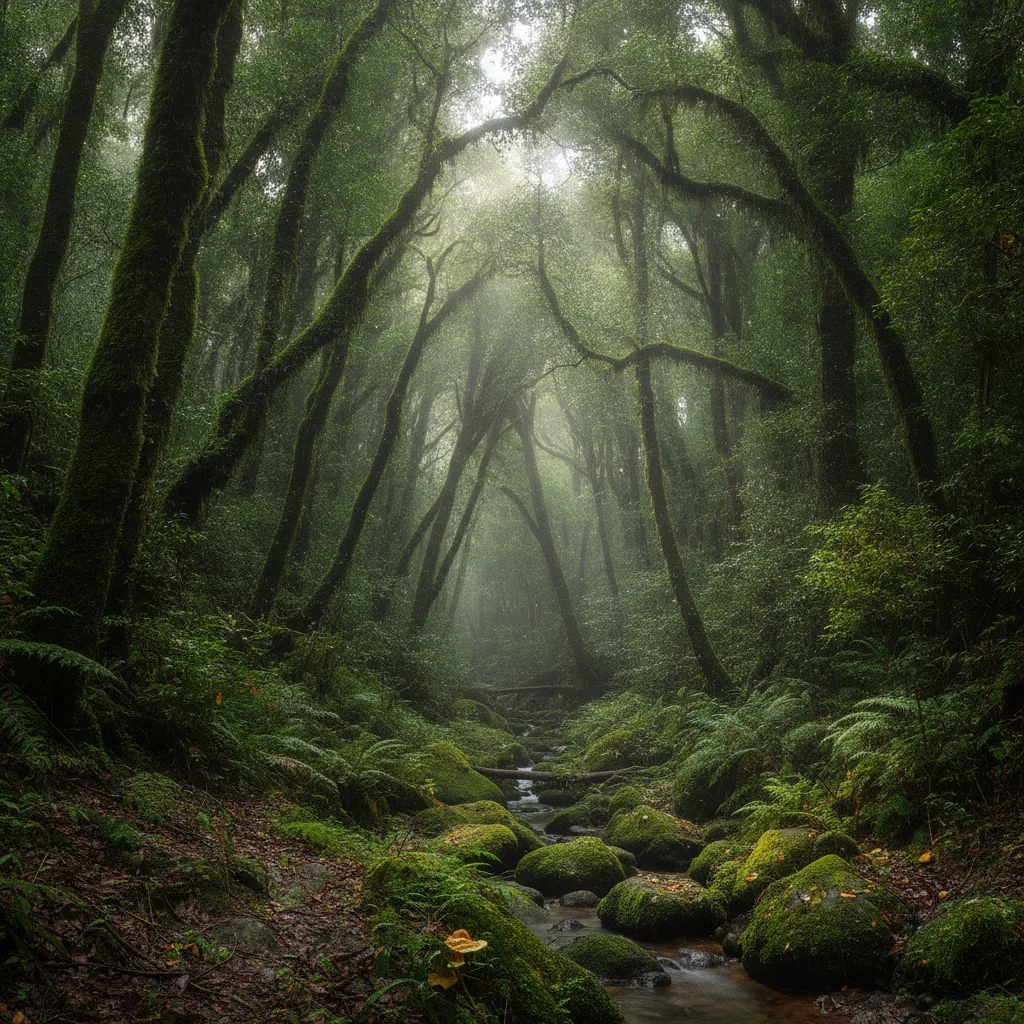
Cloud forests, also known as fog forests, are a natural treasure that challenges the common perception of how trees get their water. Unlike other ecosystems that rely mainly on direct rainfall from the soil, these forests have developed an amazing ability to "drink from the air."
Generally located in tropical and subtropical mountainous areas, where low clouds and persistent fog are common, the trees in these forests act as giant living "sponges." Their leaves, branches, and trunks are covered with epiphytes such as mosses, lichens, and ferns, which are in turn experts at capturing and retaining moisture. When fog and clouds pass through the forest canopy, water condenses on these surfaces, forming droplets that then drip to the ground or are absorbed directly by plants.
This process, known as "fog interception," can provide a significant amount of water, sometimes exceeding direct rainfall, and is crucial for the survival of these ecosystems. Thanks to this ability, cloud forests are true oases of biodiversity, home to thousands of endemic species of plants and animals, many of which are found nowhere else on the planet. In addition, they are vital for regulating the local climate and supplying fresh water to nearby human communities, demonstrating nature's ingenious adaptation.
Source: Studies on cloud forest ecology, such as those conducted by IUCN and various universities specializing in tropical botany and forest ecology.