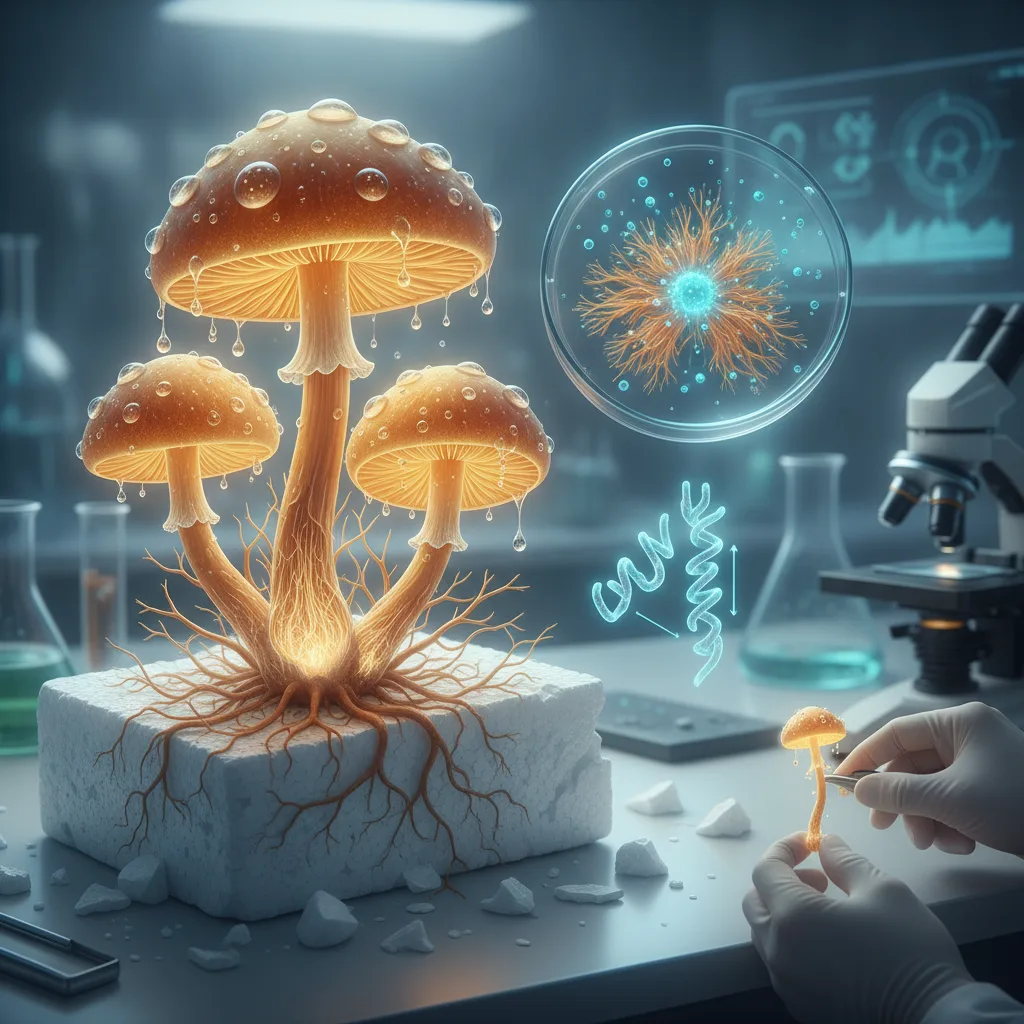
A research team from Stanford University discovered in 2023 that the common oyster mushroom (Pleurotus ostreatus) possesses enzymes capable of breaking down polystyrene, one of the most polluting and persistent plastics on the planet. In controlled experiments, the mushroom's mycelia colonized fragments of polystyrene foam and transformed them into an organic mass rich in proteins and antioxidants.
The process occurs thanks to a combination of extracellular enzymes, such as peroxidases, which break down long polymer chains into smaller molecules. These are then metabolized by the fungus, which converts them into biomass. Under optimal conditions of humidity and temperature, a culture can degrade up to 25% of the initial weight of the plastic in 30 days.
- Key fact: It is estimated that 1 kilogram of this fungus can clean up the plastic equivalent of a standard supermarket bag.
- Future application: Scientists are developing portable bioreactors that could be deployed in landfills or polluted areas to convert plastic waste into livestock feed or even for direct human consumption.
This ability not only offers a biodegradable solution to the plastic problem, but also presents a closed loop where waste becomes a nutritional resource, challenging our conception of waste and sustainability.
Source: Study published in Nature Biotechnology, 2023. Stanford University.