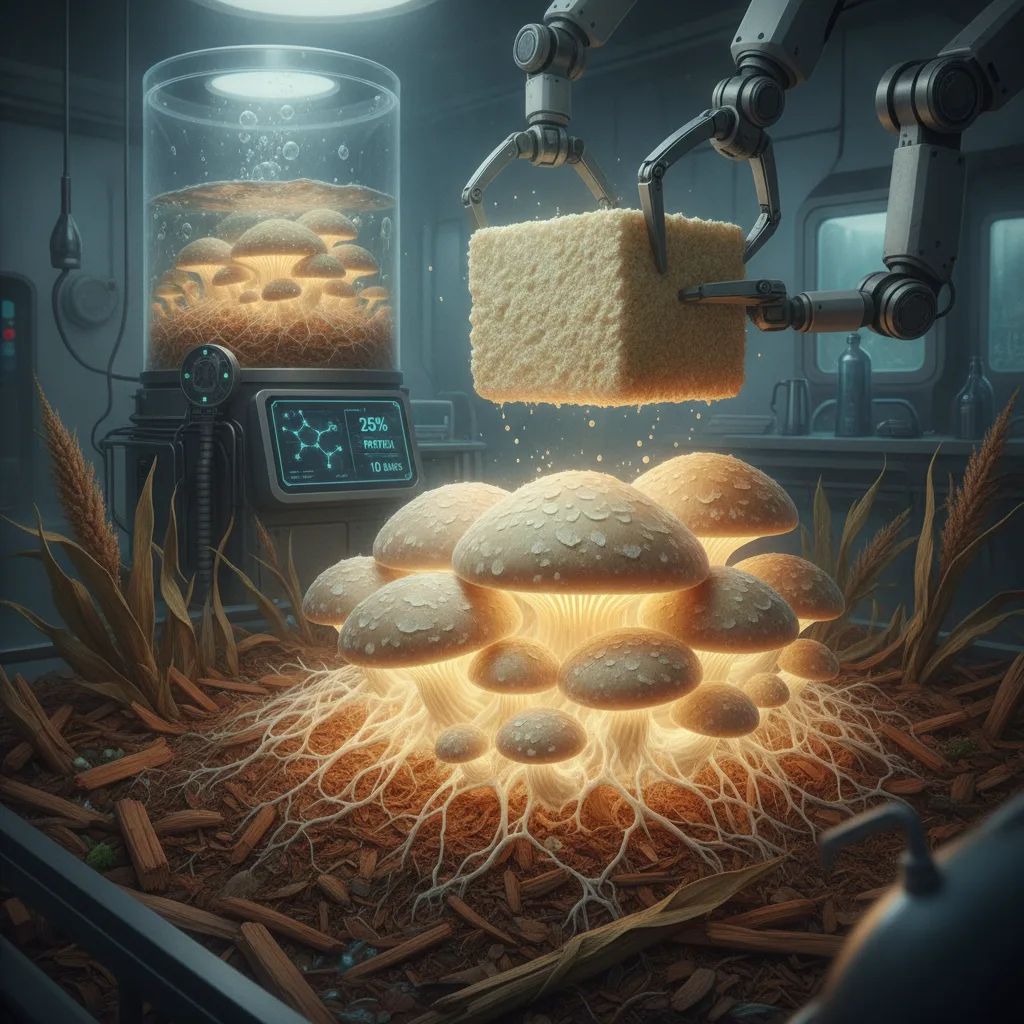
A common woodland fungus, Pleurotus ostreatus (the popular "oyster mushroom"), is being researched for its astonishing ability to transform wood and agricultural waste into a highly nutritious food. This process, known as fungi-fermentation, not only recycles waste, but also creates an edible product with a nutritional profile comparable to meat.
In experiments conducted at the Wageningen Institute of Food Technology (Netherlands), it was shown that P. ostreatus can grow on substrates such as sawdust, straw, or coffee husks. In a fermentation cycle of 10 to 14 days, the fungus breaks down lignin and cellulose, transforming them into a fibrous mass rich in protein (up to 25% dry weight), fiber, B-complex vitamins, and minerals such as potassium and phosphorus.
- Process: The fungal mycelium releases enzymes that "digest" the wood.
- Product: A "plant steak" or protein flour with a texture similar to chicken is obtained.
- Sustainability: It reduces the carbon footprint of protein production by 80% compared to traditional livestock farming.
This technology, which is already being scaled up by companies such as Mycorena (Sweden) and Quorn (United Kingdom), could revolutionize global food security by turning agricultural waste into high-quality food, without requiring fertile land or large amounts of water.
Source: Wageningen Institute of Food Technology (WUR) and publications in the journal 'Fungal Biology and Biotechnology'.