For decades, neuroscience faced a baffling puzzle: while the rest of the human body's organs rely on the lymphatic system to remove toxins and cellular debris, the brain appeared to lack this essential drainage system. The answer arrived in 2012 from Danish neuroscientist Maiken Nedergaard and her team at the University of Rochester, who discovered the glymphatic system.
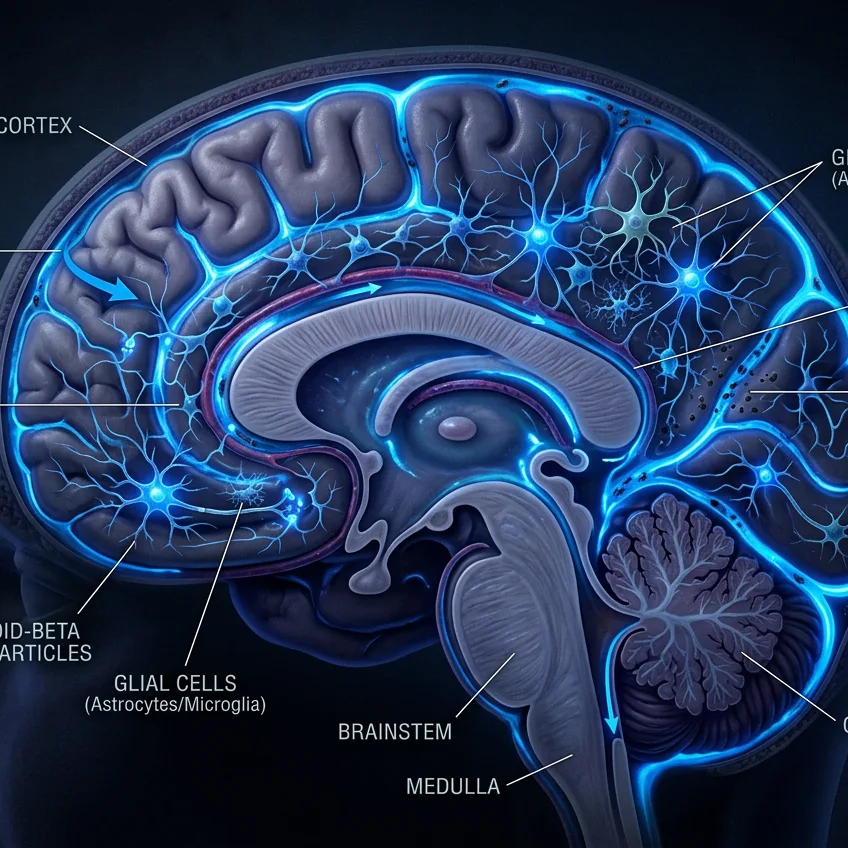
This biological circuit works like a genuine microscopic sanitation network supported by glial cells (particularly astrocytes and their aquaporin-4 channels). What is truly astonishing about this mechanism is that it remains almost inactive while we are awake:
- Opening the floodgates: Upon reaching deep sleep stages (slow-wave sleep), brain cells contract and shrink in volume by roughly 60%, expanding the interstitial space.
- Pressure washing: This opening allows cerebrospinal fluid to flow rapidly through brain tissue, rhythmically propelled by the pulsations of cerebral arteries.
- Waste evacuation: The current rinses and flushes out harmful proteins accumulated during wakefulness, such as amyloid-beta and tau protein, channeling them toward cervical lymphatic vessels for destruction.
Research has shown that waste clearance in the brain is up to ten times more potent during sleep than during the day. This periodic cleansing explains why a single sleepless night triggers immediate brain fog and why chronic lack of quality sleep is closely linked to an increased risk of cognitive decline and Alzheimer's disease.
Source: Science Translational Medicine (Nedergaard et al., 2012 / 2013)