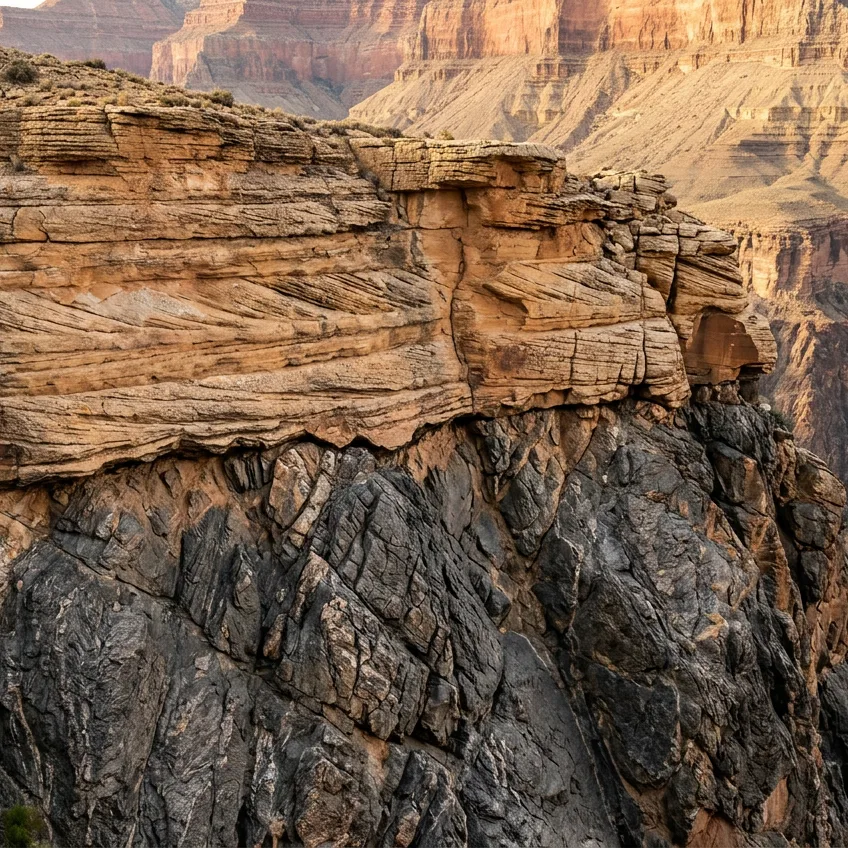
In 1869, during his famous pioneering expedition along the Colorado River, geologist John Wesley Powell observed something baffling on the sheer walls of the Grand Canyon: relatively young sedimentary sandstone layers rested in direct contact with ancient metamorphic and igneous rocks. Between the two formations, there were no signs of a gradual transition; a gigantic slice of time was missing. Powell had just stumbled upon what science would christen The Great Unconformity.
This phenomenon is not unique to North America; it has been identified in sites across almost every continent. The gap represents the disappearance of between 300 and 1,200 million years of the rock record, which amounts to nearly one-fifth of Earth's entire timeline. It is as if someone had violently ripped out dozens of entire chapters from the book of the Earth's crust.
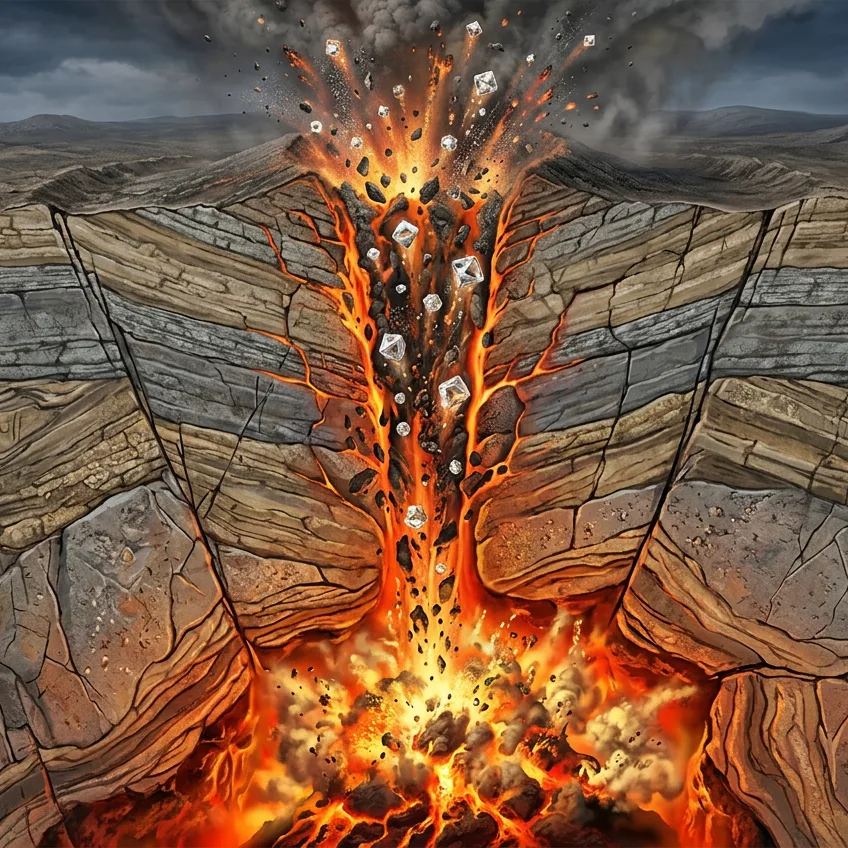
What colossal force could have obliterated kilometers of solid rock thickness before the Cambrian period began? For decades, it was considered an unsolvable puzzle, but recent research points to two main causes:
- Global glaciation ('Snowball Earth'): gigantic glaciers that covered the planet about 700 million years ago likely acted as planetary-scale sandpaper, eroding and scouring the continental crust into the oceans.
- The breakup of Rodinia: massive tectonic uplift linked to the fragmentation of this supercontinent exposed highlands to relentless atmospheric and hydrological erosion.
Paradoxically, the minerals and sediments stripped away during this massive wear ended up washing into primeval seas, delivering nutrients like calcium and phosphorus that may have catalyzed the legendary Cambrian Explosion of complex life.
Source: Nature Geoscience / United States Geological Survey (USGS)