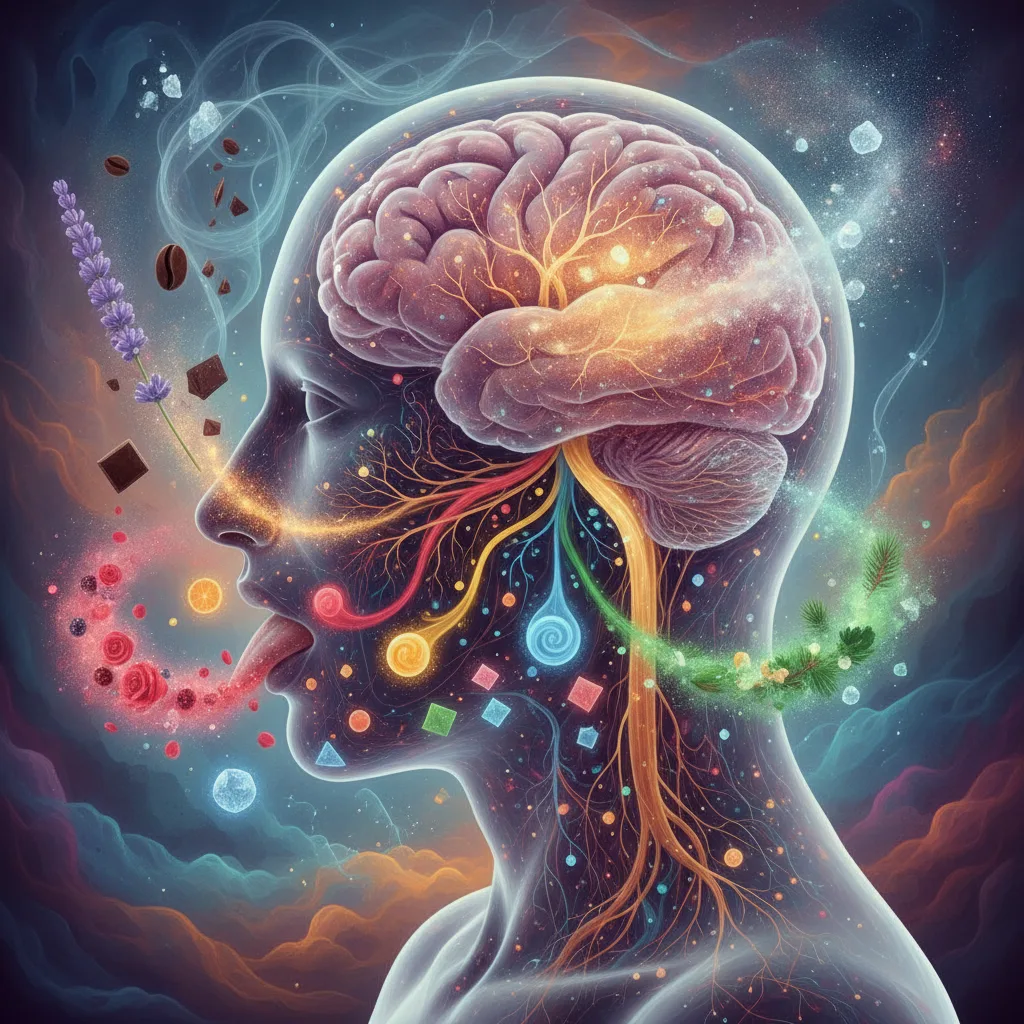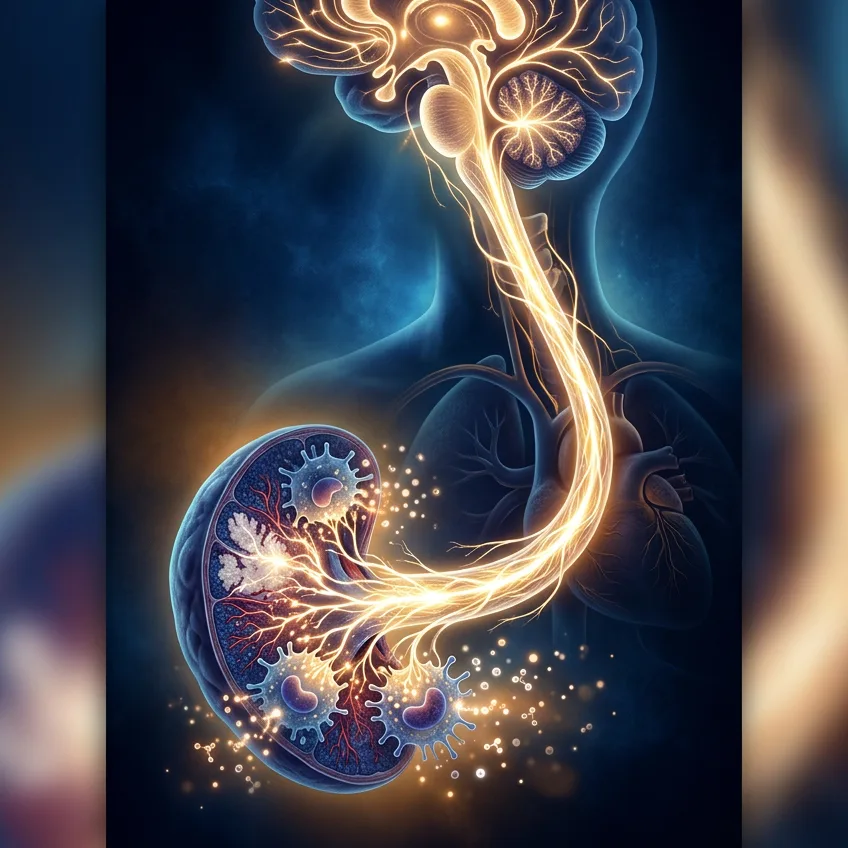
For more than a century, medicine assumed that the immune system and the nervous system operated completely independently. However, in the late 1990s, neurosurgeon Kevin Tracey discovered a fascinating mechanism that revolutionized science: the inflammatory reflex, a closed biological circuit that allows the brain to shut off peripheral inflammation in a matter of milliseconds.
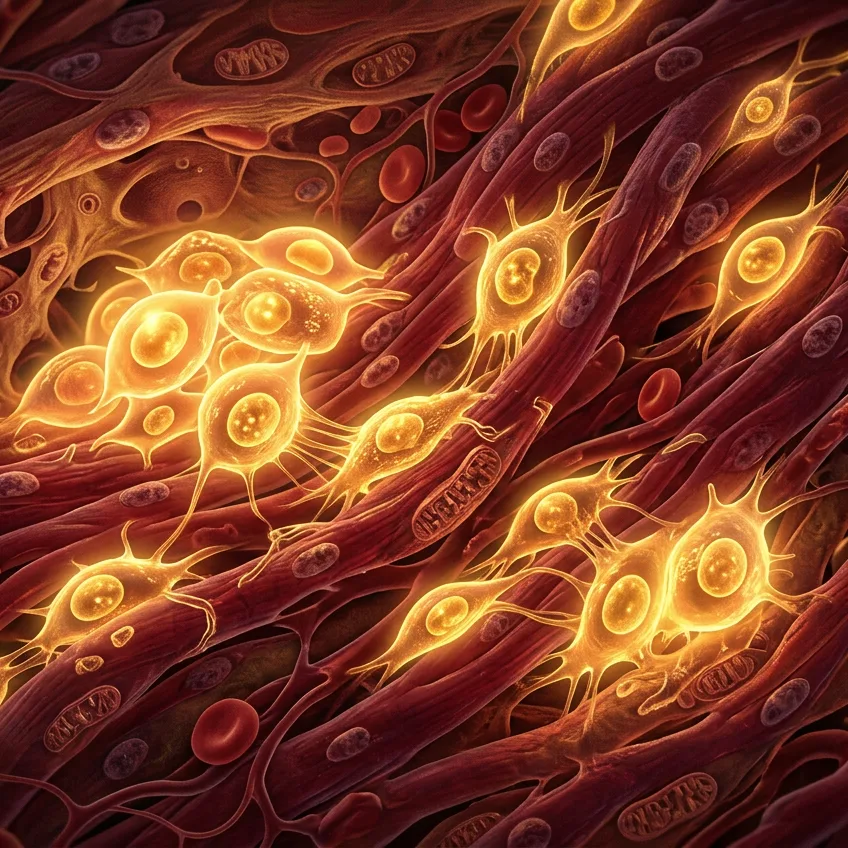
When macrophages detect pathogens or cellular damage, they release proinflammatory cytokines such as tumor necrosis factor (TNF). These molecules stimulate the sensory fibers of the vagus nerve, which carries the real-time alert to the brainstem. After processing the signal, the brain sends a descending electrical command back through the vagus nerve to the spleen.
There, an astonishing biochemical cascade is triggered:
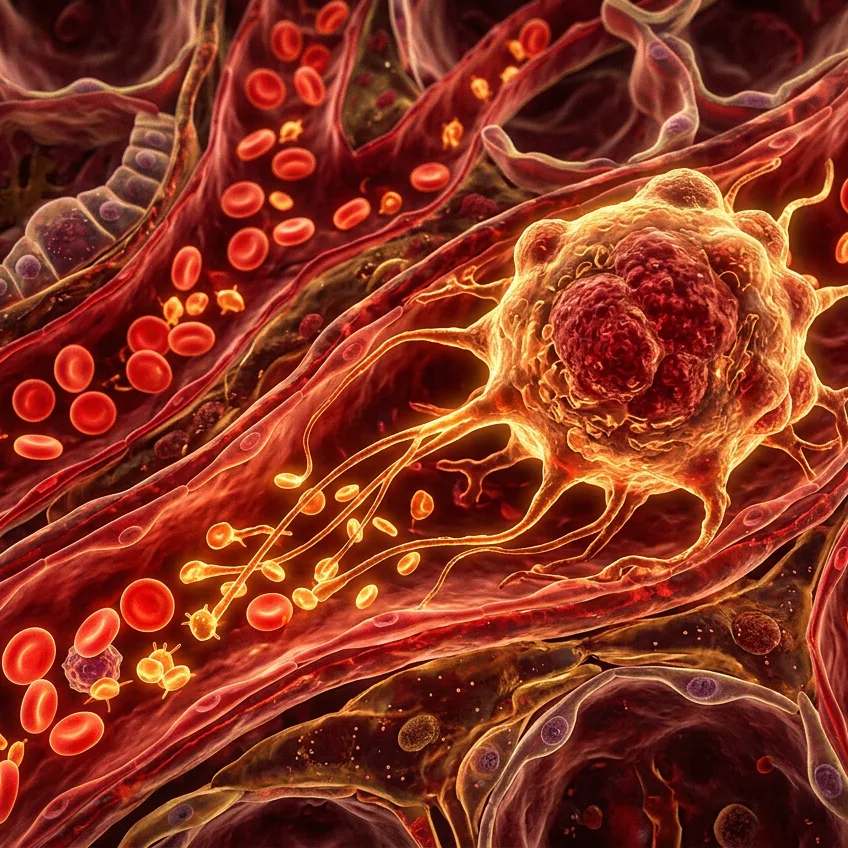
- Nerve endings in the spleen activate a unique group of memory T cells.
- In an unusual way, these immune cells produce acetylcholine, a neurotransmitter typically reserved for brain synapses.
- Acetylcholine docks onto the alpha-7 nicotinic receptors of macrophages, instructing them to abruptly halt the production of toxic cytokines.
This ingenious molecular brake prevents a standard immune response from degenerating into a deadly inflammatory storm or septic shock. Today, bioelectronic stimulation of the vagus nerve is used in pioneering clinical trials to treat autoimmune diseases such as rheumatoid arthritis and Crohn's disease, showing that modulating the nervous system can directly heal inflamed tissue.
Source: Nature (Tracey, K. J., 'The inflammatory reflex', Nature 420, 2002) / Feinstein Institutes for Medical Research