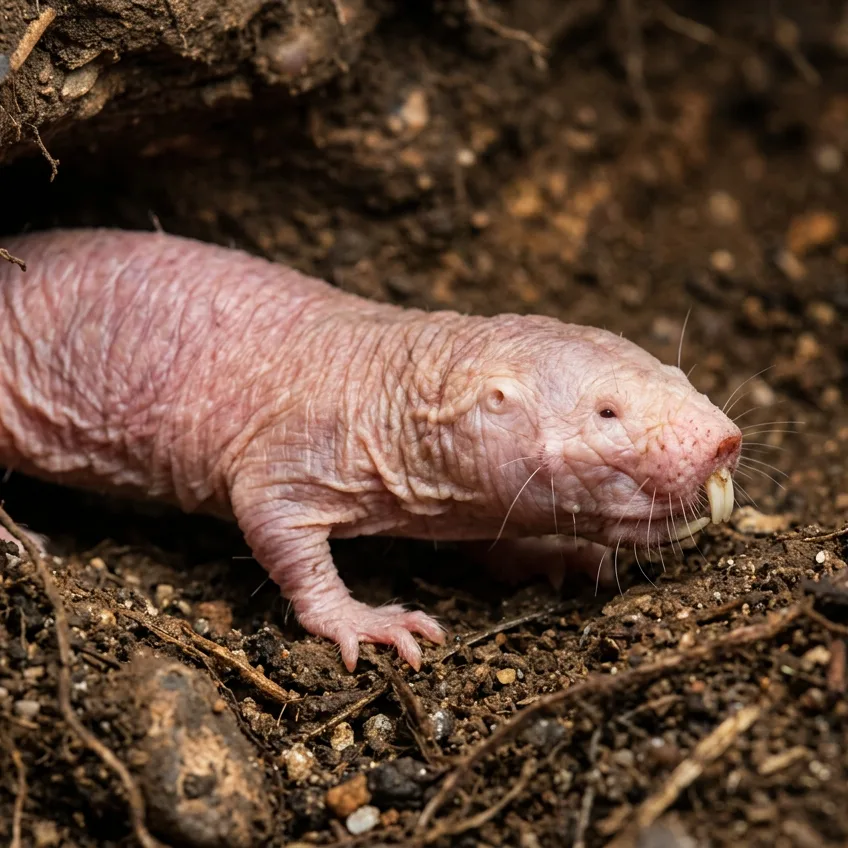
The naked mole-rat (Heterocephalus glaber) is a fascinating biological anomaly. While rodents of its size rarely exceed three years of life, this subterranean mammal native to East Africa can surpass thirty-five years in perfect health. What surprises medicine the most is not only its extraordinary longevity, but its near-total resistance to developing malignant tumors, defying conventional laws of aging.
In 2013, researchers at the University of Rochester discovered the cellular mechanism responsible for this shield: a unique type of very high-molecular-mass hyaluronic acid (HMM-HA). The cells of the naked mole-rat produce chains of this polysaccharide that are up to five times longer than human ones. In addition, the rodent's body recycles this compound very slowly, causing it to accumulate in massive concentrations between cells.
This dense extracellular matrix triggers vital benefits:
- Early contact inhibition: giant molecules press on cell receptors and induce an immediate halt in cell division before cells overcrowd.
- Physical antitumor blockade: it acts as an impenetrable barrier that smothers any attempt at uncontrolled proliferation or metastasis.
Additionally, these animals lack receptors to feel pain caused by acid and can survive up to eighteen minutes in the complete absence of oxygen by metabolizing fructose like plants. Their peculiar biology represents one of the greatest hopes today for understanding oncology and human senescence.
Source: Nature (Tian et al., 2013: 'High-molecular-mass hyaluronan mediates the cancer resistance of the naked mole-rat')