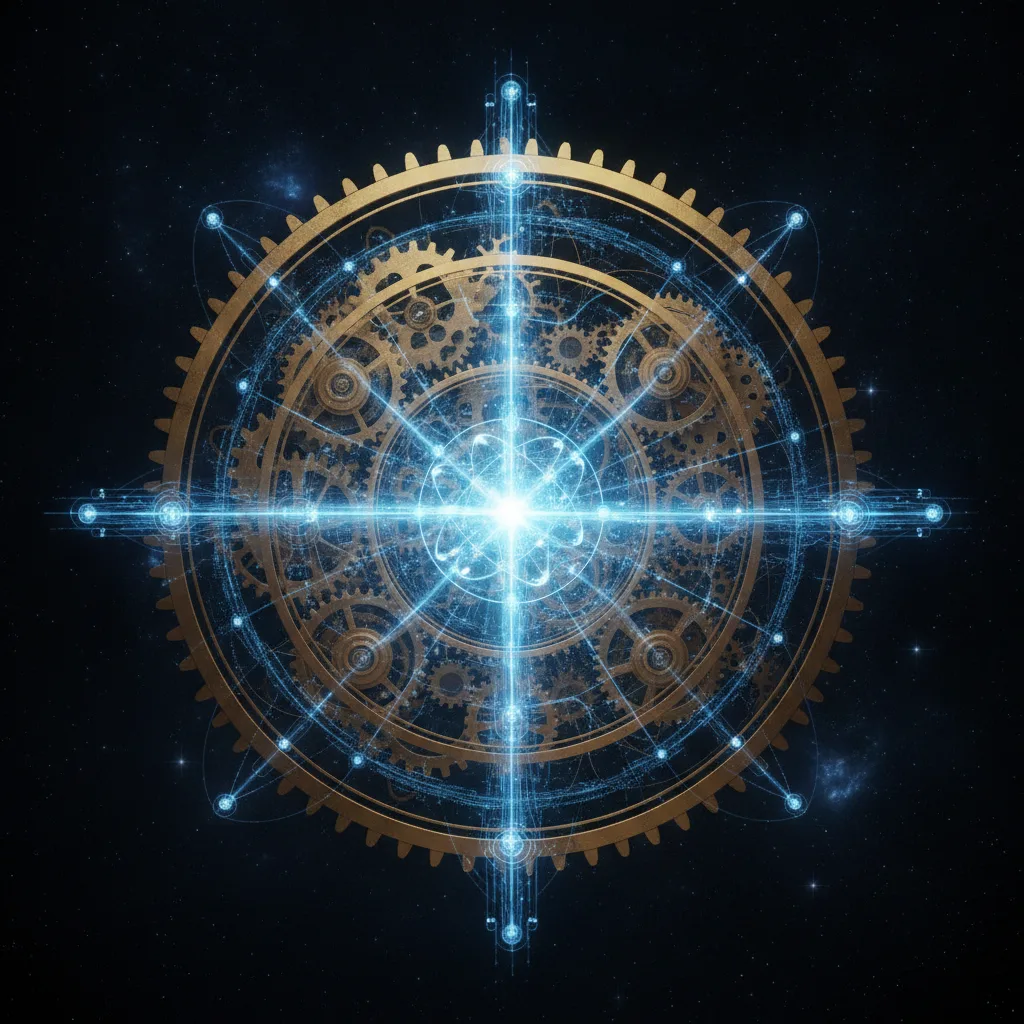
Imagine a clock so accurate that it would lose less than 1 second in 15 billion years—longer than the universe has existed! This is not a science fiction concept, but a tangible reality in the world's most advanced laboratories: the quantum atomic clock. These extraordinary devices measure time based on the energy transitions of electrons inside atoms, an incredibly stable and predictable phenomenon.
Unlike traditional atomic clocks, which use microwaves to interrogate atoms like cesium, modern quantum atomic clocks push the boundaries even further. They use high-precision lasers to "trap" and cool atoms, such as strontium or ytterbium, to temperatures close to absolute zero. Then, they detect the light frequencies with which these atoms resonate—quantum "ticks" that represent the purest and most stable definition of time.
Their precision is fundamental to our daily lives and to science. Without these clocks, technologies like the Global Positioning System (GPS) would be unfeasible, as they rely on ultra-dependent time measurements to triangulate locations with millimeter accuracy. In addition, they are crucial for:
- Telecommunications: They synchronize internet networks and global communication systems.
- Space exploration: They enable precise navigation for probes and satellites.
- Fundamental research: They facilitate the study of physical constants, the detection of gravitational waves, and the search for dark matter.
Scientists continue to refine these clocks, not only to improve existing technology, but also to open the door to discoveries we cannot even imagine today, redefining our understanding of space and time.
Source: NIST (National Institute of Standards and Technology), quantum physics laboratories (MIT, JILA, PTB)