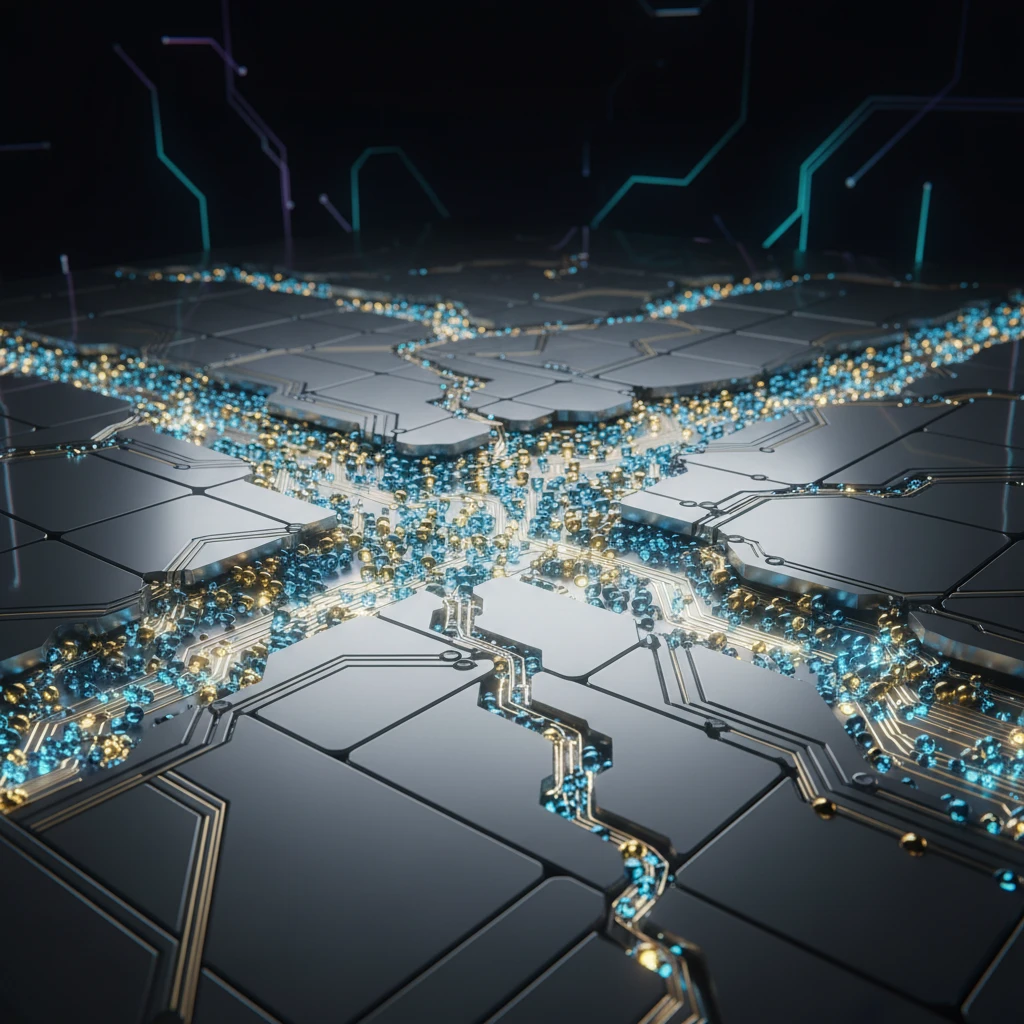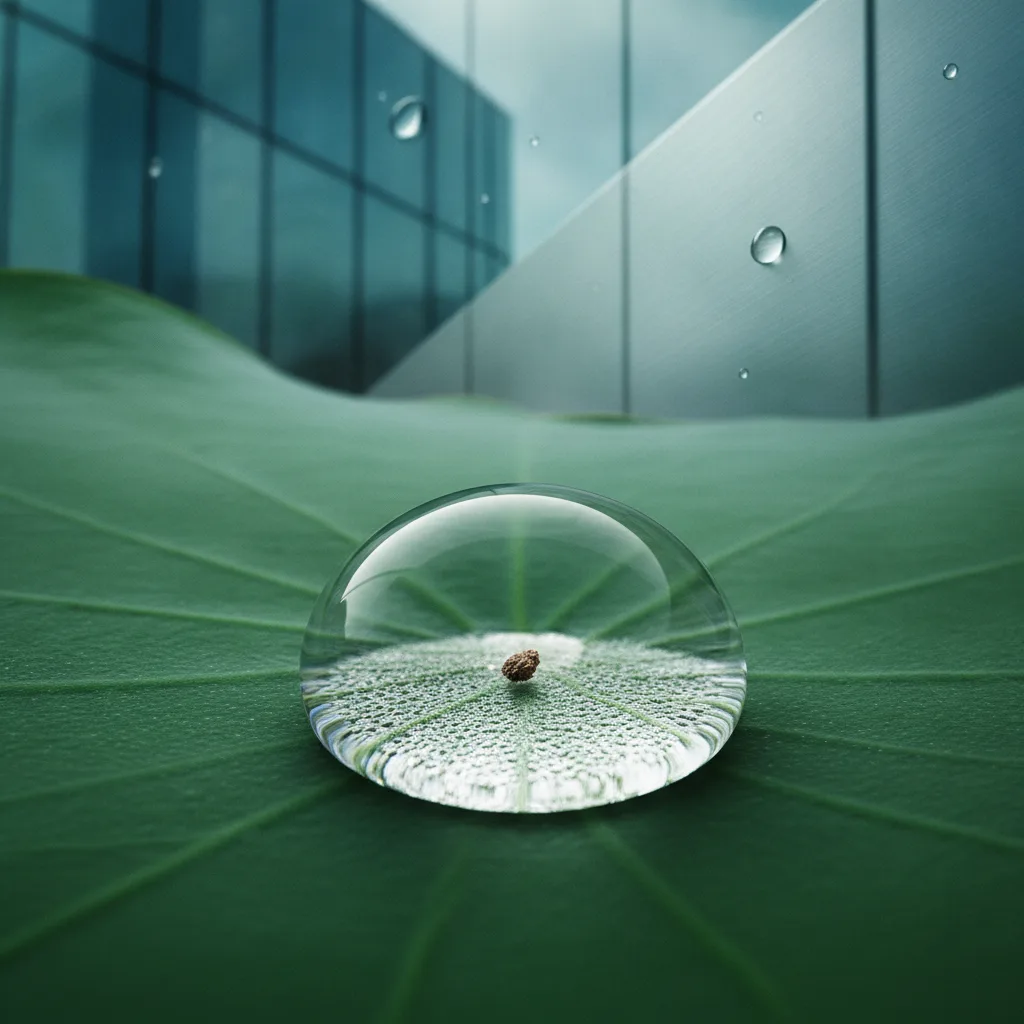
Imagine a world where your windows never get dirty, your clothes never stain, and airplanes do not accumulate ice. This could become a reality thanks to superhydrophobic surfaces, materials designed to repel water in an extreme way, inspired by nature, specifically by the amazing lotus leaf.
The secret lies in the so-called "lotus effect": the ability of certain plants to keep their leaves impeccably clean. This is not due solely to a hydrophobic wax, but to a complex hierarchical structure at the micro- and nanoscale. These tiny bumps and roughnesses minimize the water droplet's contact with the surface. At the same time, a thin layer of air is trapped between the droplet and the material, drastically reducing adhesion. Water droplets, as they roll across these surfaces, pick up dirt particles along the way, leaving the material completely clean.
Engineers and scientists have managed to replicate this effect on a variety of artificial materials. Using techniques such as nanolithography, laser etching, or vapor deposition, they have created coatings that can be applied to metals, polymers, ceramics, and textiles. The applications are vast and promising. From self-cleaning paints for buildings and cars, to anti-icing coatings for airplane wings that improve safety and efficiency. In the medical field, they could be used for surgical instruments that repel blood or for implants with a lower risk of biofouling.
Despite their enormous potential, one of the key challenges is improving the durability of these coatings, especially under abrasive conditions or prolonged outdoor exposure. However, advances continue at a rapid pace, and in the coming decades we are expected to see these technologies incorporated into a wide range of everyday products, transforming the way we interact with the physical world and keep it clean.
Source: Nature Nanotechnology, ACS Nano, Science Advances, Massachusetts Institute of Technology (MIT)