Throughout the day, an average human sighs between ten and twelve times per hour without realizing it. Although literature and cinema often associate this gesture with romance, tiredness, or melancholy, medicine has shown that the physiological sigh is, in reality, an essential emergency mechanism to keep us alive.
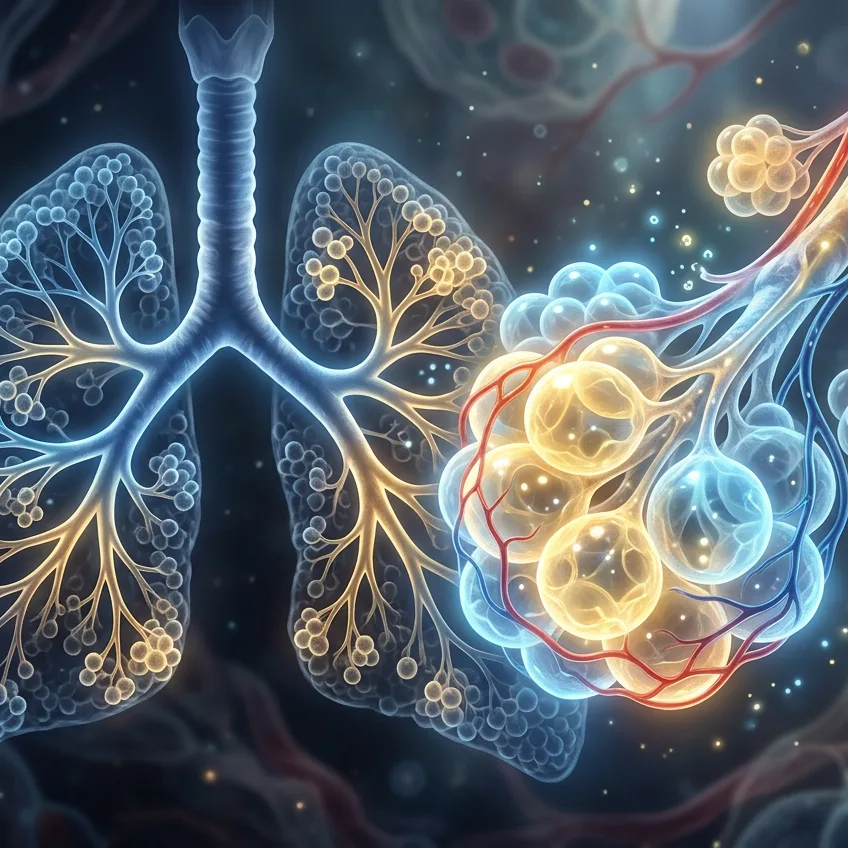
Our lungs house approximately 500 million alveoli, tiny membranous sacs where the exchange of oxygen and carbon dioxide takes place. During steady, normal breathing, surface tension causes many of these sacs to deflate and stick together, a phenomenon known as microatelectasis. Without intervention, large areas of the lungs would become unable to oxygenate the blood.
To prevent this, the brain executes an involuntary rescue protocol: the sigh. Unlike a regular breath, it consists of a double inhalation (a second breath taken on top of one already started) that draws in nearly twice the volume of air, forcing the collapsed alveoli to reopen and redistributing pulmonary surfactant, a lipid substance that reduces internal friction.
Scientists from UCLA and Stanford University discovered in 2016 that this switch is controlled by a tiny group of barely two hundred neurons in the brainstem, known as the pre-Bötzinger complex. Besides passively saving your lungs, consciously replicating this pattern—two brief inhales through the nose followed by a slow, prolonged exhale through the mouth—immediately stimulates the vagus nerve, lowering heart rate and functioning as the body's fastest neurobiological tranquilizer.
Source: Nature (Li, P. et al., 2016: 'The peptidergic control circuit for sighing') / Stanford Medicine