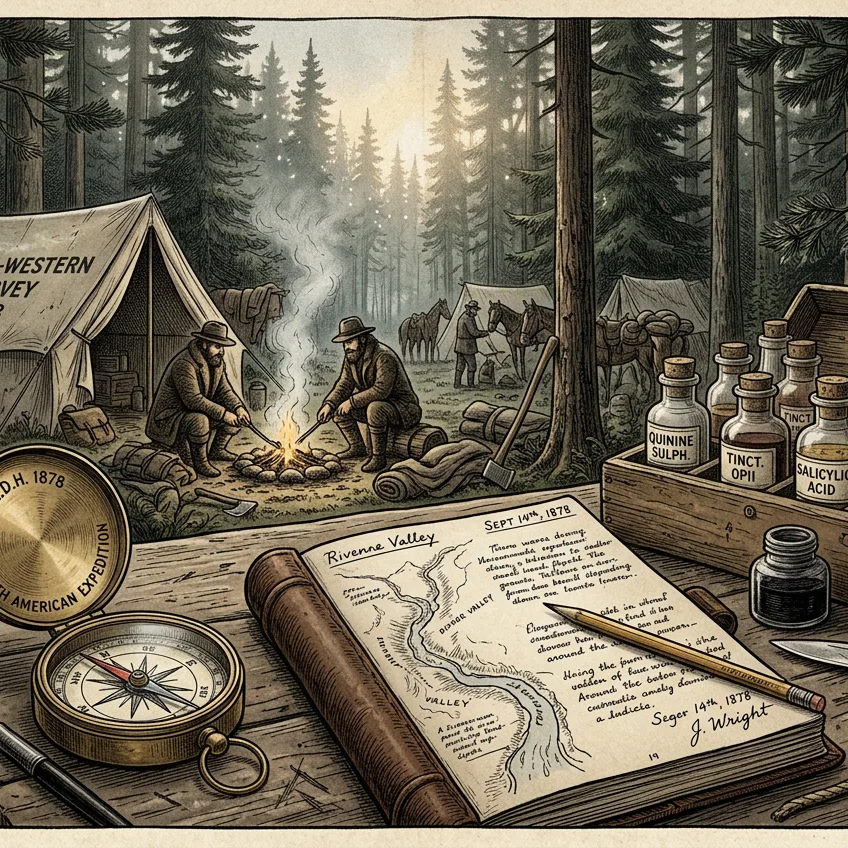
Between 1804 and 1806, explorers Meriwether Lewis and William Clark led the legendary expedition tasked with mapping the uncharted American Northwest. To keep more than thirty men healthy under extreme conditions, they turned to physician Benjamin Rush, who supplied them with a standard remedy of the era popularly known as "Rush's Thunderbolts" (Rush's Thunderbolts).
These pills consisted of an aggressive purgative compound loaded with mercurous chloride (calomel), designed to induce violent bowel movements at any sign of fever or digestive trouble. Containing roughly four times the dosage administered today for any medical purpose, the mercury was not absorbed by the human body; instead, it passed through the digestive tract intact and ended up deposited directly into the field latrines.
Two centuries later, historians and archaeologists faced a dilemma: the expedition journals described hundreds of campsites, but time and river erosion had erased their physical traces. The solution came from geochemistry:
- Geological permanence: Elemental mercury is a heavy metal that neither biodegrades nor disappears over the centuries.
- Soil analysis: Using mercury vapor surveys at strategic points across thousands of kilometers, researchers detected abnormal spikes in the metal's concentration in the subsoil.
Thanks to these chemical anomalies, scientists managed to confirm the exact location of key sites, such as the Travelers' Rest campsite in Montana, turning the expedition's digestive waste into one of the most unusual and precise archaeological markers in history.
Source: Smithsonian Magazine / National Park Service (Lewis and Clark National Historic Trail)