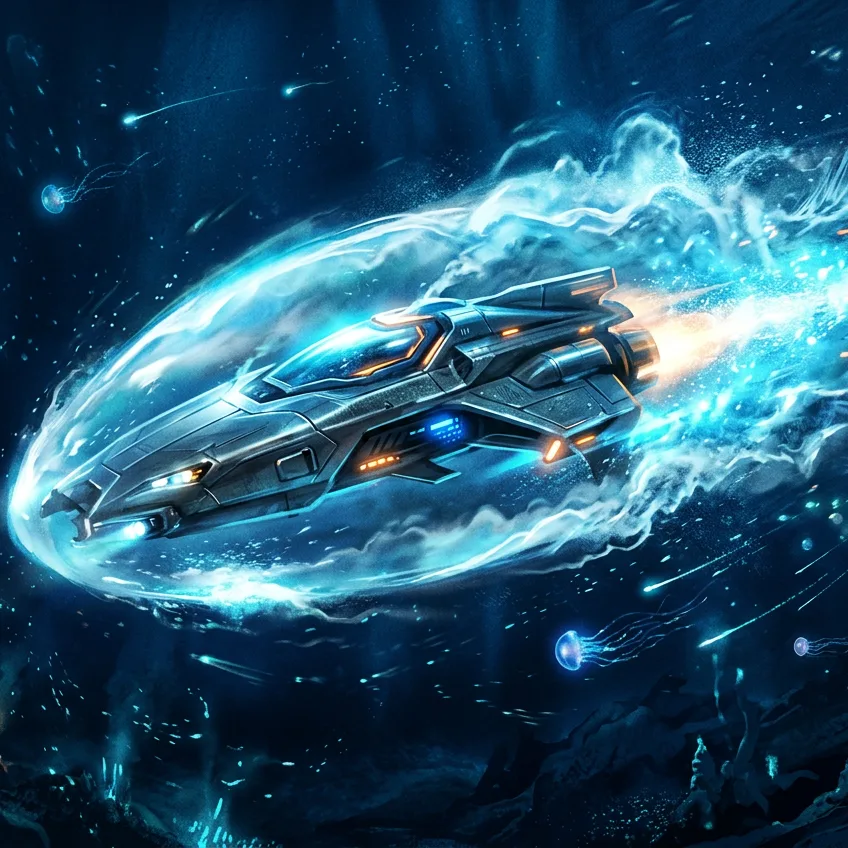
Water is approximately 800 times denser than air, which imposes a brutal physical limit on the speed of any submerged object. Most conventional torpedoes and submarines rarely exceed 80 km/h due to overwhelming frictional drag. However, there is a bold solution based on fluid dynamics capable of shattering that limit: supercavitation.
This phenomenon occurs when a body travels at such high speed that the pressure of the fluid around it drops below its vapor pressure, causing liquid water to boil spontaneously at room temperature. Instead of enduring the water's drag, the projectile intentionally generates an enveloping gas cavity—a gigantic vapor bubble—that coats almost its entire structure.
By being inside this gas capsule, the vehicle navigates experiencing the low friction of air rather than that of dense water. The only point of direct friction is its flattened nose or cavitator, which reduces hydrodynamic drag by more than 90%:
- Supersonic speed underwater: Pioneering designs such as the Soviet VA-111 Shkval torpedo, conceived in the 1970s, reached recorded speeds of more than 370 km/h (200 knots).
- Space propulsion in the abyss: Because conventional propellers cannot provide traction inside a gas bubble, these vehicles use powerful solid-fuel rocket engines.
Currently, engineers and researchers explore artificial supercavitation by injecting gases through the bow to design passenger submarines capable of crossing oceans at speeds that previously seemed exclusive to science fiction.
Source: Journal of Fluid Mechanics / U.S. Naval Institute Proceedings