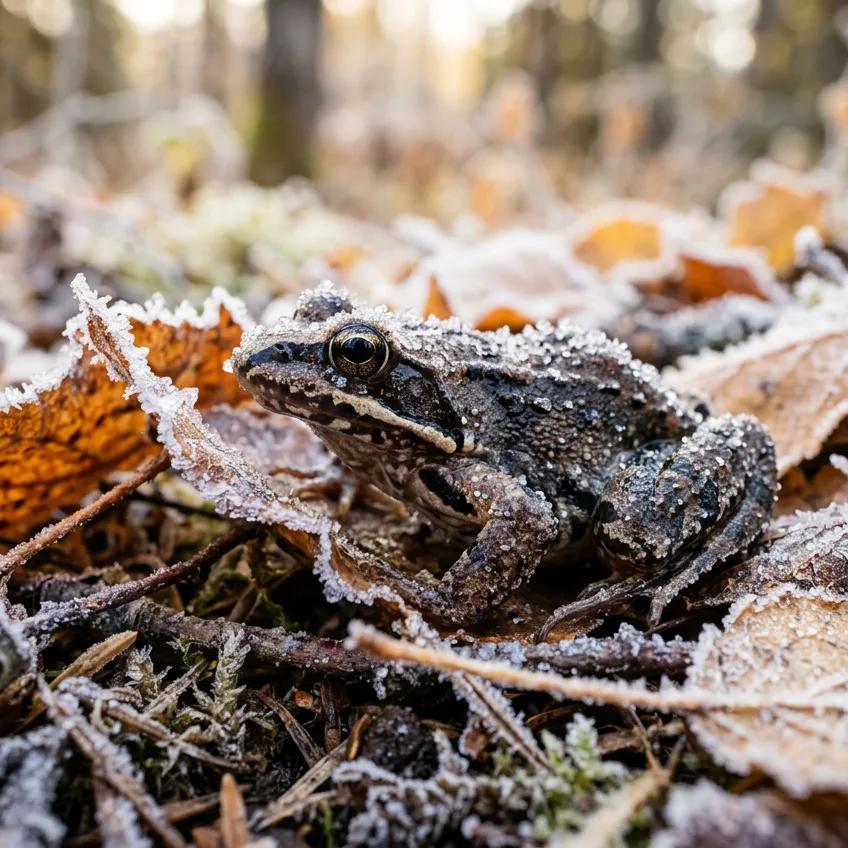
In the freezing boreal forests of Alaska and Canada lives a prodigy of cryobiology: the wood frog (Lithobates sylvaticus). While most vertebrates would die from hypothermia or irreparable tissue damage, this amphibian faces winters with temperatures down to -16 °C by letting its own body freeze completely for weeks or months.
The secret lies in its astonishing physiological response:
- Natural cryoprotectants: Upon detecting the first ice crystals on its skin, the frog's liver releases massive surges of glucose and urea into the bloodstream, multiplying their levels by up to five hundred times.
- Controlled extracellular ice: These solutes act as a biological antifreeze. Ice only forms in the spaces between cells, while the cell interior remains liquid, preventing sharp crystals from tearing the membranes.
- Reversible clinical death: During winter dormancy, up to 70 % of body water solidifies. Its breathing stops, brain activity ceases, and its heart stops beating completely; technically, the frog is clinically dead.
When spring arrives, thawing occurs from the inside out. In just a few hours, the heart spontaneously resumes its contractions, blood circulates again, and the animal hops toward its breeding ponds as if nothing had happened. This extreme mechanism is now the subject of intense medical research to extend the preservation of human organs for transplants.
Source: Journal of Experimental Biology / National Science Foundation (NSF)