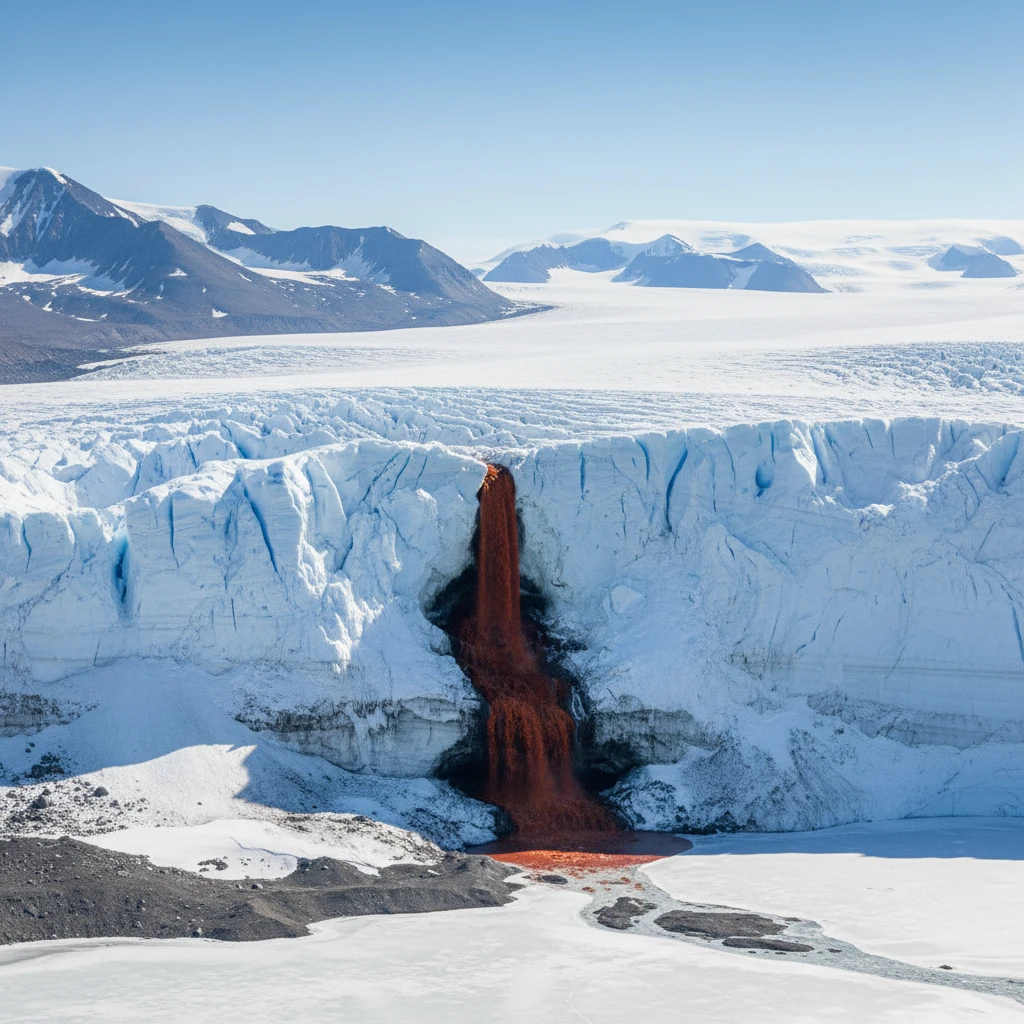
In the heart of the McMurdo Dry Valleys in Antarctica lies a natural phenomenon as surprising as it is enigmatic: "Blood Falls". This impressive spectacle, discovered in 1911 by Australian geologist Griffith Taylor, consists of a dark red brine river that flows slowly down Taylor Glacier, staining the ice in a tone reminiscent of blood.
Far from any macabre explanation, science has revealed its fascinating origin. The reddish color is not due to blood, but to a high concentration of iron oxide. This iron comes from an ancient pocket of saltwater, a subglacial lake sealed under the ice for millions of years, isolated from air and sunlight. In this extreme environment, a unique ecosystem of microorganisms has evolved, surviving without oxygen or light, using sulfur compounds to metabolize and reduce the iron abundant in the water.
When this hypersaline, iron-rich brine emerges through a fissure in the glacier and comes into contact with the air, the iron oxidizes rapidly, creating that striking rust-red color that gives the falls their name. Blood Falls is not only a visual spectacle, but also a living natural laboratory that offers an invaluable window into how life can persist and thrive in Earth's harshest conditions, serving as a crucial analog for the search for life on other worlds, such as Mars or Jupiter's icy moons.
Source: NASA, Scientific American, Journal of Geophysical Research