Birds-of-paradise are renowned for their dazzling plumage and elaborate courtship rituals, but less well known is their incredible architectural skill. While some species, such as Wilson's bird-of-paradise, clear patches of forest floor to create a "dance floor" for their intricate performances, others elevate construction to an art form.
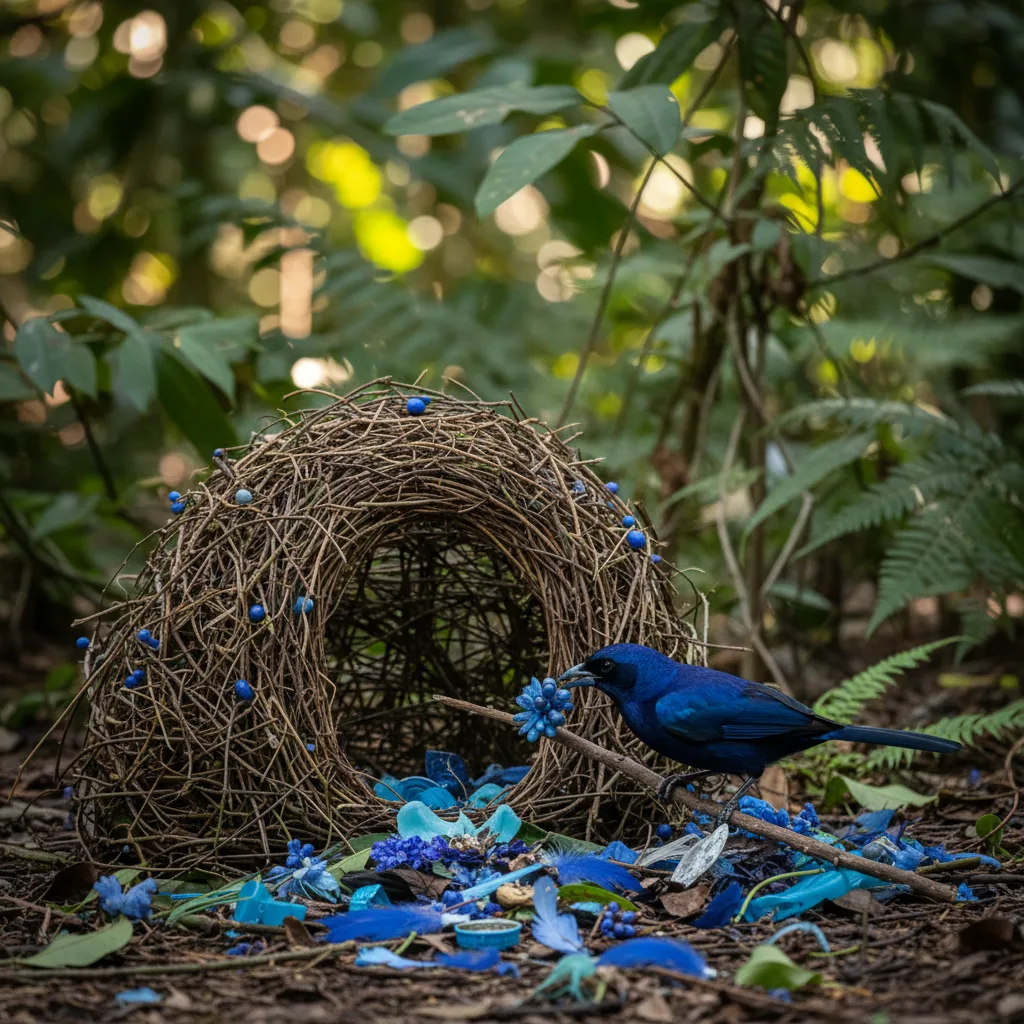
The male satin bowerbird, for example, builds an elaborate "bower"—not a nest—to attract females. This structure, a U-shaped avenue made of twigs, is meticulously decorated with blue objects: berries, flowers, feathers, and even human-made items like bottle caps. The bird then performs a series of dances and vocalizations around his bower, showcasing his artistic flair and his ability to collect rare items.
This "nuptial architecture" demonstrates not only complex cognitive abilities, but also a deep grasp of aesthetics. These elaborate constructions are a clear signal of the male's health, intelligence, and ingenuity, crucial factors for a female when choosing a mate. It is a testament to nature's creativity, where survival is not just about strength, but also about the most captivating dance and the most beautiful home.
Source: National Geographic: Birds of Paradise, Cornell Lab of Ornithology: Birds-of-Paradise Project, books on ethology and animal behavior.