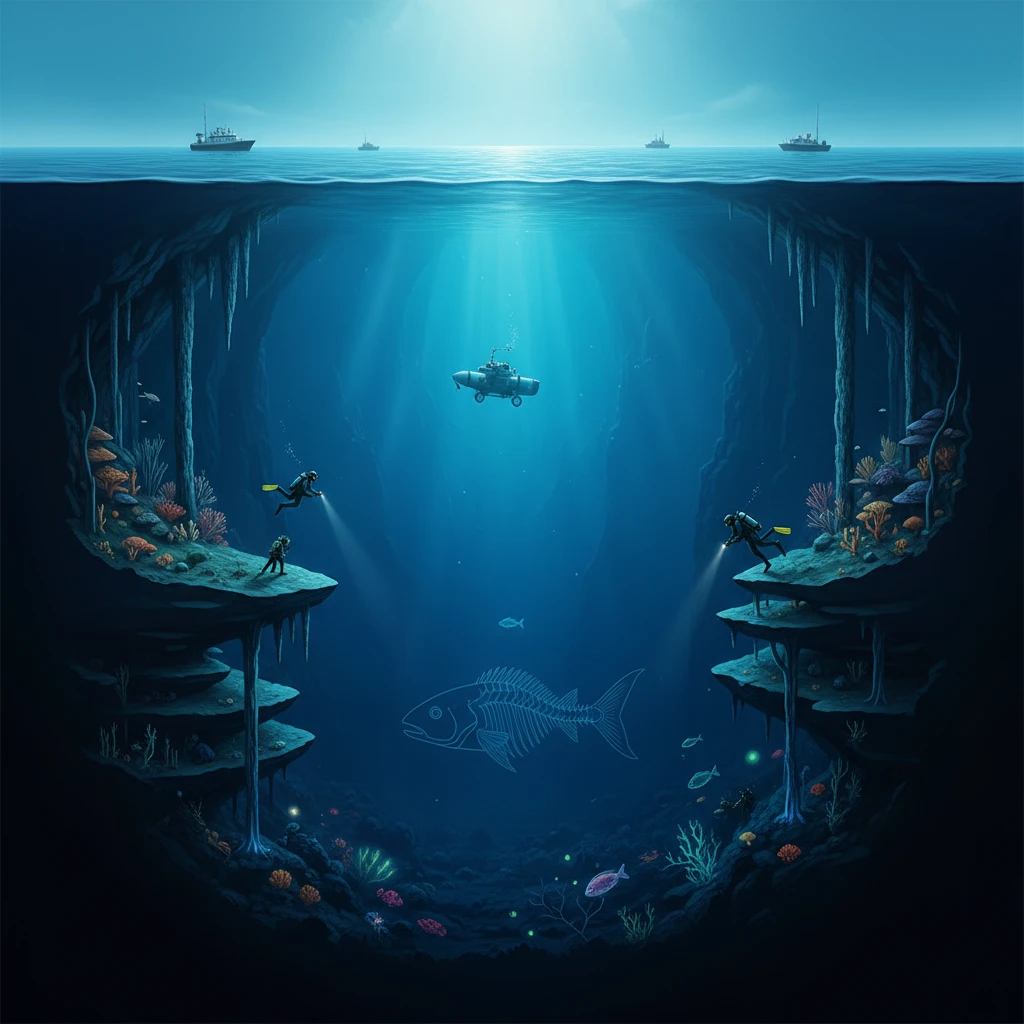
In the crystal-clear waters of the Caribbean and other tropical regions, there are underwater geological formations as enigmatic as they are spectacular: blue holes.
These vertical marine sinkholes, which can reach depths of more than 300 meters, are characterized by their deep dark blue color that contrasts dramatically with the surrounding turquoise waters, creating a stunning visual effect both from the air and underwater.
Blue holes formed during past ice ages, when sea levels were much lower. Originally, they were terrestrial caves and karst systems that, over thousands of years, were eroded by the action of rainwater on limestone. At the end of the last ice age, approximately 12,000 years ago, rising sea levels flooded these formations, creating the spectacular underwater sinkholes we know today.
What makes blue holes truly fascinating is their nature as geological time capsules. Due to their structure, many contain stratified water layers with little to no exchange with the surrounding ocean. The deepest layers often lack oxygen completely and contain high concentrations of hydrogen sulfide, creating an anoxic environment where few organisms can survive, but where the preservation of organic remains is exceptional.
Scientists from various disciplines study these unique ecosystems. Paleontologists have found perfectly preserved remains of extinct species, while microbiologists discover extremophile life forms that could offer clues about how life arose on early Earth or how it might exist on other planets. Geologists, meanwhile, analyze sediments deposited over millennia, which hold invaluable information about past climate changes.
Source: National Geographic