For centuries, medicine viewed the human skeleton as rigid, static armor whose sole purpose was to support soft tissues and shield vital organs. However, pioneering research led by geneticist Gérard Karsenty at Columbia University revolutionized this concept by showing that bones actually operate as a sophisticated endocrine gland.
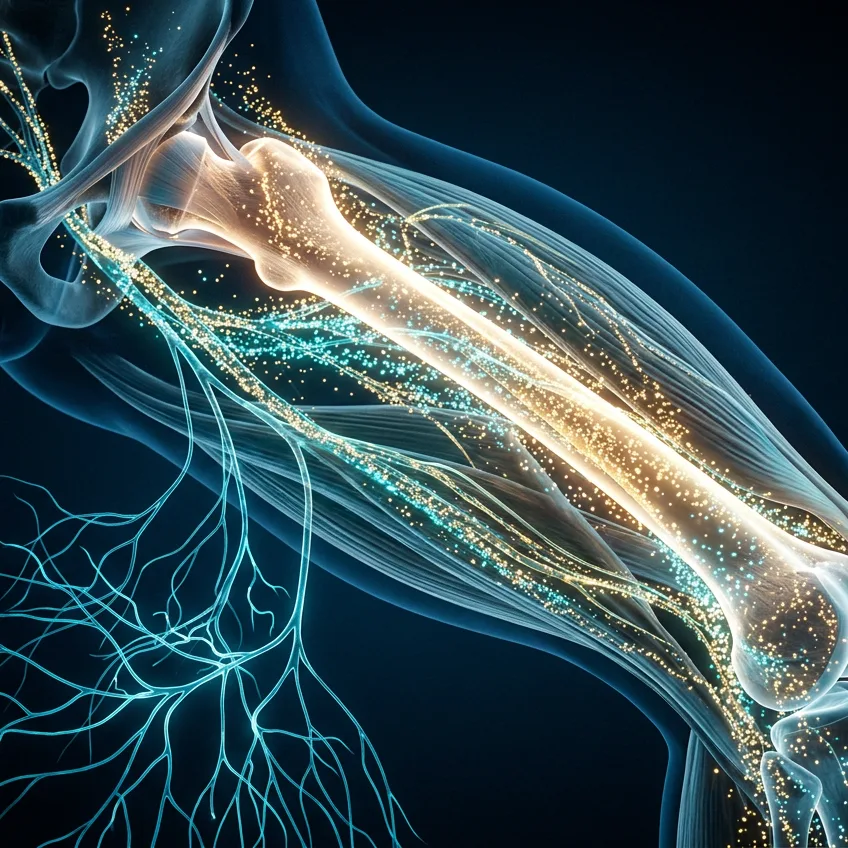
The key to this hidden function is osteocalcin, a hormone produced exclusively by osteoblasts (the cells responsible for bone formation). Far from remaining trapped in the bone matrix, it travels through the bloodstream, performing essential metabolic and cognitive functions:
- Metabolic control: It stimulates the pancreas to increase insulin production and helps muscles absorb glucose with greater energy efficiency.
- Brain health and memory: It can cross the blood-brain barrier, where it stimulates neurogenesis in the hippocampus and prevents age-related cognitive decline.
- Immediate stress response: Studies found that when sudden danger arises, bone releases a massive surge of osteocalcin in seconds, priming the muscles for flight even before adrenaline acts.
This finding transforms our view of wellness: weight-bearing or strength exercise not only prevents osteoporosis, but mechanically stimulates the skeleton to keep bathing the brain and metabolism in this authentic rejuvenating elixir.
Source: Cell / Columbia University Irving Medical Center (Research by Dr. Gérard Karsenty)