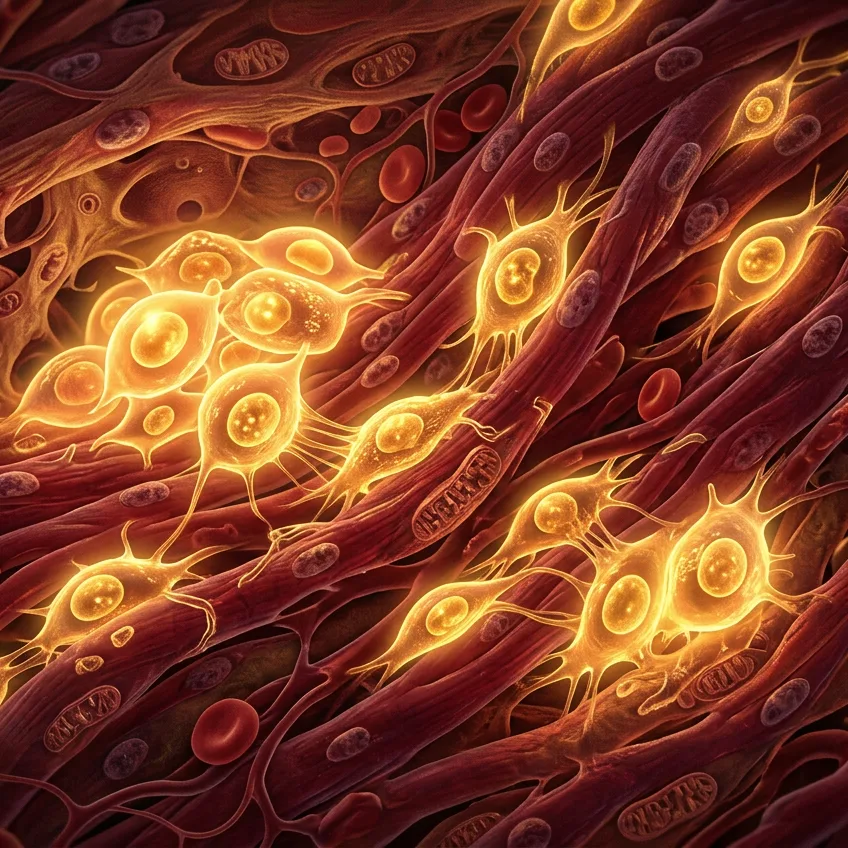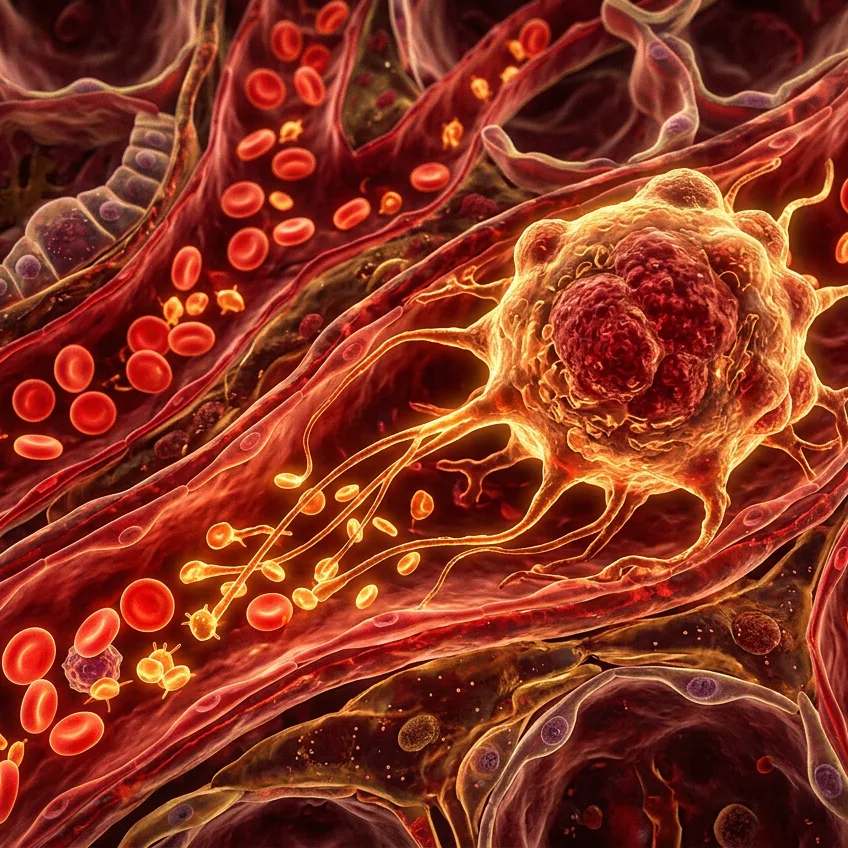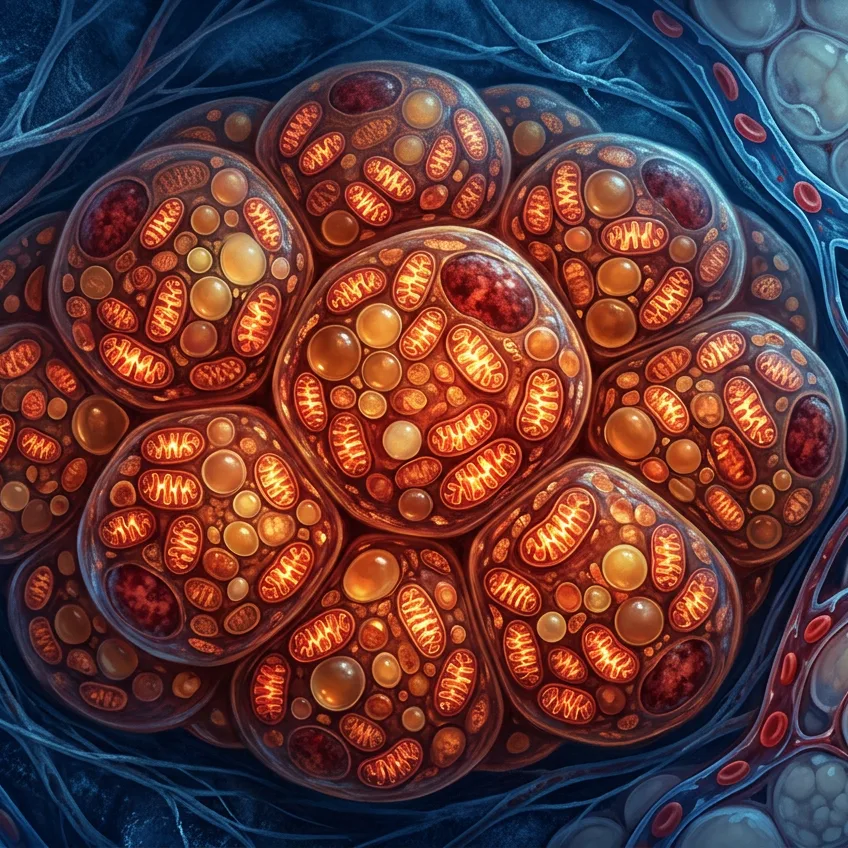
Unlike conventional white fat, whose primary function is to store excess caloric energy as triglycerides, brown adipose tissue acts as a high-performance biological furnace. Its dark color comes from an extraordinary density of blood vessels and millions of iron-rich mitochondria packing the interior of each cell.
For nearly a century, medicine assumed that this tissue only existed in babies to protect them from hypothermia and that it completely atrophied with growth. However, in 2009, studies using positron emission tomography (PET) combined with controlled cold exposure showed that adults retain functional deposits in the neck, collarbones, and along the spine.
The molecular secret of this fat lies in an exclusive protein called thermogenin or UCP1, located in the inner mitochondrial membrane:
- Energy uncoupling: Instead of using nutrients to produce ATP (the cellular energy currency), UCP1 short-circuits the electrochemical gradient and dissipates all energy directly as pure heat.
- Massive combustion: Just 50 grams of active brown fat can burn up to 20% of daily basal caloric expenditure when stimulated by sustained cool temperatures.
This mechanism, known as non-shivering thermogenesis, not only raises core body temperature in moderately cold environments, but also rapidly clears glucose and fatty acids from the bloodstream, making it one of the most promising therapeutic targets against type 2 diabetes and modern metabolic disorders.
Source: The New England Journal of Medicine (2009 studies on active brown adipose tissue identification in adult humans) / Nature Medicine