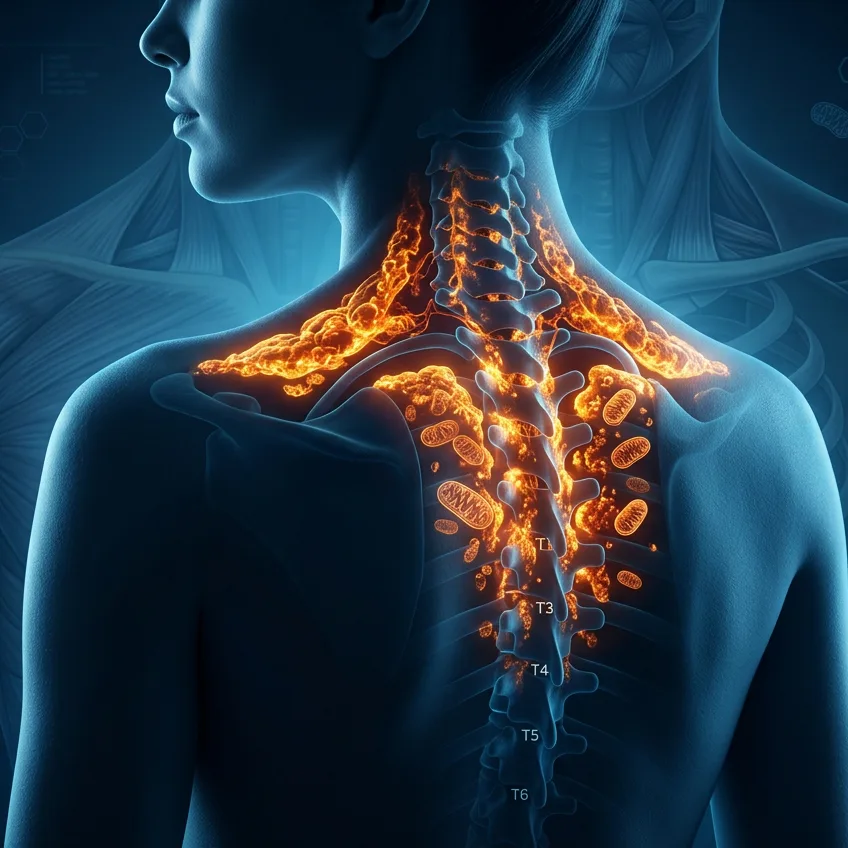
For decades, medical textbooks claimed that brown adipose tissue (or brown fat) disappeared after childhood, leaving adults only with white fat geared toward storing reserves. However, in 2009, pioneering positron emission tomography (PET) studies confirmed that we retain active deposits of this tissue in the neck, clavicles, and along the spine.
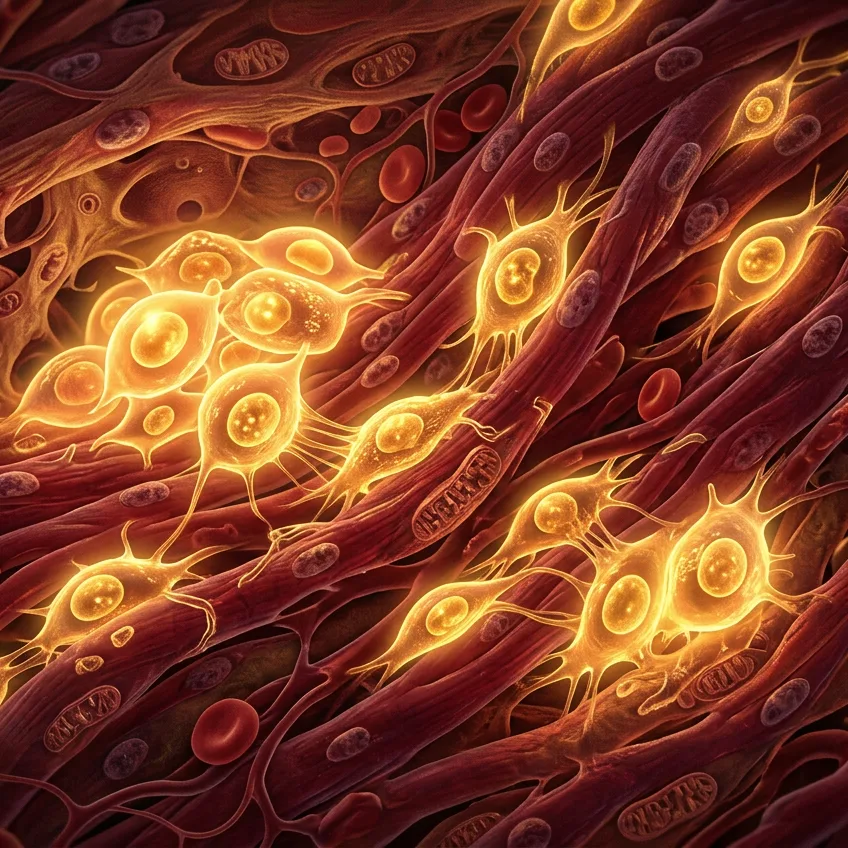
Unlike conventional white fat, brown tissue owes its characteristic color to an extraordinary density of iron-rich mitochondria. Its metabolic purpose is not to store lipids, but to deliberately break them down to generate heat through the protein thermogenin (UCP1). This molecule short-circuits the usual production of adenosine triphosphate (ATP) in the mitochondrion, transforming the energy gradient directly into pure heat without the need to shiver.
When we are exposed to cool temperatures between 16 °C and 19 °C, the sympathetic nervous system releases norepinephrine and ignites this organic boiler, triggering notable benefits:
- Metabolic sink: It massively takes up circulating glucose and fatty acids from the bloodstream to use as thermal fuel.
- Metabolic protection: Several clinical trials have shown that its sustained stimulation increases insulin sensitivity and reduces the risk of developing type 2 diabetes.
- Caloric expenditure: Although it accounts for only between 50 and 100 grams of our body mass, fully activated brown tissue can consume up to several hundred kilocalories daily at rest.
Source: The New England Journal of Medicine (Virtanen et al., 2009; van Marken Lichtenbelt et al., 2009)