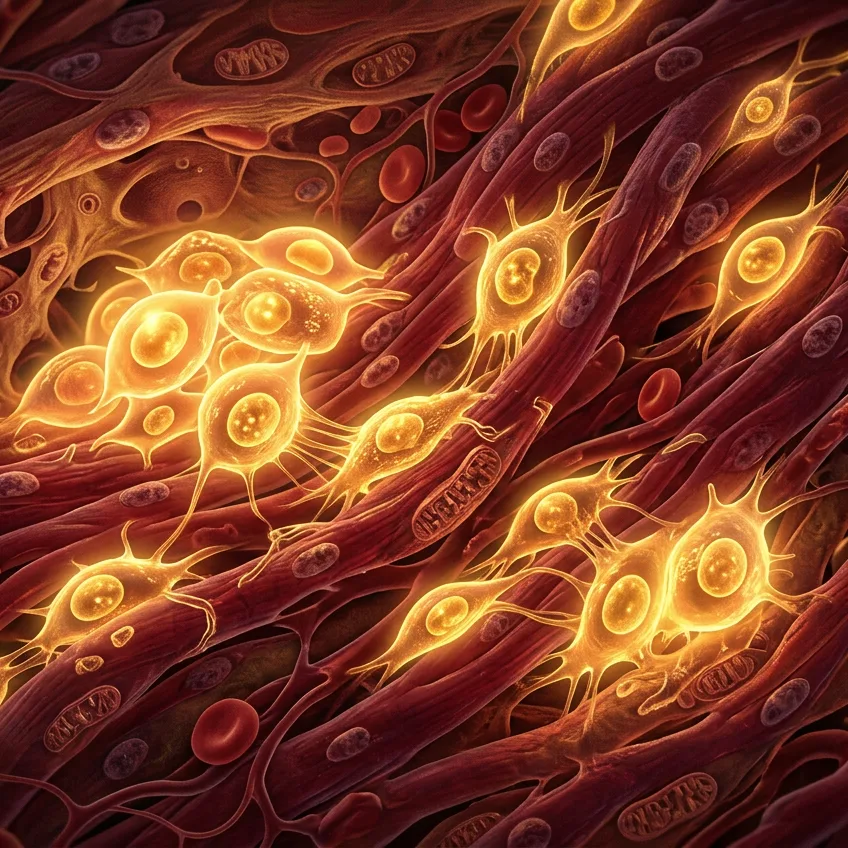
For decades it was believed that brown adipose tissue (or brown fat) was exclusive to infants and hibernating animals to keep them from freezing to death. However, in 2009 several studies confirmed through positron emission tomography (PET) that adult humans still retain active deposits of this fat, mainly in the neck, collarbones, and along the spine.
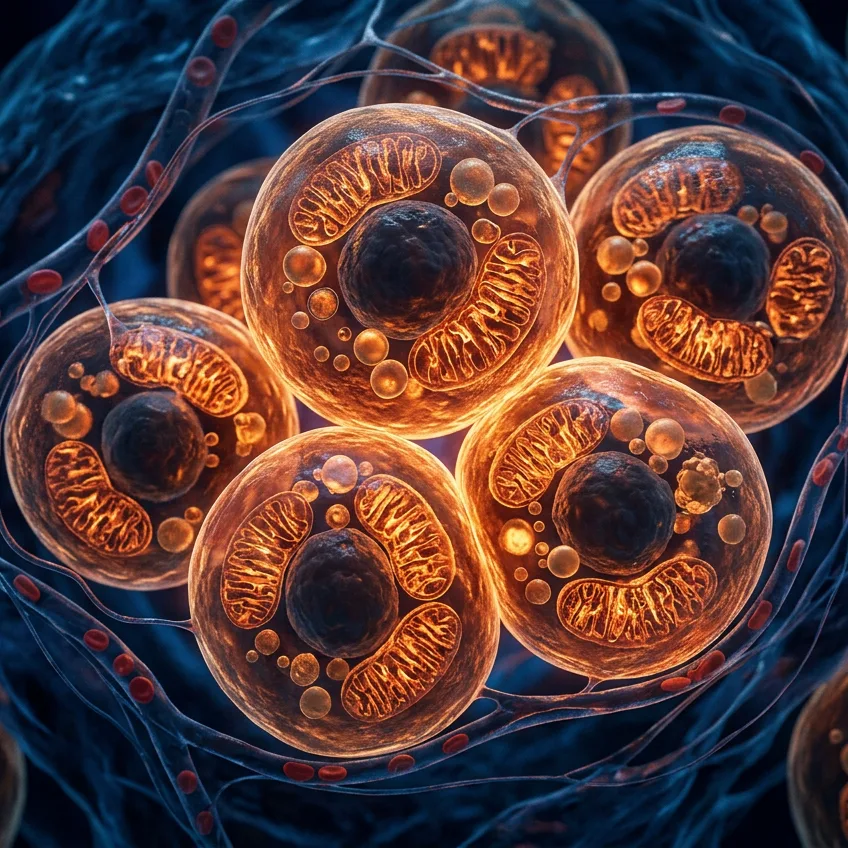
The great biological peculiarity of this tissue lies in its cells: they are packed with iron-dense mitochondria—which gives it its characteristic brownish hue—and harbor a unique protein called UCP1 or thermogenin. In a normal cell, mitochondria generate adenosine triphosphate (ATP) to supply chemical energy to the body. In brown fat, thermogenin short-circuits this process: instead of making ATP, it dissipates the proton gradient directly as pure heat in a process called non-shivering thermogenesis.
When we are exposed to cool temperatures (around 16 to 19 °C), the sympathetic nervous system releases norepinephrine, switching on this biological heater. It is estimated that just 50 grams of fully active brown fat can burn up to 20 % of daily basal caloric expenditure, actively clearing glucose and triglycerides from the bloodstream, which opens promising paths for treating type 2 diabetes and metabolic obesity.
Source: The New England Journal of Medicine (2009 studies on active brown adipose tissue in adult humans)