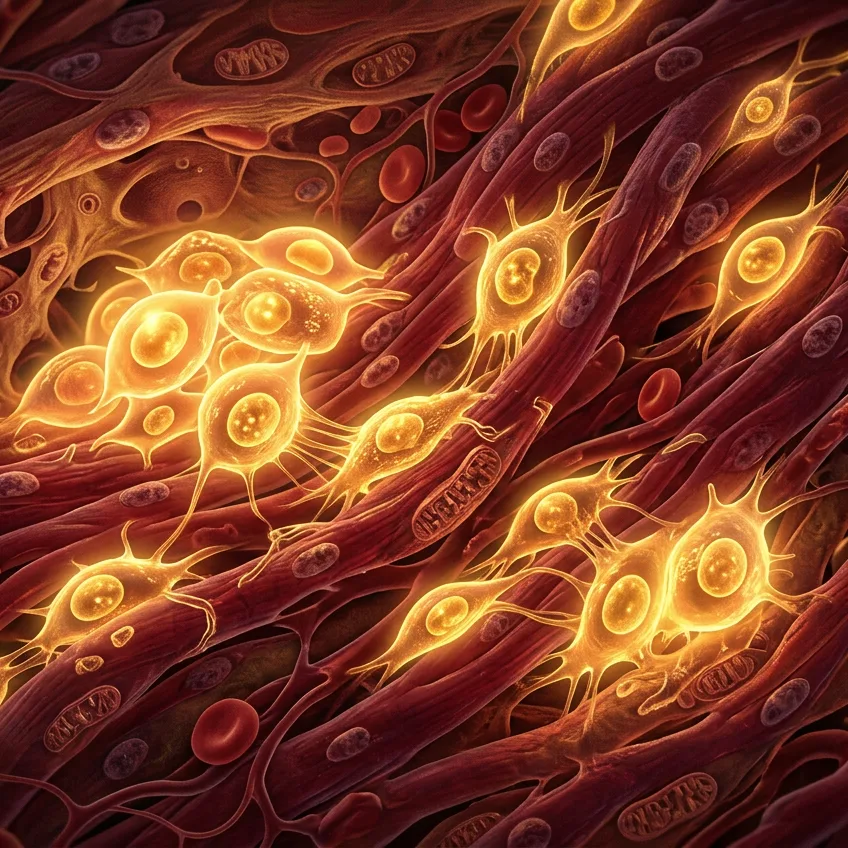
For nearly a century, medicine assumed that brown adipose tissue or brown fat was exclusive to newborns to prevent hypothermia and disappeared irreversibly with age. However, in 2009, several clinical studies using positron emission tomography (PET-CT) confirmed that adults retain active deposits of this tissue, located mainly in the neck, collarbones, and along the spine.
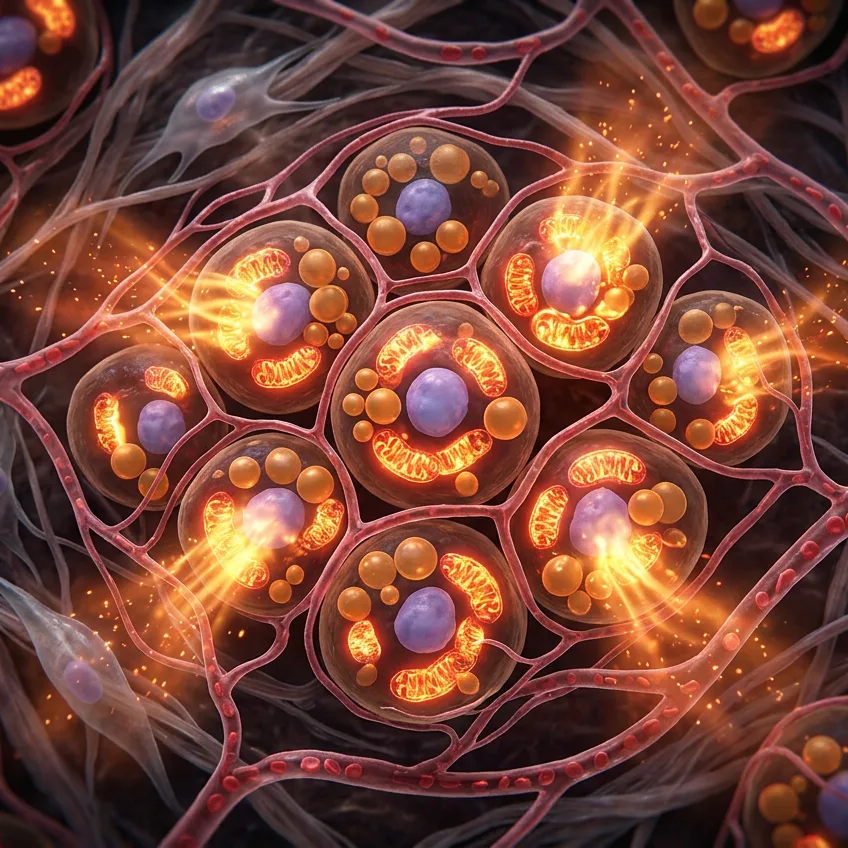
Unlike ordinary white fat, whose primary function is to store excess calories, brown fat operates as a highly efficient metabolic furnace. Its characteristic brownish hue comes from a colossal concentration of iron-rich mitochondria. These structures contain a unique molecule called UCP1 (thermogenin), a protein that short-circuits standard ATP production to dissipate energy from nutrients directly into body heat.
This process, known as non-shivering thermogenesis, unleashes extraordinary advantages for metabolic health:
- Massive glucose uptake: It clears sugar from the bloodstream at a rapid pace, notably boosting insulin sensitivity.
- Accelerated lipid burning: It devours circulating triglycerides as fuel, reducing inflammatory visceral fat.
- Temperature activation: Routine exposure to cool environments (between 16 and 19 °C) is enough to wake these dormant deposits.
Understanding and reactivating brown fat now opens one of the most revolutionary therapeutic avenues to combat obesity, fatty liver, and cardiovascular diseases.
Source: The New England Journal of Medicine / Nature Medicine